legal opinion
When Legal Opinions Go Wrong: The Institutional Cost of Overconfident Advice
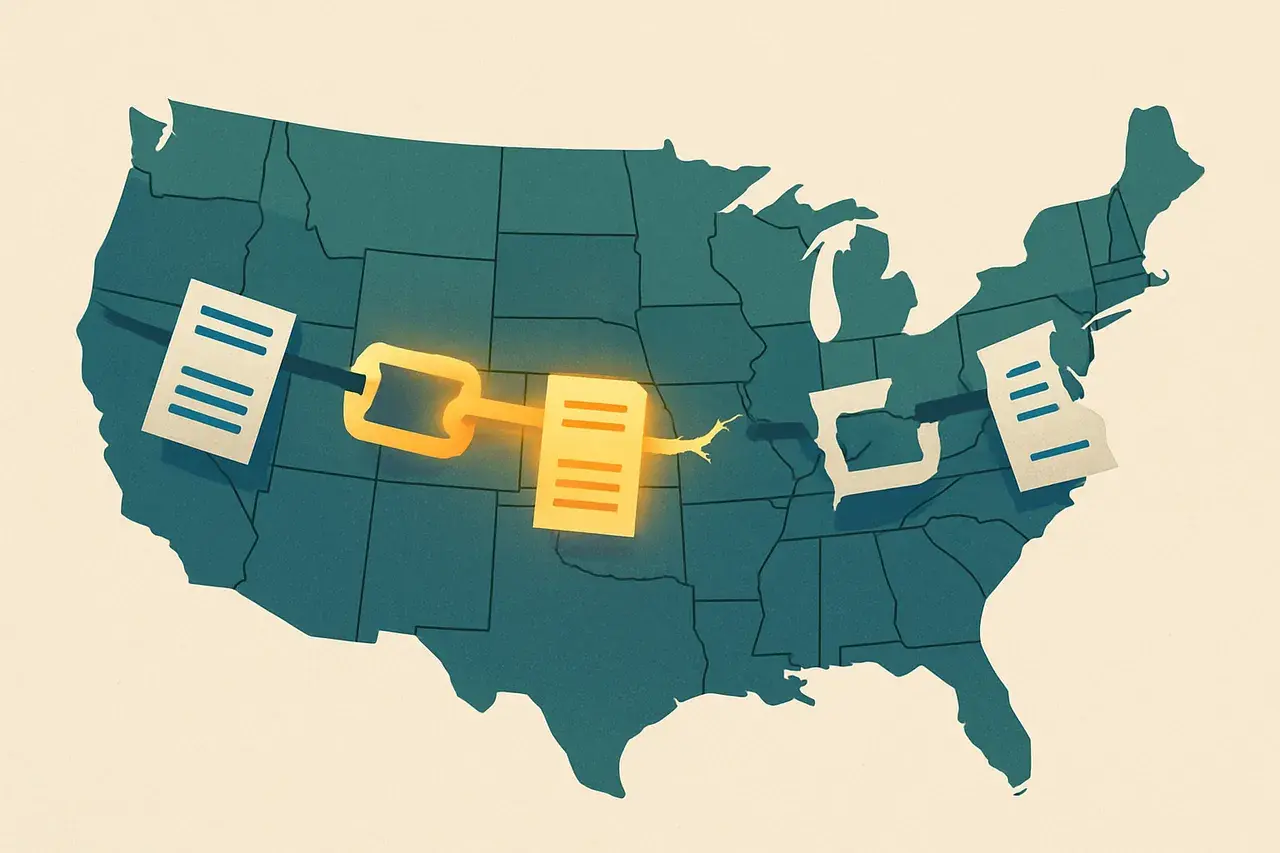
A $156 Million Question About Legal Sign-Off
The lawsuit filed by MV Realty against Holland & Knight sits at an uncomfortable intersection: a financial product described internally as novel, regulatory scrutiny from sixteen state attorneys general, and a client alleging it relied on outside counsel's blessing to commit substantial capital. Whatever the ultimate merits of the litigation, the episode forces in-house teams and law firm partners alike to ask a sharper version of a question that is usually left vague: what exactly does a legal opinion cover, and who bears the cost when reality diverges from the advice?
This is not an abstract compliance puzzle. It is a structural problem in how legal advice gets produced, recorded, and relied upon, and it is one that modern contract and matter infrastructure is finally positioned to address.
The Gap Between 'We Reviewed This' and 'This Is Legal'
Legal opinions exist on a spectrum. At one end sits the narrow, heavily caveated memorandum that lawyers are trained to write. At the other end sits the informal email thread, the verbal nod in a steering committee, the slide deck footnote that says 'reviewed by outside counsel.' Clients, particularly those deploying large sums of capital into novel structures, frequently treat everything on that spectrum as equivalent. Outside counsel frequently allows that equivalence to persist because correcting it feels like undermining the relationship.
The result is an accountability gap. When a product attracts regulatory attention across sixteen jurisdictions simultaneously, the question of what the firm actually said, in what form, under what caveats, and for whose reliance becomes litigation-defining. Firms that cannot reconstruct that paper trail precisely are exposed. Clients that assumed the trail was more comprehensive than it was feel, rightly or wrongly, that they were misled.
AI-assisted matter management does not eliminate professional judgment, but it does create a durable, searchable record of what was analysed, what law was applied, and what conclusions were reached. That record protects both sides.
Jurisdiction-Aware Advice in a Multi-State World
One detail in the MV Realty situation deserves particular attention: attorneys general in sixteen separate states became involved. That is not a single-jurisdiction compliance problem. It is a product that was structured, sold, or enforced across a patchwork of differing consumer protection, property, and financial regulation regimes.
Outside counsel advising on a product with that kind of geographic footprint faces a genuine analytical burden. Tracking statutory variations, regulatory guidance, and enforcement posture across sixteen states simultaneously is the kind of task that historically required either a very large team or a very high tolerance for gaps. Neither outcome is satisfactory when $156 million is in play.
This is precisely the context in which jurisdiction-aware legal AI adds measurable value. An AI system that knows which state it is working in, and that flags divergences between jurisdictions before a product is launched rather than after regulators mobilise, shifts the risk calculus for both client and firm. The analysis becomes part of the documented advice, not a background assumption that no one can later verify.
What In-House Teams Should Take From This
For general counsel watching this litigation unfold, the lesson is not that outside firms cannot be trusted. It is that reliance needs to be structured, documented, and specific. A legal opinion that a GC cannot quickly locate, cannot confirm covers the precise structure deployed, or cannot show was updated when the product evolved is not a shield. It is a liability.
In-house teams should be asking: do we have a single place where every material outside opinion lives, tagged to the contract or product it covers, with version history intact? Can we show, if asked, that counsel reviewed the final form of the agreement rather than an earlier draft? Did the opinion address the specific states where the product was offered, or only the state of incorporation?
These are not bureaucratic questions. They are the questions that determine whether a company can defend itself, or whether it must instead argue about what various lawyers probably meant at various points over several years.
Building the Infrastructure Before the Crisis
The firms and clients that emerge from these episodes with their reputations intact are almost always the ones that built disciplined documentation habits before the problem arose, not in response to a subpoena. That discipline used to require significant administrative overhead. It increasingly does not.
AI-driven CLM systems that draft in a company's own voice, read contracts from the client's perspective, and apply jurisdiction-specific legal knowledge do more than accelerate drafting. They create a continuous, coherent record of what was known, what was reviewed, and what conclusions were reached. That record is the infrastructure of accountability.
The MV Realty litigation is a reminder that novel financial products and aggressive growth strategies carry legal risk that generic outside counsel blessing cannot fully absorb. The firms and clients that understand this will invest in systems that make the scope and basis of every material piece of legal advice traceable. The ones that do not will keep asking, expensively, what exactly anyone meant.
See how Adira drafts in your voice and reads contracts from your side.
Explore the showroomWorking through a contract like this? Weave is Adira’s free tool to read, mark up, and connect any contract in your browser — no account needed.
Try Weave — freeRelated reading

Civil Asset Forfeiture and the Contract You Never Knew You Signed
21 July 2026

Trademark Infringement Lawsuits: What the Buc-ee's Dispute Teaches About Brand Protection Clauses
8 September 2026
India Supreme Court Protest Rights Ruling: What GCs and Multinationals Must Know About Campus Dissent, Police Powers, and Contract Risk
12 August 2026