brand legal disputes
Trademark Disputes in Entertainment: Drafting Lessons from the Taylor Swift 'Life of a Showgirl' Fight
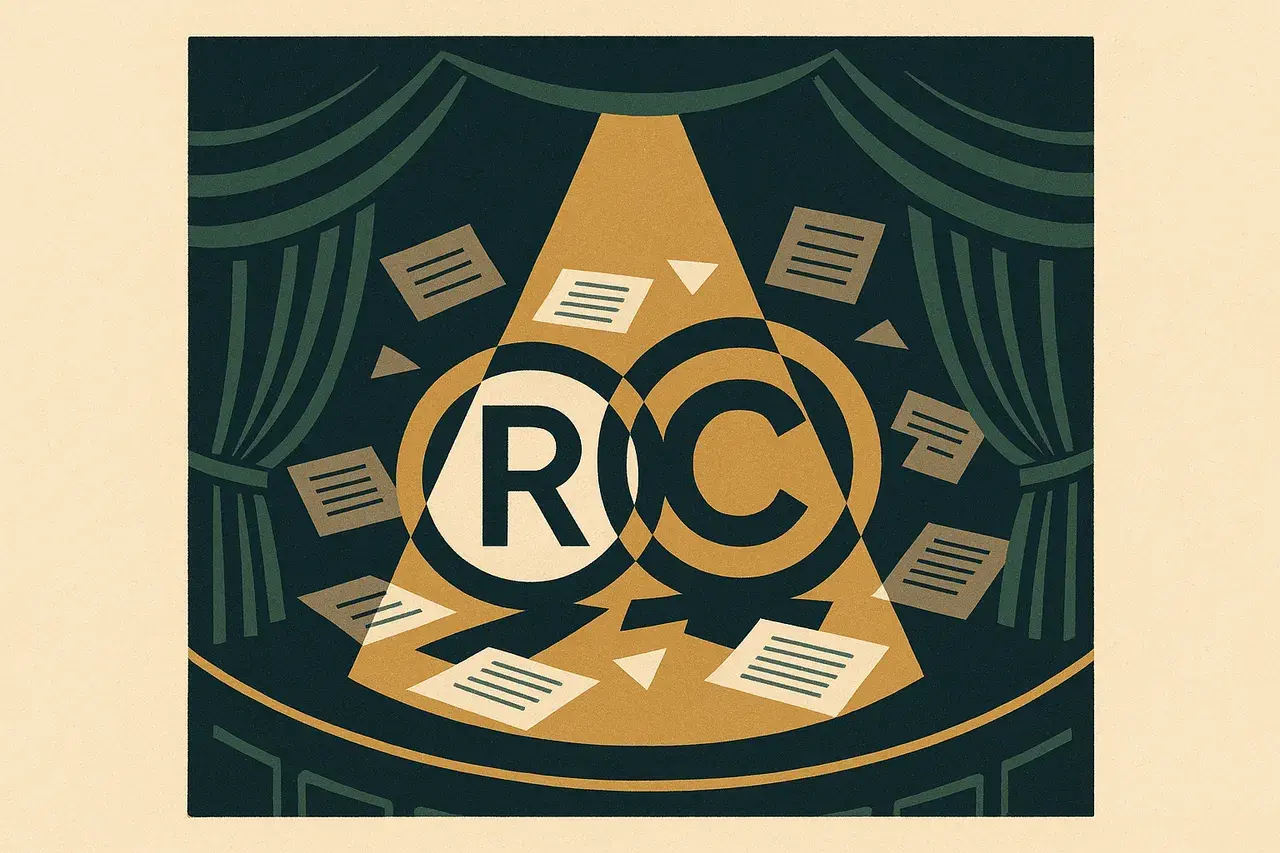
What the Taylor Swift Trademark Row Is Actually About
A lawsuit contesting Taylor Swift's use of the phrase 'Life of a Showgirl' has escalated to the point where Swift's legal team has described the claim as 'nonsensical'. The dispute centres on whether another party holds prior trademark rights in a phrase that Swift's organisation has sought to register and use commercially. Whatever the ultimate outcome, the litigation illustrates a pattern that recurs across the entertainment industry: a phrase, title or brand element is adopted, commercialised and only later scrutinised for underlying IP ownership. By that point, merchandise has been produced, licences have been granted and the cost of untangling the mess is significant.
For in-house counsel and commercial lawyers advising creative businesses, the question is not who will win this particular case. The question is which contractual safeguards, if they had existed, would have stopped the dispute from escalating in the first place.
The Clause That Typically Fails: IP Ownership Representations
In most entertainment licensing and merchandise agreements, the representations and warranties section contains a standard assurance that the licensor 'owns or has the right to use' the intellectual property being licensed. This formulation is deceptively thin. It says nothing about whether the IP has been registered, whether a clearance search was conducted, whether any third party has filed a conflicting application, or whether the licensor will indemnify the other side if a prior rights holder emerges.
A trademark ownership representation that simply states the licensor 'owns' a mark is almost always drafted from the licensor's perspective without adequate verification. When a dispute like the Swift case arises, that representation becomes the first thing a court scrutinises, and its vagueness benefits neither party.
What a Tighter Contract Would Have Said
A well-drafted IP clause in an entertainment or merchandise agreement should do several things that standard boilerplate typically omits.
First, it should include a trademark clearance obligation: a positive covenant requiring the licensor to confirm, prior to execution, that a clearance search has been completed in each relevant jurisdiction and that no conflicting marks have been identified. The search results should be disclosed as a schedule to the agreement.
Second, the representations clause should state not only that the licensor owns the mark, but that no third party has asserted or, to the licensor's knowledge, threatened to assert any claim inconsistent with that ownership. This shifts the information asymmetry that typically favours the licensor.
Third, the IP indemnification clause should be mutual and specific. It should require the licensor to indemnify the licensee or counterparty against all losses, costs and proceedings arising from any third-party trademark claim relating to the licensed material, including the cost of rebranding if the mark is ultimately found to be unavailable.
Fourth, contracts involving high-profile brands should include a trademark registration milestone covenant: the licensor commits to filing for registration in specified classes by a specified date, and provides evidence of filing. Use without registration is a common source of vulnerability.
How Jurisdiction Complicates Trademark Disputes
Trademark law is territorial, and entertainment disputes routinely cross borders. A phrase that is unregistered but in use in the United States may be subject to a competing registration in the European Union, Australia or elsewhere. A contract drafted without jurisdiction-specific IP schedules creates real exposure whenever a tour, merchandise line or streaming release goes global.
Tighter agreements specify the jurisdictions in which the licensor warrants ownership or registration, require notice within a defined period if a conflicting application is discovered post-execution, and include a procedure for the licensor to pursue cancellation or opposition proceedings at its own cost. Leaving these provisions out is not neutral: it means the licensee absorbs the risk of jurisdictional gaps it had no hand in creating.
Using AI Contract Review to Catch Trademark Clause Gaps
One structural reason these clauses remain weak is that they are rarely reviewed from the counterparty's perspective. A licensor's standard template will always favour the licensor, and a busy negotiation rarely focusses attention on IP warranty language until a dispute has already materialised.
AI-assisted contract review tools, including platforms like Adira, read agreements from the user's side of the transaction. They flag missing trademark clearance obligations, identify indemnification gaps, and compare the IP representations against a jurisdiction-aware standard, whether the relevant law is US federal trademark practice, EU trade mark regulation or the UK Trade Marks Act 1994. That kind of systematic, position-aware review is precisely what prevents a 'nonsensical' lawsuit from landing on a party that assumed its counterparty had done the necessary homework.
The Practical Takeaway for Brand and Entertainment Lawyers
The escalation of the Swift trademark dispute is a useful reminder that brand protection is a contract problem before it is a litigation problem. The time to resolve questions of ownership, registration status and indemnification is during negotiation, not after a complaint has been filed.
Specific steps that reduce trademark dispute exposure include: requiring evidence of registration or pending application before signing; insisting on mutual indemnification rather than unilateral carve-outs; scheduling clearance searches as contract exhibits; and defining a clear notice and cure mechanism for third-party claims. None of these provisions are exotic. They are simply absent from the standard templates most entertainment businesses continue to use.
Frequently asked questions
- What trademark clause most commonly fails in entertainment licensing disputes?
- The IP ownership representation is the most frequent failure point. Standard clauses simply state that the licensor 'owns or has the right to use' the mark without requiring evidence of registration, a completed clearance search or disclosure of any known conflicting claims. A tighter clause would require all three before the contract is executed.
- How do you protect yourself from a trademark dispute in a licensing agreement?
- Require the licensor to provide evidence of trademark registration or a pending application, attach clearance search results as a schedule, and include a specific indemnification clause covering all costs if a third party asserts prior rights. Adding a notice obligation for post-signing conflicts discovered by either party also reduces exposure significantly.
- Does trademark law apply differently in different countries for entertainment contracts?
- Yes. Trademark rights are territorial, meaning a mark can be registered and protected in one jurisdiction while unregistered or contested in another. Entertainment contracts covering global releases, tours or merchandise should include jurisdiction-specific IP schedules and warrant ownership or registration status separately for each key market.
- Can AI contract review tools identify trademark clause gaps?
- Yes. AI contract review platforms can flag missing clearance obligations, weak ownership representations and absent indemnification language by reading the agreement from the user's contractual position. Tools like Adira apply jurisdiction-aware legal standards, which is particularly valuable when a contract will operate across multiple trademark regimes.
- What should a trademark indemnification clause say in an entertainment agreement?
- It should require the licensor to indemnify the counterparty against all losses, legal costs and proceedings arising from any third-party claim that the licensed mark infringes prior rights. It should also cover rebranding costs if the mark is found to be unavailable, and should not be limited to claims of which the licensor had prior knowledge.
See how Adira drafts in your voice and reads contracts from your side.
Explore the showroomWorking through a contract like this? Weave is Adira’s free tool to read, mark up, and connect any contract in your browser — no account needed.
Try Weave — freeRelated reading
Trademark Infringement Lawsuits: What the Buc-ee's Dispute Teaches About Brand Protection Clauses
8 September 2026
Trademark Confusion Claims Against Netflix: What the Demon Hunter Lawsuit Teaches Every Brand Owner About Naming Risk
27 August 2026
Trademark Ownership Disputes in Music Partnerships: Lessons from the C+C Music Factory Lawsuit
19 August 2026