brand legal disputes
Trademark Confusion in Entertainment Contracts: Lessons from the Demon Hunter v Netflix Dispute
What Happened: A Band Name and a Streaming Title Collide
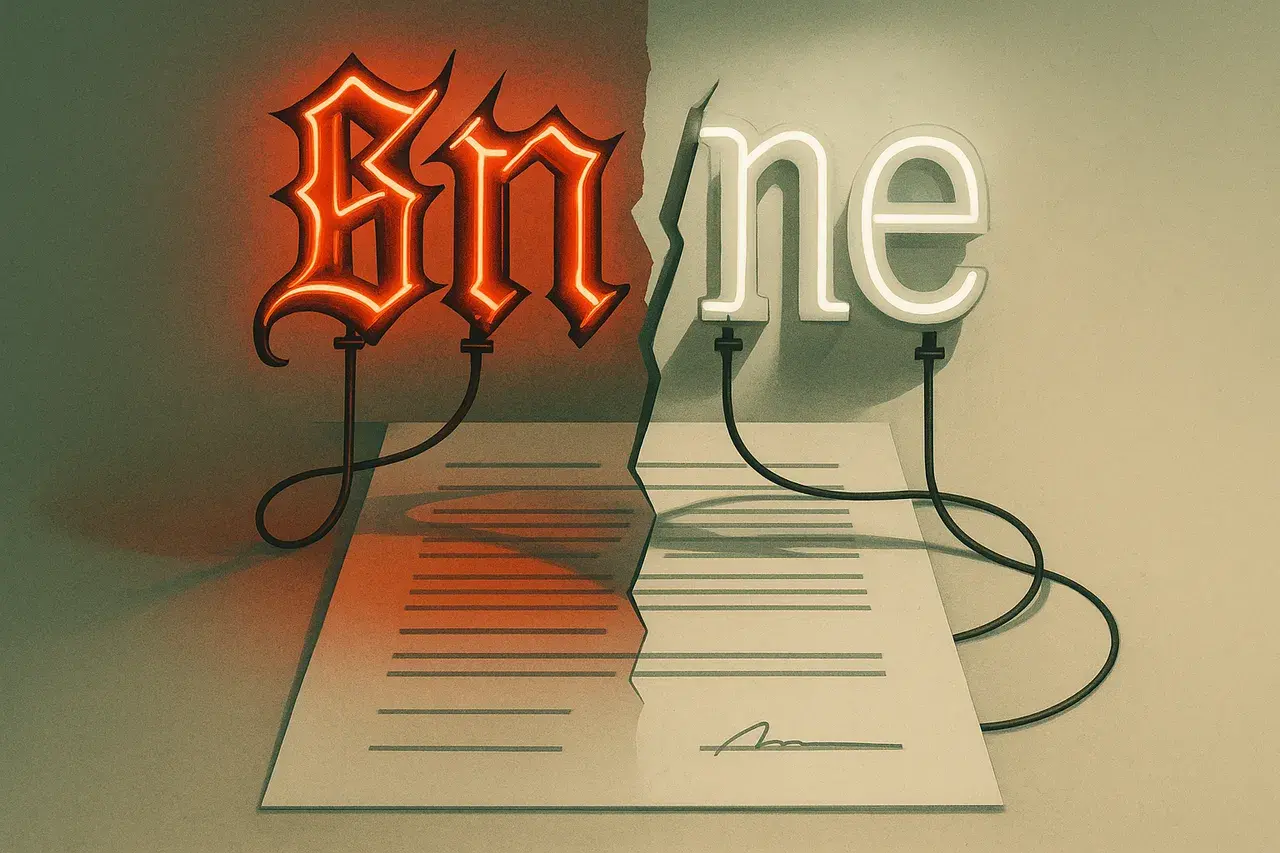
Demon Hunter, the Seattle-based Christian metal band active since 2000, has filed a trademark infringement lawsuit against Netflix, alleging that a Netflix production sharing the same name is causing consumer confusion. The band holds registered trademark rights in the name and argues that viewers and music fans are conflating the two properties. The case is a textbook example of how a streaming platform's content-development pipeline can collide with the prior rights of an established brand, even one operating in a different segment of the entertainment market.
The lawsuit turns on the doctrine of likelihood of confusion, a legal test that asks whether an ordinary consumer, seeing both uses of a name in the marketplace, might mistakenly believe they share a common origin or affiliation. When a band and a Netflix title occupy overlapping cultural and commercial spaces, courts tend to look carefully at audience overlap, marketing channels, and the strength of the senior mark. Demon Hunter, with decades of recorded output and a loyal fanbase, has a credible claim to brand strength.
The Contract Gap That Made This Possible
From a contract-drafting perspective, the more instructive question is not who will win in court but why this conflict was not resolved before anyone rolled cameras. Large entertainment companies commission, develop, and greenlight dozens of titles each year. Each of those titles should pass through a structured IP clearance process before the name is committed to production agreements, marketing budgets, or distribution licences.
The failure here appears to be an absent or inadequate clearance covenant in Netflix's own production and development agreements. A well-drafted content development contract will include a representation from the producing party that it has conducted full trademark clearance across relevant classes and jurisdictions, and an obligation to obtain sign-off from in-house or external IP counsel before the title is locked. Without that obligation written into the agreement, clearance becomes an informal step that can be skipped under schedule pressure.
Which Clause Failed and What It Should Have Said
The clause that typically fails in these situations is the IP warranties and representations section. In many standard production agreements, this clause reads broadly, stating that the content does not infringe any third-party intellectual property rights. That language sounds protective but it is backward-looking and passive. It records a belief rather than mandating a process.
A tighter contract would have included three distinct obligations. First, a clearance condition precedent: no title shall be locked or published in any distribution agreement until a trademark clearance opinion has been obtained from qualified counsel covering at minimum Classes 9, 41, and 44 in all primary distribution territories. Second, an active monitoring covenant: the producing party shall conduct, or commission, a watch service for conflicting marks throughout the production period. Third, a specific indemnity: the producing party shall indemnify and hold the distributor harmless against any claim arising from a failure to obtain adequate clearance, with the indemnity surviving termination of the agreement for a defined period.
Had Netflix's production agreement with the relevant studio or production house contained those provisions, either the conflict would have been caught before launch, or contractual liability would have been clearly allocated to the party best positioned to prevent it.
Trademark Coexistence: A Negotiation Tool That Was Not Used
Even where clearance reveals a potential conflict, the outcome need not be litigation. Trademark coexistence agreements are a well-established tool that allows two parties to use similar names in defined ways, with guardrails around territory, goods and services class, and marketing conduct. The Los Angeles Times notes the band's concern about "consumer confusion," which is precisely the harm a coexistence agreement is designed to address by drawing clear boundaries.
Negotiating a coexistence agreement requires both parties to be at the table before the conflict becomes a lawsuit. That conversation is far cheaper than discovery. Streaming platforms and studios should include a standing protocol in their IP governance frameworks: when clearance surfaces a senior mark with a live registration, legal must engage the senior rights holder before greenlight, not after.
How AI Contract Tools Reduce Trademark Exposure at Scale
The volume of content being developed across streaming platforms makes manual clearance for every title difficult to sustain consistently. This is where AI-assisted contract lifecycle management adds measurable value. A platform like Adira can be configured to flag title fields in development agreements and trigger an automated clearance checklist before the contract progresses to execution. It can also read existing agreements from the platform's perspective, identifying where clearance obligations have been placed on counterparties and where they have been left silent.
Beyond individual contracts, Adira's clause library can store jurisdiction-specific, pre-approved IP warranty language, so that every new production agreement starts from a baseline that has already been reviewed by counsel. That consistency, applied across hundreds of titles per year, is where the systemic risk reduction lies. One missed clearance step on one title can generate litigation costs and reputational exposure that dwarf the cost of building the process in the first place.
Key Drafting Takeaways for Brand and Legal Teams
The Demon Hunter v Netflix dispute is a reminder that trademark risk in entertainment is not limited to copying logos or reworking storylines. A shared name, even across different media formats, can trigger substantial liability when a senior mark is well-established and audiences overlap. The practical steps for any brand or legal team are straightforward.
Before any title is locked, conduct clearance across all relevant classes and territories. Build a clearance condition precedent into every production and development agreement, and make sure the obligation is active rather than declaratory. Where a conflict is identified, explore coexistence before the conflict becomes a filing. Use contract management tooling to enforce these steps systematically, so that process does not depend on any individual remembering to ask the right question under deadline pressure. A name is not a minor detail in an entertainment contract. It is often the most commercially significant IP asset the agreement touches.
Frequently asked questions
- What is likelihood of confusion in a trademark lawsuit?
- Likelihood of confusion is the central test in most trademark infringement cases. A court asks whether an ordinary consumer encountering both uses of a name would probably believe they come from the same source or are affiliated. Factors include the similarity of the marks, the relatedness of the goods or services, and the strength of the senior mark.
- How can a company avoid trademark infringement when naming a TV show or film?
- The key step is conducting a full trademark clearance search across relevant classes and territories before the title is locked in any contract. The production or distribution agreement should include a condition precedent requiring a clearance opinion from qualified IP counsel. Where a conflict is found, a coexistence agreement can often resolve the issue without litigation.
- What clause in a contract prevents trademark disputes?
- A clearance condition precedent, combined with active IP monitoring obligations and a specific indemnity for clearance failures, provides the strongest contractual protection. Broad warranty language alone is insufficient because it records a belief rather than mandating a process.
- What is a trademark coexistence agreement and when should you use one?
- A trademark coexistence agreement is a contract between two parties with similar or identical marks that sets out the boundaries within which each may use their name, covering territory, product or service category, and marketing conduct. It should be used when clearance identifies a senior rights holder before a conflict escalates to litigation, as it is far cheaper and faster than court proceedings.
- Can a band sue a streaming platform for using the same name?
- Yes, if the band holds a registered trademark and can demonstrate that the streaming platform's use of the same name is likely to cause consumer confusion. The band's registration date, the strength of its brand, and the degree of audience overlap between the two properties will all be relevant to the outcome.
See how Adira drafts in your voice and reads contracts from your side.
Explore the showroomRelated reading
Trademark Ownership Disputes in Music Partnerships: Lessons from the C+C Music Factory Lawsuit
19 August 2026

Trademark Overreach and the Nominative Fair Use Defence: Lessons from the Mormon Stories Lawsuit
15 August 2026
Trademark Overreach vs. Fair Use: Drafting Lessons from the Church vs. Mormon Stories Podcast Dispute
14 August 2026