legaltech
AI Time Recording Meets Contract Lifecycle Management: What the Thomson Reuters and Laurel Partnership Means for Legal Teams
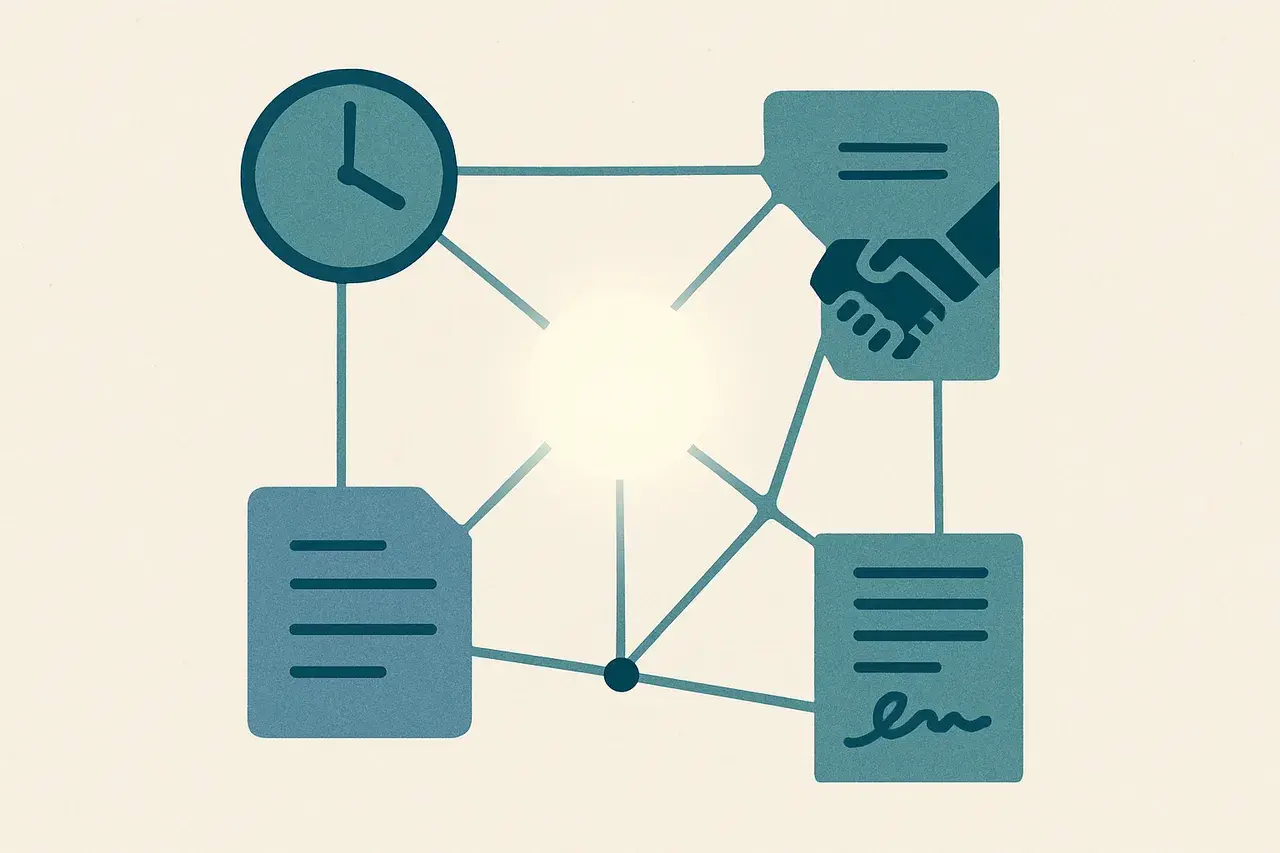
Why AI Time Recording Is Suddenly a CLM Conversation
At first glance, automated time recording and contract lifecycle management sit in different corners of the legal technology stack. One captures billable hours; the other governs how agreements are created, negotiated, signed, and renewed. The Thomson Reuters partnership with Laurel, the AI-powered time-capture platform, is a reminder that those corners are moving closer together. As law firms and in-house teams push toward end-to-end workflow automation, the boundaries between practice management, billing, and contract management are beginning to blur in ways that legal operations leaders cannot afford to ignore.
What Laurel Actually Does, and Why It Matters
Laurel uses artificial intelligence to reconstruct a lawyer's working day from signals across email, documents, calendar entries, and other digital activity, generating draft time entries without the lawyer manually recording every six-minute unit. The pitch is accuracy and recovery of otherwise lost time. For firms operating on hourly billing, that is a direct revenue argument. For in-house teams benchmarking outside counsel spend, it creates a richer data layer around how legal work is actually consuming resources.
Thomson Reuters already operates a large ecosystem spanning Westlaw, Practical Law, and the HighQ collaboration platform. Adding Laurel means a firm using that ecosystem can, in theory, move from legal research through drafting, collaboration, and billing without leaving a single integrated environment. That kind of consolidation is precisely what legal operations directors have been requesting for several years.
Where This Fits Inside a Modern CLM Stack
Contract lifecycle management platforms are often evaluated on their drafting, negotiation, and approval capabilities. Fewer buyers think carefully about the post-signature phase: obligation tracking, renewal alerts, spend analytics, and the connection between contract commitments and the actual legal work performed against them. This is where AI time recording becomes genuinely relevant to CLM.
Consider a matter tied to a specific contract, a complex commercial dispute or a regulatory filing deadline embedded in an agreement. If time entries can be linked automatically to the relevant contract record, legal operations teams gain visibility into the true cost of delivering on contractual obligations. That data feeds smarter resourcing decisions, better outside counsel guidelines, and more credible budget forecasts. Laurel's integration into the Thomson Reuters stack moves this kind of joined-up reporting from ambition to plausible near-term reality.
Adira's own approach to CLM is built on the same principle: that a contract platform should read agreements from the client's perspective, surface obligations proactively, and connect to the surrounding workflow rather than sitting in isolation. A richer time-and-activity data layer from tools like Laurel only strengthens the analytical foundation that good CLM depends on.
An Honest Assessment of Adoption Challenges
Partnerships announced at the platform level do not automatically translate into adoption on the ground. Legal teams face several genuine friction points here.
First, data privacy. AI time-capture tools ingest signals from email and documents. Firms handling sensitive matters, particularly those subject to legal professional privilege or regulated client confidentiality obligations, will require careful configuration and clear data-processing agreements before deployment. Procurement teams should ask specific questions about where time-activity data is stored, how long it is retained, and whether it can be used to train shared models.
Second, cultural resistance. Time recording is already one of the more contentious tasks in private practice. Introducing AI that reconstructs a lawyer's day from ambient signals can feel intrusive, however well intentioned. Change management, not just the technology itself, will determine whether adoption rates justify the investment.
Third, integration depth. A partnership announcement and a genuine, deeply integrated product experience are different things. Legal operations teams evaluating any expanded Thomson Reuters stack should ask for specific API documentation, pilot case studies, and a clear roadmap before committing.
What Legal Operations Teams Should Do Now
The broader trend this partnership represents, consolidation of the legal technology ecosystem around a small number of large platform providers, is real and accelerating. For legal operations leaders, that creates both opportunity and risk.
The opportunity is simplification. Fewer vendors, fewer contracts, fewer integration projects, and a single data model across research, drafting, collaboration, and billing is genuinely valuable. The risk is lock-in. When a firm's entire workflow sits inside one vendor's ecosystem, switching costs become very high, and negotiating leverage over pricing and terms diminishes accordingly.
Practical steps for legal teams right now: map your current tool stack against the capabilities being absorbed into large platforms; identify which integrations are genuinely adding value versus those that exist only on paper; and ensure that any new platform agreements include data portability provisions so that your contract and matter data remains accessible if you need to move.
Legal technology is maturing quickly. The firms and legal departments that approach it with the same rigour they apply to their client contracts will be better positioned than those who follow the marketing.
Frequently asked questions
- What is Laurel and how does it help lawyers with time recording?
- Laurel is an AI-powered time-capture platform that reconstructs a lawyer's billable activity from digital signals such as emails, documents, and calendar entries, generating draft time entries automatically. It aims to reduce the administrative burden of manual time recording and recover billable time that would otherwise go uncaptured.
- How does AI time recording connect to contract lifecycle management?
- When time entries can be linked to specific contract records, legal teams gain visibility into the true cost of performing contractual obligations, which informs budget forecasting, outside counsel management, and resource planning. This data layer makes CLM platforms more analytically powerful beyond their core drafting and approval functions.
- What are the risks of using AI time tracking software in a law firm?
- The main concerns are data privacy, since these tools ingest activity signals from email and documents that may include privileged or confidential information, and cultural resistance from lawyers who find ambient monitoring intrusive. Firms should review data-processing terms carefully and invest in change management alongside the technology rollout.
- Is consolidating legal tech onto one platform like Thomson Reuters a good idea?
- Consolidation can simplify operations and improve data consistency across research, drafting, and billing workflows, but it increases vendor dependency and reduces negotiating leverage over time. Legal teams should ensure any platform agreement includes strong data portability rights and evaluate the depth of integrations rather than relying solely on partnership announcements.
- What should legal operations teams look for when evaluating AI legal workflow tools?
- Teams should assess genuine integration depth through API documentation and live case studies, data privacy and retention practices, configurability for jurisdiction-specific requirements, and the vendor's roadmap transparency. Equally important is a realistic change management plan, since technology adoption in legal settings depends heavily on practitioner buy-in.
See how Adira drafts in your voice and reads contracts from your side.
Explore the showroomWorking through a contract like this? Weave is Adira’s free tool to read, mark up, and connect any contract in your browser — no account needed.
Try Weave — freeRelated reading
AI Legal Tech Plugins and Contract Lifecycle Management: What the Plugin Ecosystem Means for Legal Teams
18 September 2026

Google Gemini for Legal Teams: What the Cloud AI Push Means for Contract Lifecycle Management
17 September 2026

AI Improves Law Firm Profitability: What the Numbers Mean for Legal Teams and CLM Adoption
16 September 2026