legaltech
AI Legal Tech Plugins and Contract Lifecycle Management: What the Plugin Ecosystem Means for Legal Teams
The Plugin Moment in Legal AI Has Arrived
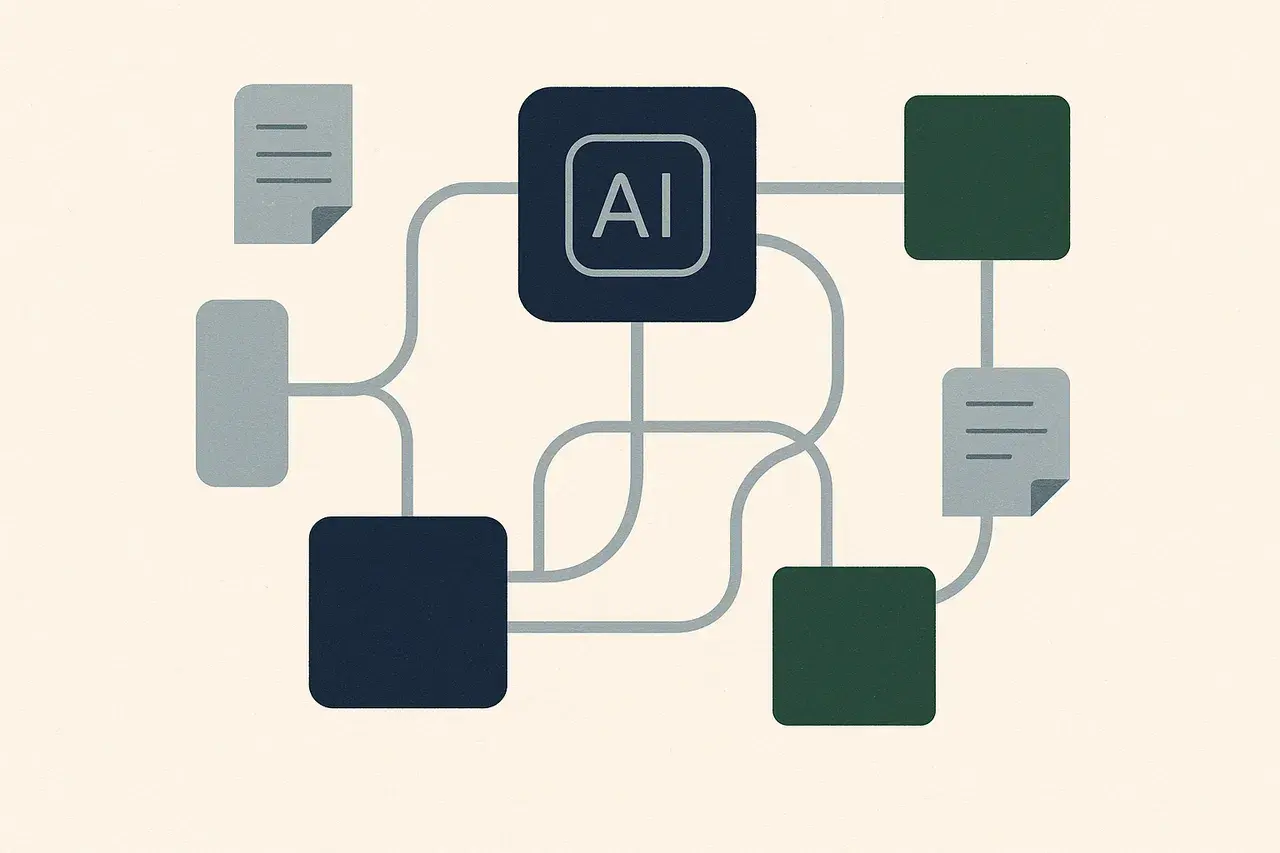
OpenAI's launch of Astra for Law, accompanied by 26 partner-built plugins from day one, marks a structural shift in how legal technology is being assembled and sold. Rather than a single monolithic platform trying to do everything, the plugin model treats a capable AI reasoning engine as a foundation and invites specialist vendors to extend it. For legal teams evaluating AI tools for contract lifecycle management, this development deserves careful attention, not excitement for its own sake, but because it changes the procurement calculus in ways that are likely to persist.
The core idea is straightforward. A general-purpose legal AI model gains domain depth through plugins built by vendors who already understand specific practice areas, jurisdictions, or workflow steps. Lawyers get a unified interface; specialist capability sits underneath. The analogy to operating systems and app stores is imperfect but instructive.
Where Legal AI Plugins Fit Inside a CLM Workflow
Contract lifecycle management spans a long chain: intake, drafting, negotiation, review, approval, signature, storage, obligation tracking, and renewal. No single AI tool has historically excelled at every stage. Plugins, in theory, allow a legal team to bolt specialist capability onto each node of that chain without replacing their core system of record.
In practice, the value concentrates at a few high-friction points. Drafting and first-pass review remain the stages where AI generates the clearest time savings. A plugin that brings jurisdiction-specific clause libraries into a drafting session, or one that flags non-standard indemnity language against a company's pre-approved fallback positions, solves a real problem. Plugins aimed at obligation extraction and deadline monitoring address a different but equally costly failure mode: contracts that are signed and forgotten until a renewal deadline passes unnoticed.
For platforms like Adira, which reads contracts from the client's perspective and drafts in the company's own voice, the plugin ecosystem raises a practical question: does adding more AI tools to a workflow produce better contracts, or does it produce more complexity with marginal quality gains? The honest answer is that integration depth matters far more than feature count.
The Adoption Reality for In-House Legal Teams
In-house legal teams face a familiar tension. The business wants faster contract turnaround. Legal wants consistency, auditability, and control. AI legal tech plugins can serve both goals, but only if the implementation is disciplined.
The risk in a rich plugin ecosystem is tool sprawl. A team that adopts a drafting plugin, a separate review plugin, a third plugin for signature routing, and a fourth for obligation tracking may find that data does not flow cleanly between them. Each handoff becomes a potential point of inconsistency. Lawyers end up managing integrations rather than managing contracts.
According to coverage in Artificial Lawyer, the 26 plugins available at Astra for Law's launch span a broad range of functions, which suggests breadth was prioritised over depth at launch. That is a sensible go-to-market choice, but legal teams should resist the temptation to adopt broadly and integrate narrowly. A focused deployment of two or three well-integrated tools will outperform a sprawling suite that nobody fully trusts.
What Legal Teams Should Evaluate Before Adopting AI Plugins
The evaluation criteria for AI legal tech plugins are different from those for standalone software. Key questions include: does the plugin operate on your data or send it to a third-party model? How does the vendor handle privilege and confidentiality? What is the audit trail when the AI makes a recommendation that is later disputed?
Jurisdictional awareness is another non-negotiable consideration. An AI plugin built primarily on US case law and contract norms will produce outputs that look wrong to a European in-house team, and may actually be wrong in ways that create legal risk. Legal teams operating across multiple jurisdictions should press vendors on how jurisdiction-specific their underlying models and clause libraries genuinely are, as opposed to how jurisdiction-aware their marketing claims to be.
Data residency requirements under GDPR and equivalent frameworks add another layer. A plugin that routes contract data through servers in a jurisdiction your data processing agreements do not contemplate is not just a procurement headache; it is a compliance exposure.
The Honest Case for a Considered Approach
The arrival of a plugin ecosystem for legal AI is a net positive for the profession. Competition between specialist vendors will drive quality up and price down. Lawyers who engage seriously with these tools, rather than waiting for a perfect solution, will build institutional knowledge that compounds over time.
But the plugin model also creates a new category of vendor risk. A plugin that a legal team has woven into its daily workflow can become a single point of failure if the vendor folds, gets acquired, or changes its pricing model. The same due diligence that applies to any mission-critical software supplier applies here, perhaps more so, because the outputs of these tools can end up in signed contracts.
The right posture is selective adoption, rigorous integration testing, and a clear governance policy for when AI output is accepted without further review versus when a qualified lawyer must check the work. The plugin era makes legal AI more powerful. Governance is what makes it safe.
Frequently asked questions
- What are AI legal tech plugins and how do they work?
- AI legal tech plugins are specialist software modules that connect to a core legal AI platform and extend its capability into specific areas such as contract review, clause drafting, or obligation tracking. They allow law firms and in-house teams to add targeted functionality without replacing their existing systems. The quality of the integration between the plugin and the underlying platform determines how useful the combination is in practice.
- How do AI plugins fit into contract lifecycle management?
- AI plugins can be deployed at specific stages of the contract lifecycle, including drafting, negotiation, review, approval, and obligation monitoring. The most immediate value tends to come from plugins that automate first-pass review or that surface non-standard clauses against a company's approved fallback positions. The risk is fragmentation: if plugins do not share data cleanly, the overall workflow can become slower rather than faster.
- Can AI legal tools be trusted with confidential contracts?
- Legal AI tools can be used safely with confidential contracts, but only if the vendor's data handling practices are properly reviewed. Legal teams should confirm where contract data is processed, whether it is used to train third-party models, and how the tool supports legal privilege. Data residency requirements under GDPR and similar frameworks must also be checked before deployment.
- What should in-house legal teams look for when choosing AI contract tools?
- In-house legal teams should prioritise jurisdictional accuracy, integration with existing CLM systems, clear audit trails, and transparent data handling policies. Feature breadth is less important than reliable performance on the specific tasks the team needs to automate. Starting with a small, well-defined use case and expanding only once the tool has proven itself is a more sustainable approach than wide adoption at launch.
- Is OpenAI Astra for Law available for enterprise legal teams?
- OpenAI launched Astra for Law as an AI reasoning platform for the legal sector, with 26 partner-built plugins available at launch covering a range of legal workflow functions. Enterprise availability, pricing, and compliance certifications should be confirmed directly with OpenAI and the relevant plugin vendors, as enterprise terms often differ from general access. Legal teams with strict data residency or privilege requirements should conduct due diligence before deployment.
See how Adira drafts in your voice and reads contracts from your side.
Explore the showroomWorking through a contract like this? Weave is Adira’s free tool to read, mark up, and connect any contract in your browser — no account needed.
Try Weave — freeRelated reading

AI ROI in Legal: What the Latest Legaltech Momentum Means for Contract Lifecycle Management
30 August 2026

Digital Twins for Lawyers: What the Twin1 Launch Means for AI Contract Lifecycle Management
21 August 2026
Conversational AI for Legal Teams: What Relativity's claiR Tells Us About the Next Phase of Contract Intelligence
13 August 2026