global legal
South Korea Abortion Pill Approval 2027: What GCs and Pharma Counsel Must Know Now
The Regulatory Background Every GC Should Understand
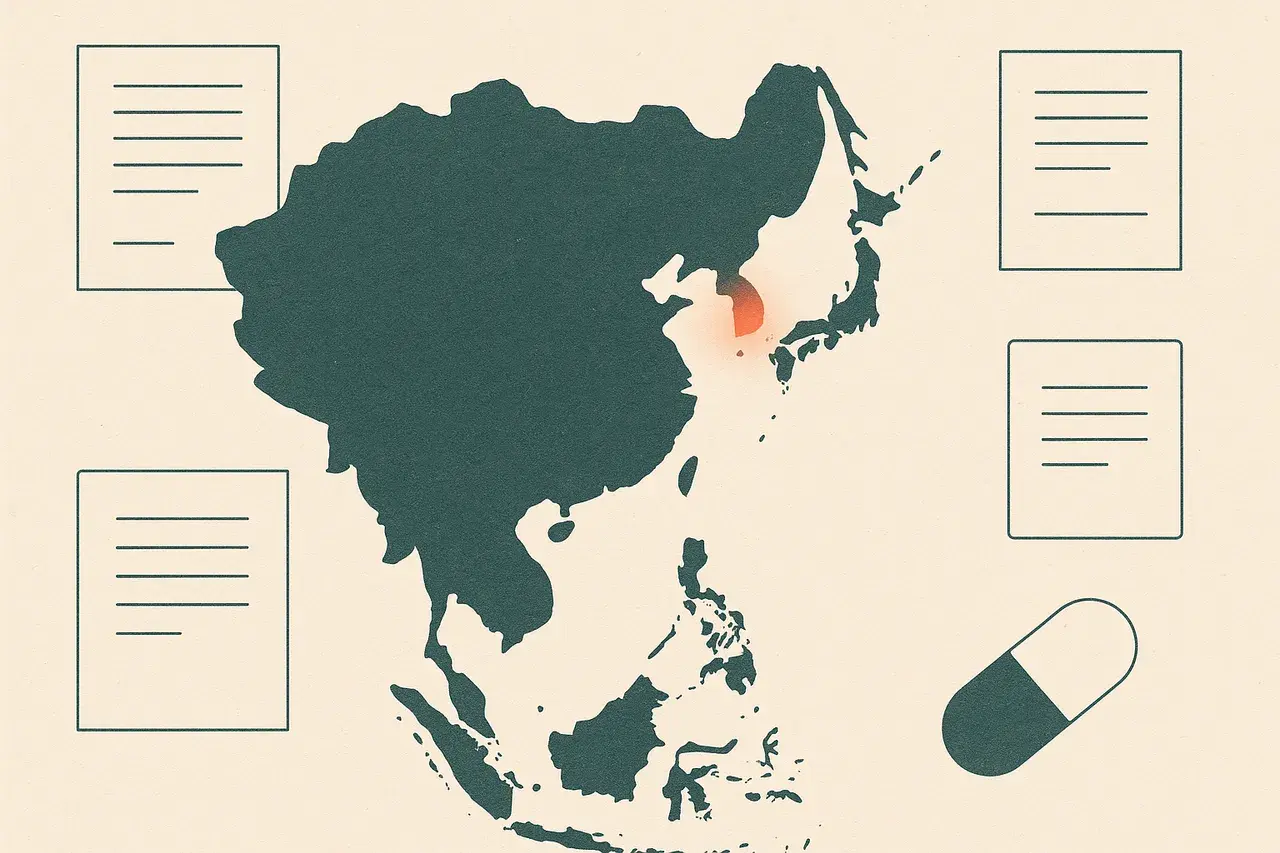
South Korea's path to approving an abortion pill has been unusually protracted by international standards. The Constitutional Court of Korea ruled in 2019 that the country's criminal prohibition on abortion was unconstitutional, creating an immediate legal vacuum. Parliament failed to fill that vacuum with fresh legislation, leaving termination services in a grey zone where the criminal ban was gone but no regulated clinical pathway existed. Seven years after that landmark ruling, the Ministry of Food and Drug Safety has now stated its intent to approve the country's first abortion pill by the first quarter of 2027. The announcement signals the end of that vacuum, but it also opens a defined window of regulatory and commercial activity that counsel across the pharma, healthcare, and distribution sectors cannot afford to ignore.
What the Approval Process Involves and Who It Binds
South Korea's drug approval framework sits under the Ministry of Food and Drug Safety, which conducts efficacy and safety reviews broadly comparable to those of the European Medicines Agency or the US Food and Drug Administration, though with its own procedural requirements. Any manufacturer seeking approval for a mifepristone or misoprostol-based product for the Korean market will need to submit a full new drug application under Korean pharmaceutical law, including local clinical data or bridging studies where global trial data is relied upon. Importers and domestic distributors are bound by the same framework: no product can enter the supply chain without a valid marketing authorisation.
The ruling does not automatically legalise all forms of abortion services or all gestational windows. The specific indications, approved gestational limits, prescribing restrictions, and dispensing rules will all be set out in the marketing authorisation and any accompanying ministerial guidance. Counsel advising clients on market entry should build contingency clauses into heads of terms now, rather than waiting for the final approval text.
Contract Changes Forced by the Regulatory Shift
For pharma companies with existing Korean distribution or licensing agreements, the 2027 timeline forces a direct review of several standard provisions. First, regulatory milestone clauses: many existing agreements define commercialisation rights by reference to approvals that were unthinkable under the old criminal regime. Those definitions may need updating to capture new product categories. Second, exclusivity and territory provisions: if a Korean distributor holds broad reproductive-health exclusivity, the scope of that exclusivity now potentially includes products that did not exist in the licensed market when the contract was signed. Third, compliance warranties: any representation that a product's sale and distribution comply with all applicable Korean law will need to be reviewed against the new regulatory framework as it crystallises, because the standards will change between signing and the 2027 rollout.
For international players already distributing mifepristone or misoprostol in other markets, the question of whether existing supply agreements can be extended to cover Korea is a separate legal analysis. Korean regulatory approval is jurisdiction-specific; an EU marketing authorisation carries no automatic weight with the Ministry of Food and Drug Safety.
The Cross-Jurisdictional Picture for Regional Counsel
South Korea's move matters beyond Seoul. It reinforces a broader Asia-Pacific trend in which jurisdictions that previously imposed criminal or near-total bans on abortion are shifting, through courts or legislatures, toward regulated access frameworks. Thailand decriminalised abortion in 2021. Japan approved an oral abortion pill in 2023 after decades of restriction. Each jurisdiction has created its own distinct regulatory path, and counsel managing regional pharma portfolios must treat them individually rather than assuming that approval in one market eases the path in another.
Global GCs should also note that the South Korean development has supply chain implications. Manufacturers planning a 2027 Korean launch will be competing for manufacturing capacity and regulatory bandwidth at roughly the same time as other Asia-Pacific rollouts mature. Building that timeline into supply agreements and force majeure carve-outs is practical advice, not speculation.
Practical Steps for Legal and Compliance Teams
The period between now and Q1 2027 is a preparation window, not a waiting room. Legal teams should take several concrete steps. Audit existing Korean distribution, licensing, and co-promotion agreements for clauses that will be affected by the new approval category. Engage Korean regulatory counsel to monitor the Ministry of Food and Drug Safety's consultation process: draft guidance documents typically circulate before a final approval decision, and early engagement can shape labelling and dispensing conditions that then flow through to commercial contracts. Review employment and HR policies for Korean operations in light of expanded reproductive healthcare access, since several jurisdictions that have legalised abortion services have seen follow-on obligations around employer-provided healthcare benefits. Finally, map the data privacy implications: Korean personal data law is stringent, and reproductive health data processed through any digital prescribing or dispensing platform will attract heightened regulatory scrutiny.
The Adira Perspective on Jurisdiction-Specific Drafting
The South Korea abortion pill approval story illustrates a pattern that recurs across global regulatory practice: a single court ruling creates a multi-year lag before a workable commercial and regulatory framework emerges, and contracts signed during that lag carry embedded legal risk that only surfaces when the framework finally arrives. Drafting contracts that are genuinely jurisdiction-aware, rather than relying on generic governing-law boilerplate, is the difference between a smooth market entry and an expensive renegotiation. Adira's platform reads contracts from the perspective of the jurisdiction in which they operate, flags provisions that regulatory change renders ambiguous, and drafts in the voice of the company it serves. As South Korea moves toward its 2027 milestone, that kind of jurisdiction-specific intelligence is precisely what regional and global counsel need.
Frequently asked questions
- Is abortion legal in South Korea in 2025?
- Abortion is no longer a criminal offence in South Korea following the Constitutional Court's 2019 ruling that struck down the criminal ban. However, a comprehensive legislative framework has not been enacted, leaving access regulated through existing medical practice rules rather than a dedicated abortion law. The Ministry of Food and Drug Safety aims to approve the first abortion pill by Q1 2027, which will provide a clearer clinical and regulatory pathway.
- When will abortion pills be available in South Korea?
- The Ministry of Food and Drug Safety has targeted the first quarter of 2027 for approval of South Korea's first abortion pill. Actual commercial availability will depend on the completion of the marketing authorisation process, distribution approvals, and any prescribing restrictions set out in ministerial guidance issued alongside the approval.
- What does South Korea's abortion pill approval mean for pharma contracts?
- Pharma companies with existing Korean distribution or licensing agreements will need to review regulatory milestone clauses, exclusivity definitions, and compliance warranties in light of the new product category. Contracts signed before the approval framework existed may not capture these products accurately, creating ambiguity around commercialisation rights and territory scope.
- How does South Korea's drug approval process work for abortion pills?
- The Ministry of Food and Drug Safety oversees drug approvals in South Korea through a new drug application process that requires efficacy and safety data, including local clinical evidence or bridging studies. A valid marketing authorisation must be obtained before any product can be imported, distributed, or sold. The process is distinct from approvals granted by the EMA, FDA, or other regulators.
- Which countries in Asia have approved abortion pills?
- Japan approved an oral abortion pill in 2023, making it one of the most recent significant approvals in the region. Thailand decriminalised abortion in 2021 and has been expanding access to medical abortion services. South Korea is now moving toward a Q1 2027 approval, which would make it the latest major Asia-Pacific jurisdiction to establish a regulated pathway for abortion medication.
Sources
See how Adira drafts in your voice and reads contracts from your side.
Explore the showroomWorking through a contract like this? Weave is Adira’s free tool to read, mark up, and connect any contract in your browser — no account needed.
Try Weave — freeRelated reading
South Korea Abortion Pill Approval 2027: What GCs and Life-Sciences Counsel Need to Know
20 September 2026

Redistricting and the Rule of Law: What Emergency Injunction Denials Mean for Electoral Compliance Globally
9 September 2026

Hong Kong Societies Ordinance Compliance: What the 612 Fund Conviction Means for Global NGOs and Contract Counterparties
4 September 2026