legal tech
NewLaw Firms and AI Contract Tools: What Legal Teams Need to Know in 2026
The Problem With Hourly Billing Has Not Gone Away
For years, corporate legal teams have complained about the same structural problem: traditional law firms charge by the hour, incentivising volume over efficiency, and the bill arrives long after the damage is done. NewLaw and NewMod firms, which combine technology, fixed-fee pricing, and leaner delivery models, have been promising to fix this for the better part of a decade. The emergence of Merrill, a firm explicitly positioning itself in the NewMod category for litigation work, is a signal that the frustration has reached a tipping point. As Rick Merrill has noted publicly, companies are very frustrated because there has been no credible alternative at scale. That frustration is now a market.
For legal operations professionals evaluating their technology and sourcing strategies together, this development matters well beyond litigation. It points to a broader reconfiguration of how legal services and legal technology interact across the entire contract lifecycle.
What the NewMod Model Actually Means for Contracts
A NewMod firm is not simply a cheaper law firm. It is a delivery model that bundles legal expertise with process discipline and, increasingly, purpose-built software. The litigation focus of firms like Merrill is relevant to contract teams because disputes do not begin in a courtroom. They begin in a poorly drafted indemnity clause, an ambiguous termination right, or a jurisdiction provision that nobody stress-tested at signing.
Contract lifecycle management platforms that draft and review agreements upstream have a direct role in reducing the volume of work that ever reaches a litigation team, NewMod or otherwise. When an AI CLM tool reads a contract from the company's own perspective, flags non-standard risk allocation, and proposes language consistent with the company's preferred positions, it is performing genuine risk management rather than administrative filing. The cost avoided is real, even if it never appears on a legal invoice.
Where AI Contract Tools Fit in the New Legal Supply Chain
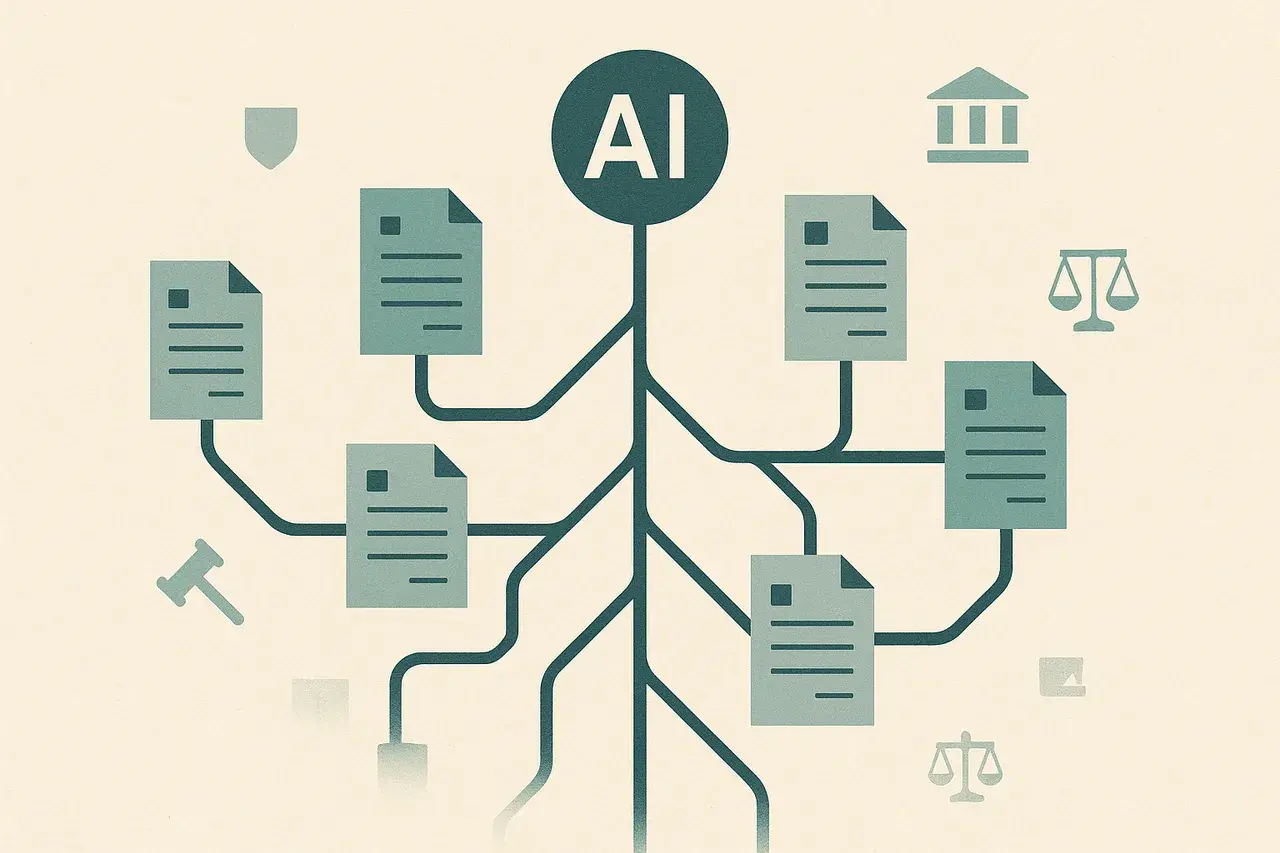
The legal technology market in 2026 is increasingly layered. At the top sit the generative AI platforms that draft, review, and negotiate contracts. Beneath them are the workflow and repository tools that manage signature, storage, and obligation tracking. Further downstream, litigation support technology handles discovery, case management, and settlement analysis. NewMod firms like Merrill are positioning themselves at that downstream layer, but the most effective corporate legal teams are recognising that upstream investment in AI contract management reduces downstream exposure.
For in-house counsel considering how to reduce outside counsel spend, the sequence matters. Deploying an AI drafting and review tool that works in the company's own voice and knows the governing law of each jurisdiction means fewer contracts go out with defects that generate disputes later. The NewMod litigation firm becomes a fallback rather than a routine cost centre.
Honest Adoption Challenges for Legal Teams
Legal technology adoption remains genuinely hard, and the enthusiasm around NewLaw models should not obscure that reality. In-house teams face three recurring obstacles.
First, there is data readiness. AI tools that learn a company's preferred contract positions need a clean, accessible body of historical agreements. Many legal departments still lack that foundation.
Second, there is internal change management. Lawyers trained in traditional firms often regard AI-assisted drafting with scepticism, particularly when the output is intended to replace rather than assist their judgement. Integrating AI contract lifecycle management tools requires investment in training and a clear explanation of what the system does and does not do.
Third, there is vendor selection complexity. The CLM market is crowded, the marketing language is often indistinguishable between platforms, and procurement cycles are long. Legal ops teams need to evaluate tools on jurisdiction-specific legal accuracy, integration with existing systems, and the quality of the drafting voice, not on feature count alone.
NewMod firms face parallel adoption challenges. Corporate clients are accustomed to established firm relationships, and switching even a portion of litigation work to a new model requires internal approval processes that move slowly.
What Global Legal Teams Should Do Now
The convergence of NewMod service delivery and AI contract tooling creates a genuine opportunity to restructure legal cost and risk at the same time. The practical steps for legal operations and general counsel are straightforward.
Start with the contract portfolio. Identify which agreement types generate the most disputes, the most negotiation friction, and the most external counsel time. These are the categories where AI drafting and review tools deliver the clearest return.
Map the handoffs. Understand where a contract leaves the CLM platform and enters the hands of an external provider, whether a traditional firm or a NewMod alternative. Tightening that handoff, ensuring that the external team can see the full contract history and the AI-generated risk flags, reduces duplication and miscommunication.
Build for jurisdiction. Global companies need CLM tools that understand the legal requirements of each market where they operate. A platform that drafts in a company's own voice but also knows the mandatory provisions under German law, Singapore law, or New York law is materially more useful than one that applies a single template globally.
The NewMod moment in litigation is real. The smarter response is to combine it with the upstream AI investment that reduces the litigation pipeline in the first place.
Frequently asked questions
- What is a NewMod law firm and how is it different from a traditional law firm?
- A NewMod firm combines legal expertise with technology and alternative pricing structures, typically fixed fees or subscription models, rather than hourly billing. The model is designed to give corporate clients predictable costs and more efficient delivery. Unlike traditional firms, NewMod providers are built around process discipline and often integrate software into their service.
- How can AI contract lifecycle management tools reduce litigation costs?
- AI CLM tools reduce litigation costs by catching risky or ambiguous contract language before a deal is signed. When an AI platform reviews contracts from the company's own legal perspective and flags non-standard provisions, it reduces the number of disputes that arise from drafting errors. Fewer defective contracts means less work reaching external litigation counsel.
- What should in-house legal teams look for when choosing a CLM platform in 2026?
- Legal teams should prioritise jurisdiction-specific legal accuracy, the quality of AI-generated drafting in the company's own voice, and integration with existing systems such as procurement and finance tools. Feature count is less important than whether the platform understands the governing laws relevant to the company's markets and can flag risk in context.
- Are alternative legal service providers suitable for contract management work?
- Alternative legal service providers are increasingly capable of handling high-volume, process-driven contract work such as standard NDA review or supplier agreement negotiation. For complex, bespoke agreements or high-stakes transactions, most companies still combine ALSP support with in-house oversight. AI CLM platforms can sit above both, providing consistency across all contract types.
- What are the biggest barriers to AI adoption in corporate legal departments?
- The three most common barriers are poor data readiness, resistance to change among legally trained staff, and difficulty selecting the right vendor in a crowded market. Legal teams that address these in sequence, starting with organising their contract data, then building internal buy-in, then running a structured vendor evaluation, tend to achieve faster and more durable adoption.
See how Adira drafts in your voice and reads contracts from your side.
Explore the showroomWorking through a contract like this? Weave is Adira’s free tool to read, mark up, and connect any contract in your browser — no account needed.
Try Weave — free