legaltech
AI Contract Review Tools in 2025: What Legal Teams Need to Know Before Adopting
The AI Contract Tool Landscape Is Getting Crowded
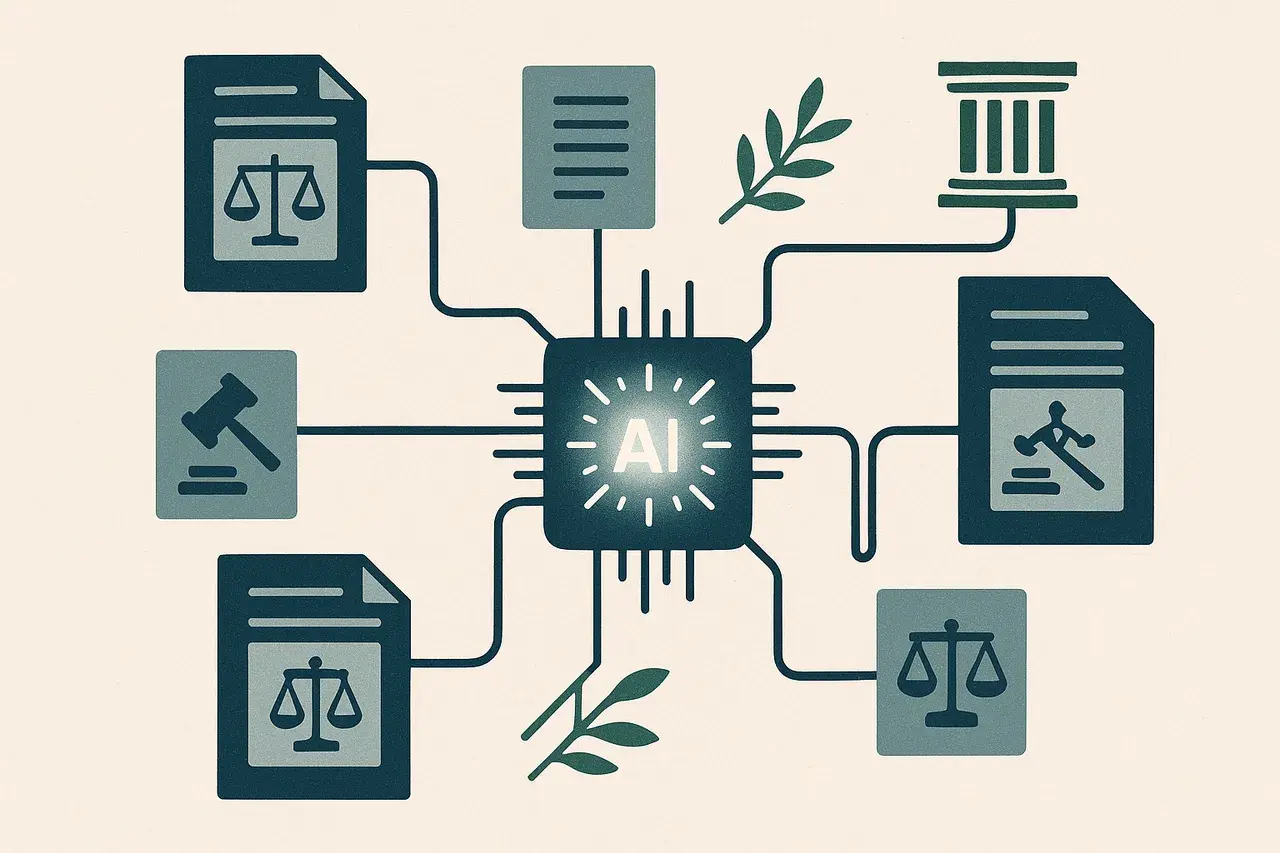
AI contract review tools are no longer a niche experiment. Conferences such as Legal Innovators New York are devoting significant programme time to platforms including Spellbook and Vera, a signal that the market has moved past proof-of-concept and into serious procurement conversations. For in-house legal teams and law firms evaluating their options, the abundance of choice is itself the challenge. Knowing what each category of tool actually does, and where it genuinely fits in a contract lifecycle management workflow, matters more than ever.
The broad market now splits into roughly three layers: drafting assistants that generate first-draft language, review and redline tools that read a counterparty's paper and flag risk, and full contract lifecycle management platforms that connect drafting, negotiation, execution, and post-signature obligation tracking. Many vendors claim to do all three. Few do all three well.
What Spellbook, Vera and Their Peers Actually Do
Spellbook positions itself primarily as an AI drafting and review assistant that operates inside Microsoft Word, making it accessible to lawyers who want AI assistance without changing their existing environment. Vera, by contrast, focuses on contract intelligence and risk scoring, surfacing issues across large volumes of agreements rather than helping draft a single document. These are meaningfully different value propositions, and conflating them leads legal ops teams to buy the wrong tool for their most pressing problem.
The honest framing is this: drafting assistants accelerate the creation of new agreements; review and analysis tools protect a company when it receives contracts written by the other side. A legal team that mostly sends its own paper needs different AI support than one that spends its days reviewing vendor or customer paper. The CLM workflow has multiple stages, and the best AI legal technology addresses each stage with the appropriate capability rather than applying one model uniformly.
Where AI Contract Tools Fit in the CLM Workflow
Contract lifecycle management covers at least six distinct phases: intake and instruction, drafting, negotiation and redlining, approval, execution, and post-signature management. Current AI contract review tools tend to be strong at phases two and three, moderate at phase six when obligations need extracting from signed agreements, and relatively weak at intake and approval routing, which still depend heavily on human judgement and organisational process design.
The implication for legal teams is practical. Deploying an AI drafting tool without fixing the intake process upstream, or without linking executed contracts to an obligation tracker downstream, produces a faster middle with a broken beginning and end. CLM workflow automation only delivers its promised return on investment when the entire chain is considered, not just the most visible or exciting segment.
The Honest Adoption Challenges for Legal Teams
Legal AI adoption faces three structural headwinds that no conference keynote fully resolves. First, data quality: AI contract analysis tools are only as good as the contract data they train on or review. Organisations with inconsistent naming conventions, contracts stored across email, SharePoint folders, and legacy systems, and no standard playbook will find that AI surfaces noise alongside insight.
Second, jurisdictional accuracy: most AI contract drafting tools were built on predominantly US or UK legal corpora. A legal team operating across Southeast Asia, the Middle East, or continental Europe needs to verify that the tool understands local mandatory provisions, such as statutory notice periods or governing law requirements, before it touches live transactions. An AI that confidently drafts a clause that is unenforceable under local law creates liability rather than reducing it.
Third, change management: lawyers are trained to own their reasoning. Introducing a tool that generates or critiques contract language requires deliberate effort to build trust, establish review protocols, and define clearly which outputs require a qualified lawyer's sign-off. Legal ops AI tools succeed or fail at the human layer, not the technology layer.
How to Evaluate AI Contract Review Tools Against Your CLM Needs
A structured evaluation should test five things. Does the tool read contracts from your side, applying your preferred positions and playbook, rather than offering generic market-standard commentary? Does it know the law of the jurisdictions your business actually operates in? Does it integrate with your existing document environment without requiring lawyers to leave the tools they use daily? Does it connect to the rest of your CLM workflow so that insights from negotiation inform post-signature tracking? And does the vendor offer transparent explanations of how the AI reaches its conclusions, making it auditable when a lawyer needs to justify a position?
Platforms that answer yes to all five are rare. Most specialise. The evaluation process should therefore start with an honest audit of where your contract lifecycle management is most broken today, and select the tool that fixes that specific problem rather than the one with the most impressive product demonstration.
What the Legal Innovators Conference Signal Means for Legal Ops
The growing profile of AI contract tools at events such as Legal Innovators New York reflects a market that is consolidating around a smaller number of serious, well-funded platforms after an early period of fragmentation. For legal ops and procurement teams, this is broadly good news: vendors are being forced to demonstrate measurable outcomes rather than simply showcasing capabilities.
The next twelve months will likely see tighter integration between AI drafting tools, CLM platforms, and enterprise systems such as Salesforce and SAP, as well as growing regulatory scrutiny of automated contract analysis in high-stakes sectors. Legal teams that build a clear internal view of their CLM workflow today, understand which stages need AI support, and invest in the governance frameworks to deploy these tools responsibly will be better placed than those waiting for the market to settle before engaging. The market will not settle. The right approach is structured, incremental, and grounded in how your legal team actually works.
Frequently asked questions
- What is the best AI tool for contract review in 2025?
- The best AI contract review tool depends on your specific workflow. Drafting-focused tools such as Spellbook suit teams that create their own paper, while contract intelligence platforms such as Vera are better for analysing large volumes of incoming agreements. The most effective choice aligns with the stage of your contract lifecycle management process that needs the most improvement.
- Can AI replace contract lawyers?
- AI contract tools can accelerate drafting, flag risk, and extract obligations from signed agreements, but they cannot replace a qualified lawyer's judgement on novel issues, jurisdictional nuance, or negotiation strategy. The appropriate model is AI handling high-volume, repeatable tasks while lawyers focus on decisions that require legal reasoning and accountability.
- How does AI contract review work?
- AI contract review typically uses large language models trained on legal text to read a contract, identify clauses against a predefined playbook or risk framework, and suggest redlines or flag issues for a lawyer to review. The quality of the output depends on how well the model understands the relevant jurisdiction and how accurately the playbook reflects the company's actual legal positions.
- What should legal teams look for when choosing a CLM platform with AI?
- Legal teams should prioritise jurisdictional accuracy, integration with existing document tools, the ability to apply company-specific playbooks rather than generic standards, and clear audit trails that show how the AI reached its conclusions. A platform that covers the full contract lifecycle from drafting through to post-signature obligation tracking offers more long-term value than a point solution.
- What are the biggest challenges in legal AI adoption?
- The three main barriers are data quality, jurisdictional accuracy, and change management. Organisations need clean, organised contract data for AI to produce reliable insights, the tool must understand local law in every operating jurisdiction, and legal teams require clear protocols for when AI output must be reviewed by a qualified lawyer before being relied upon.
See how Adira drafts in your voice and reads contracts from your side.
Explore the showroomRelated reading
Harvey, Tenet and the Legal AI Contract Tools Reshaping CLM in 2025
22 August 2026

Digital Twins for Lawyers: What the Twin1 Launch Means for AI Contract Lifecycle Management
21 August 2026

AI Legal Translation in Contract Lifecycle Management: What the Harvey-DeepL Integration Means for Global Legal Teams
20 August 2026