brand legal disputes
Trademark Infringement in Footwear: What the New Balance vs Decathlon Dispute Teaches Contract Drafters
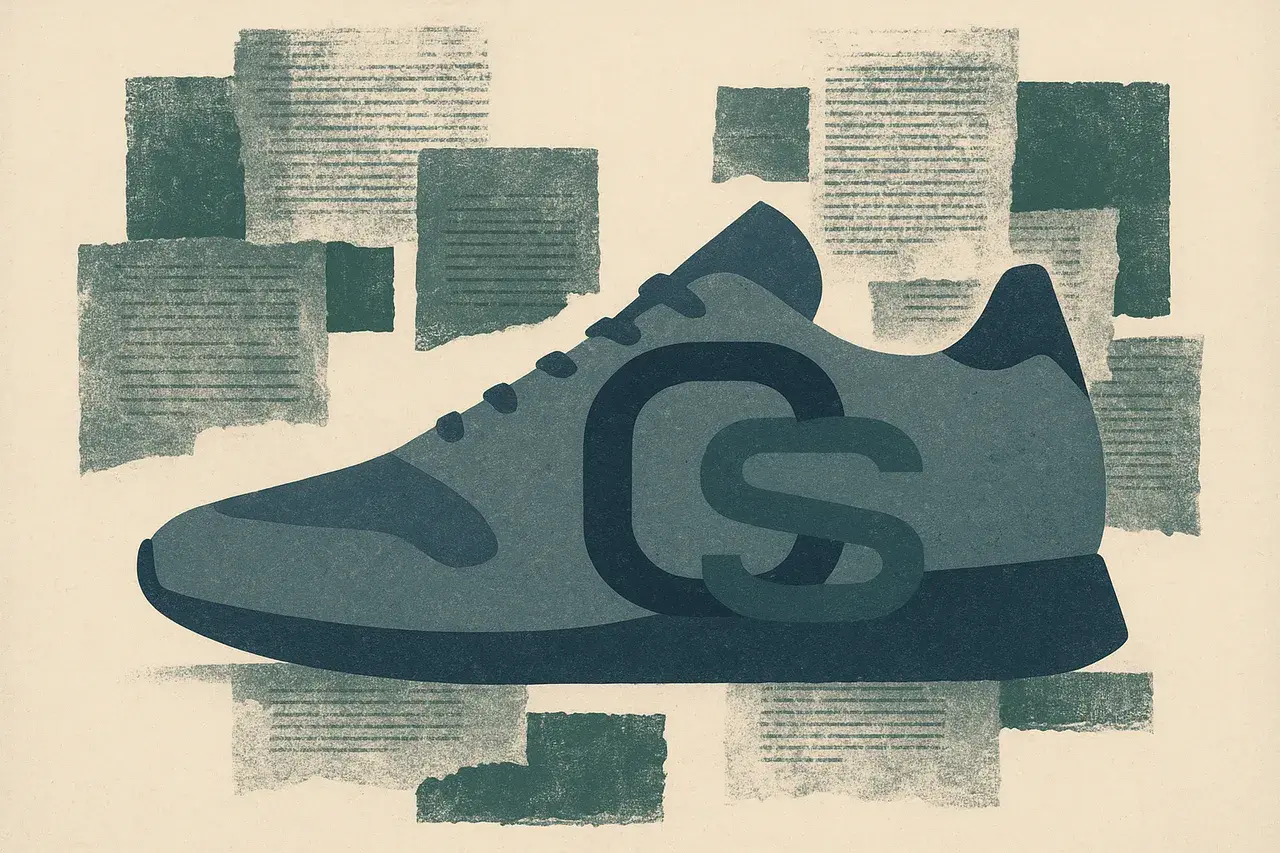
The Core Dispute: A Logo Too Close for Comfort
New Balance has filed a trademark infringement claim against the sporting-goods giant Decathlon, alleging that a shoe logo used on Decathlon products is confusingly similar to New Balance's well-known 'N' mark. The case has not yet been decided, but the legal theory is straightforward: two marks placed on competing footwear, aimed at the same consumers, in the same retail channels, create a likelihood of confusion, which is the central test in trademark law across most jurisdictions.
What makes this dispute commercially instructive is not just the alleged copying. It is the chain of contractual relationships that typically sits behind any private-label or own-brand product range. Decathlon designs, sources, and sells its own branded goods through a vast global supply chain. When a brand of that scale faces a trademark infringement claim, the question for lawyers is not only 'did the mark infringe?' but 'which contract should have caught this, and why did it not?'
Which Clause Failed: Trademark Clearance and IP Warranties
In most product development cycles, the point of failure in trademark disputes is the absence of a rigorous pre-launch clearance obligation written into the contract. A typical product development or private-label supply agreement will contain a general intellectual property warranty, something along the lines of confirming that the supplied goods do not infringe third-party rights. That language sounds adequate. In practice it is often insufficient for three reasons.
First, it is retrospective. It kicks in only after infringement has occurred and a claim has been made. Second, it rarely obliges the designer or developer to conduct and document a formal clearance search before the design is approved. Third, the indemnity tied to it frequently caps liability at the contract value, which bears no relationship to the cost of a trademark dispute with a brand owner of New Balance's size and litigating appetite.
A footwear brand or retailer that creates its own logo without a documented clearance search is, in effect, self-insuring against a risk it has not properly measured.
What a Tighter Contract Would Have Said
A well-drafted product design and supply agreement in a brand-sensitive sector should contain at least three layers of trademark protection.
A pre-approval clearance obligation. The agreement should require the designing party to commission a trademark clearance search, covering the relevant classes and key jurisdictions, before any logo or brand element is submitted for approval. The search results should be disclosed to the approving party and retained as a contractual deliverable.
A representations and warranties clause with teeth. The IP warranty should state specifically that the design does not, to the best of the warrantor's knowledge after conducting reasonable searches, infringe any registered or unregistered trademark in the territories of sale. The phrase 'after conducting reasonable searches' is load-bearing. It ties the warranty to a standard of diligence rather than leaving it as a bare assertion.
An uncapped or separately capped IP indemnity. General liability caps should not apply to third-party intellectual property claims. IP indemnities in brand-sensitive agreements should be carved out from the general liability cap, or given their own higher sublimit, because the downside risk (injunctions, account of profits, reputational damage) is qualitatively different from ordinary commercial loss.
As one IP litigator has noted in a related context, Reuters reports that the New Balance case targets logos applied to footwear sold across multiple markets, which amplifies the jurisdictional complexity and the potential damages exposure significantly.
Likelihood of Confusion: The Legal Standard Designers Must Understand
The legal test for trademark infringement in most common law and EU-adjacent systems centres on whether an average consumer would be confused as to the origin of the goods. Courts assess factors including visual and phonetic similarity of the marks, the relatedness of the goods, the sophistication of the consumer, and the strength of the senior mark.
For footwear in particular, logo placement matters enormously. A lateral stripe or letter mark on the side of a trainer sits in exactly the position where consumers are trained to read brand identity. New Balance's 'N' mark is precisely that kind of positional mark. Any designer creating a new logo for athletic footwear who does not specifically search for similar positional marks in Class 25 is taking an unquantified risk.
Contract language can reinforce this awareness. A design brief incorporated by reference into a supply agreement can specify that logo placement must avoid registered positional marks in the relevant classes and markets. That is a practical, enforceable standard, not just a general aspiration.
How Adira Helps Teams Catch This Before It Becomes a Claim
Adira's contract intelligence layer reads agreements from your side, which means it can flag when an IP warranty clause lacks a clearance obligation, when an indemnity is subject to a general cap that would be inadequate for a trademark dispute, or when a product development agreement is silent on jurisdictional scope for IP representations.
When drafting a new supply or design agreement, Adira generates clause language calibrated to the jurisdiction and sector, including footwear and apparel, where trademark risk concentrates in specific product elements. Teams reviewing an existing contract library can use Adira to surface gaps across a portfolio of agreements before a dispute makes those gaps expensive.
Practical Steps for Brand and Procurement Teams Right Now
If your organisation sources or develops own-brand products, three actions reduce trademark infringement exposure without waiting for litigation to reveal the problem.
First, audit your existing product development and supply agreements to confirm whether the IP warranty is tied to a clearance obligation. If it is not, negotiate an amendment or include the obligation in the next renewal.
Second, establish a documented clearance protocol for any new logo, label, or brand element. The protocol should specify search scope, the classes covered, the markets covered, and who signs off on the results. Documentation is your defence if a claim is made.
Third, review your liability caps. If your general limitation clause applies to IP indemnities without any carve-out, you are transferring far less risk than you assume. A supplier facing an uncapped claim from a major brand will look hard at every contractual mechanism to limit its exposure, and so should you.
The New Balance and Decathlon dispute is a reminder that trademark risk in product design is not an abstract legal concern. It is a contract drafting problem, and it has a contract drafting solution.
Frequently asked questions
- What is the New Balance lawsuit against Decathlon about?
- New Balance has sued Decathlon alleging that a logo used on Decathlon footwear is confusingly similar to New Balance's well-known 'N' trademark. The claim is based on trademark infringement, specifically the likelihood that consumers would confuse the origin of the products. The case has broad implications for how retailers design and clear own-brand logos.
- How do courts decide if a shoe logo infringes a trademark?
- Courts apply a likelihood of confusion test, assessing factors such as visual similarity between the marks, the relatedness of the goods, the channels of distribution, and the strength of the original mark. In footwear, positional marks on the side of the shoe receive particular scrutiny because consumers use that position to identify brand origin. A confusingly similar mark in the same position on competing goods is a strong basis for an infringement claim.
- What contract clause protects a retailer against trademark infringement claims?
- The key protections are a pre-approval trademark clearance obligation, an IP warranty tied to a standard of reasonable diligence, and an IP indemnity that is carved out from the general liability cap. The clearance obligation is often missing from standard supply agreements and is the most important preventive tool. Without it, the warranty is a bare assertion rather than a risk-managed commitment.
- Can a supplier be required to conduct a trademark clearance search before delivering a design?
- Yes, and this is standard practice in well-drafted product development agreements in brand-sensitive sectors. The agreement should specify the scope of the search, the classes and jurisdictions covered, and require the results to be disclosed as a contractual deliverable before design approval. Tying the IP warranty to completion of this search gives the obligation legal weight.
- What happens if my general liability cap covers IP indemnities?
- If your general liability cap applies to IP indemnities without a carve-out, you may recover far less than your actual losses in a trademark dispute. Trademark claims can result in injunctions, disgorgement of profits, and legal costs that vastly exceed typical contract values. IP indemnities should either be excluded from the general cap or given a separate, higher sublimit reflecting the actual risk.
See how Adira drafts in your voice and reads contracts from your side.
Explore the showroomWorking through a contract like this? Weave is Adira’s free tool to read, mark up, and connect any contract in your browser — no account needed.
Try Weave — freeRelated reading
Trademark Infringement in Footwear: What the New Balance vs Decathlon Lawsuit Teaches Contract and IP Teams
19 September 2026
Trademark Infringement Damages: What the Buc-ee's $850,000 Award Teaches Every Brand About Licensing Clauses
18 September 2026

Trademark Infringement Lessons from the Buc-ee's $850K Win: Which Clauses Fail and How to Draft Better
16 September 2026