brand legal disputes
Trademark Infringement Damages: What the Buc-ee's $850,000 Award Teaches Every Brand About Licensing Clauses
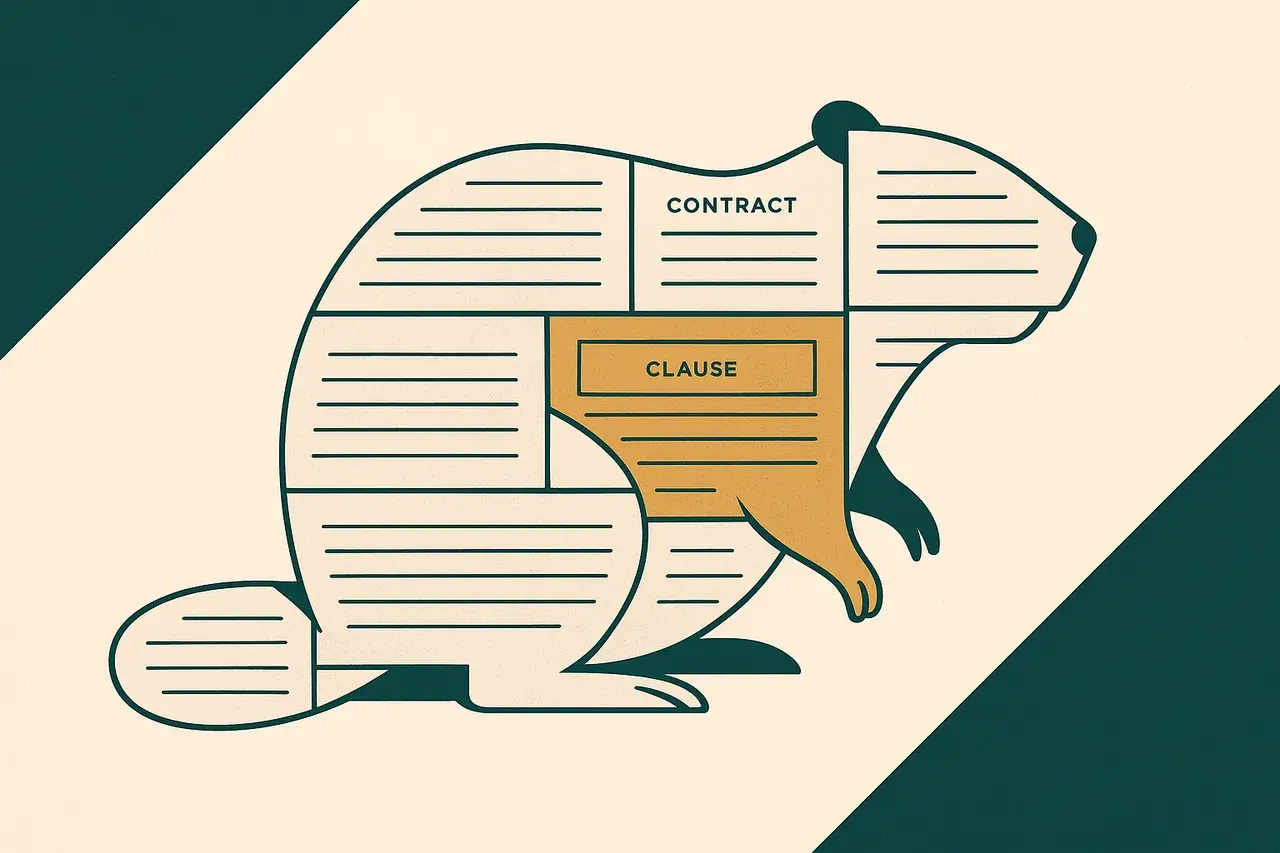
Why the Buc-ee's Verdict Matters Beyond One Retailer
Buc-ee's, the Texas-based travel-centre chain with one of the most recognisable beaver mascots in American retail, has been awarded $850,000 in a trademark infringement lawsuit. The case is a reminder that distinctive brand identity is a commercial asset that courts will protect, and that the cost of ignoring it can be substantial. For legal and commercial teams at any brand-owning company, the more instructive question is not what Buc-ee's won, but why the infringing party was exposed in the first place, and which contractual safeguards could have prevented the dispute from reaching a courtroom at all.
Which Clause Typically Fails in Trademark Infringement Disputes
The most common point of failure in brand-related litigation is not the absence of a trademark registration. Most businesses register their marks. The failure is almost always in the downstream commercial contracts: licence agreements, franchise documents, co-branding arrangements, and vendor agreements that either omit trademark-use restrictions entirely or include them in language so vague that enforcement becomes expensive and uncertain.
A typical weak clause reads something like "licensee shall use the mark in accordance with licensor's brand guidelines." That sentence is nearly useless in court. It provides no definition of permitted territory, no restriction on sub-licensing, no quality-control mechanism, and no clear statement of what constitutes a breach. When a party deviates from the intended use, the licensor is left arguing about subjective standards rather than pointing to a clear contractual obligation that was crossed.
In infringement disputes that reach the likelihood-of-confusion test, courts look at factors including the similarity of marks, the proximity of the goods or services, and evidence of actual consumer confusion. A well-drafted agreement should anticipate each of these factors and build contractual barriers against them, not leave the brand owner to reconstruct its intentions after the fact.
What a Tighter Contract Would Have Said
A contract built to withstand a trademark infringement challenge would include at least five specific provisions that are routinely absent from boilerplate agreements.
First, a precise trademark-use licence, limiting the mark to an approved form, colour, size, and context, with an explicit prohibition on modification. Second, a quality-control clause with an audit right, allowing the licensor to inspect goods, materials, or premises to confirm the mark is being used in a way that protects its distinctiveness. Without this, a licensor risks losing its mark entirely through a finding of naked licensing.
Third, a representation and warranty from the counterparty confirming it has no prior or conflicting trade mark rights, and that it will not apply to register anything confusingly similar. Fourth, an express prohibition on sub-licensing without written consent, because infringement frequently travels through sub-licensees the original licensor has never met. Fifth, a termination-for-cause clause with a short or no cure period for trademark misuse, so the licensor can act quickly when it discovers a problem rather than waiting out a 30-day or 60-day remedy window while consumer confusion deepens.
The damages provision also deserves careful attention. Parties often agree on liquidated damages for late payment or delivery failures but say nothing specific about brand-related breaches. A clause that pre-agrees that trademark misuse causes irreparable harm, and that the licensor is entitled to seek injunctive relief without posting a bond, removes a procedural obstacle that delays enforcement.
Calculating Trademark Infringement Damages: What Courts Consider
The $850,000 figure awarded in the Buc-ee's case is a useful benchmark for understanding how trademark infringement damages are calculated. Courts in the United States can award a plaintiff's actual losses, the infringer's profits attributable to the infringement, or statutory damages in cases involving counterfeiting. In some circumstances, a court may enhance damages if it finds the infringement was willful.
For commercial teams assessing risk, this means the financial exposure from an infringement claim is not capped at a fixed number. It scales with the infringer's revenue and the duration of the infringing activity. A business that uses a confusingly similar mark across a high-revenue product line for several years faces a materially different damages calculation than one that made a single isolated use. That asymmetry should inform how seriously contracting parties treat trademark-use restrictions at the drafting stage.
How AI Contract Review Reduces Trademark Exposure
One of the practical challenges in brand protection is that trademark-use obligations are scattered across many contract types. A company might have robust controls in its formal licence agreements but leave the same brand exposed in vendor contracts, marketing-services agreements, or event-sponsorship documents that nobody reviewed for IP risk.
AI-powered contract lifecycle management platforms, like Adira, are designed to read contracts from the company's own perspective and flag gaps in IP protection consistently across every document type. Rather than relying on a lawyer to catch a missing quality-control clause in a one-page vendor addendum, the platform surfaces the issue automatically, applies the company's preferred playbook, and proposes tighter language that matches the jurisdiction's legal standards. That kind of systematic coverage is difficult to achieve through manual review alone, particularly as contract volumes grow.
Three Actions to Take Before Your Next Brand Agreement Is Signed
The Buc-ee's outcome is a useful prompt for any brand owner to audit its current contract portfolio. Three immediate actions reduce exposure without requiring a full legal overhaul.
First, run a search across existing agreements for the words "brand guidelines" or "in accordance with licensor's instructions" and treat every instance as a drafting risk to be tightened. Second, add a standard IP-use schedule as an exhibit to every new commercial agreement that touches the brand, making approved and prohibited uses concrete rather than aspirational. Third, build a renewal-review trigger so that older licence agreements are reassessed against current brand strategy before they auto-renew. Marks evolve, business relationships shift, and a contract written five years ago may permit uses that are now inconsistent with how the brand is positioned.
The cost of those steps is modest. The cost of not taking them, as the Buc-ee's case illustrates, can run to six or seven figures, plus legal fees, management time, and the harder-to-quantify damage to brand equity during the period of confusion.
Frequently asked questions
- How much can you recover in a trademark infringement lawsuit?
- In the United States, a trademark owner can recover its actual damages, the infringer's profits attributable to the infringement, or statutory damages in counterfeiting cases. Courts may also enhance damages for willful infringement, which means the total award scales with the severity and duration of the infringing activity.
- What contract clause protects a trademark in a licensing agreement?
- The most important clauses are a precise trademark-use licence defining approved forms and contexts, a quality-control provision with an audit right, and a prohibition on sub-licensing without consent. Without a quality-control clause, a licensor risks a naked-licensing finding, which can invalidate the mark entirely.
- What is the likelihood of confusion test in trademark law?
- The likelihood of confusion test is the primary standard courts use to decide whether one mark infringes another. Judges weigh factors including the similarity of the marks, the proximity of the goods or services, the strength of the original mark, and evidence of actual consumer confusion.
- How do I avoid trademark infringement in a commercial contract?
- Include a representation from the counterparty that it holds no conflicting mark rights, restrict how the mark can be used with specific approved-use schedules, and add a termination right with a short or no cure period for trademark misuse. These steps give the brand owner clear contractual grounds to act quickly if a problem arises.
- What is naked licensing and why is it dangerous for trademark owners?
- Naked licensing occurs when a trademark owner allows another party to use its mark without exercising quality control over the goods or services offered under that mark. Courts have used naked licensing as grounds to cancel a trademark registration, making it one of the most serious risks in poorly drafted licence agreements.
See how Adira drafts in your voice and reads contracts from your side.
Explore the showroomWorking through a contract like this? Weave is Adira’s free tool to read, mark up, and connect any contract in your browser — no account needed.
Try Weave — freeRelated reading

Trademark Infringement Lessons from the Buc-ee's $850K Win: Which Clauses Fail and How to Draft Better
16 September 2026
Trademark Infringement Lessons from the Buc-ee's $850K Win Against a Clothing Store
15 September 2026
Trademark Infringement Lessons from the Buc-ee's $850K Lawsuit: Which Clauses Fail and How to Fix Them
13 September 2026