legal industry
Lawyer Mental Health Crisis: What the Illinois Supreme Court Study Means for Legal Contracts and Professional Risk
The Illinois Study Every Legal Operations Team Should Read
A landmark study commissioned by the Illinois Supreme Court, and investigated by ABC7 Chicago's I-Team, has confirmed what many inside the profession have long suspected: lawyers in Illinois are experiencing a mental health crisis at rates that exceed the general population. The findings cover anxiety, depression, problematic alcohol use, and burnout, and they arrive at a moment when courts, law firms, and in-house legal teams are all reckoning with unsustainable workloads. While the study is Illinois-specific, the underlying conditions, namely grinding deal cycles, constant deadline pressure, and an expectation of perpetual availability, are not remotely unique to one US state. They are structural features of legal practice everywhere.
The relevance of this study extends well beyond wellbeing policy. Lawyer mental health and contract quality are directly connected. When the people responsible for drafting, reviewing, and negotiating your agreements are operating under chronic stress, the probability of material errors rises. That is not a judgment about individual lawyers; it is basic cognitive science.
How Attorney Burnout Translates Into Contract Risk
Legal malpractice data has for years shown that missed deadlines, drafting errors, and failures to advise on key provisions cluster around periods of high workload. Burnout compounds this by eroding the precise faculties lawyers rely on most: sustained attention, working memory, and the ability to hold multiple contingent scenarios in mind simultaneously.
In contract terms, the consequences are concrete. Limitation of liability clauses drafted in haste may fail to cover the right categories of loss. Definitions that seem adequate at first glance may create ambiguity once a dispute arises. Renewal and termination notice periods, often treated as boilerplate, can be quietly misaligned with a client's commercial reality when a reviewing lawyer is cognitively depleted. None of these errors require negligence in the legal sense; they simply require a human being who is exhausted.
For in-house teams managing hundreds or thousands of contracts annually, the aggregate risk is significant. A single poorly scoped indemnity clause or an overlooked auto-renewal provision can cost more than an entire year's legal spend to unwind.
The Systemic Pressures Driving the Crisis
The Illinois Supreme Court study does not exist in isolation. The American Bar Association's own research has repeatedly flagged elevated rates of depression and anxiety among lawyers compared with other professions, and similar findings have emerged in the UK, Australia, and Canada. The profession has a structural problem, not an individual one.
Several forces are at work simultaneously. Clients expect faster turnaround at lower cost. Law firms respond by increasing associate billing targets. In-house teams are asked to do more with smaller headcounts. Technology has, until recently, done relatively little to absorb genuinely cognitive legal work, as opposed to document storage or billing administration. The result is that the human lawyer remains the bottleneck, and that bottleneck is under growing strain.
Legal operations professionals and general counsel who ignore this dynamic are, in effect, treating a systemic risk as a personal failing. That is neither accurate nor useful.
What Law Firms and In-House Teams Can Do About Contract Quality Under Pressure
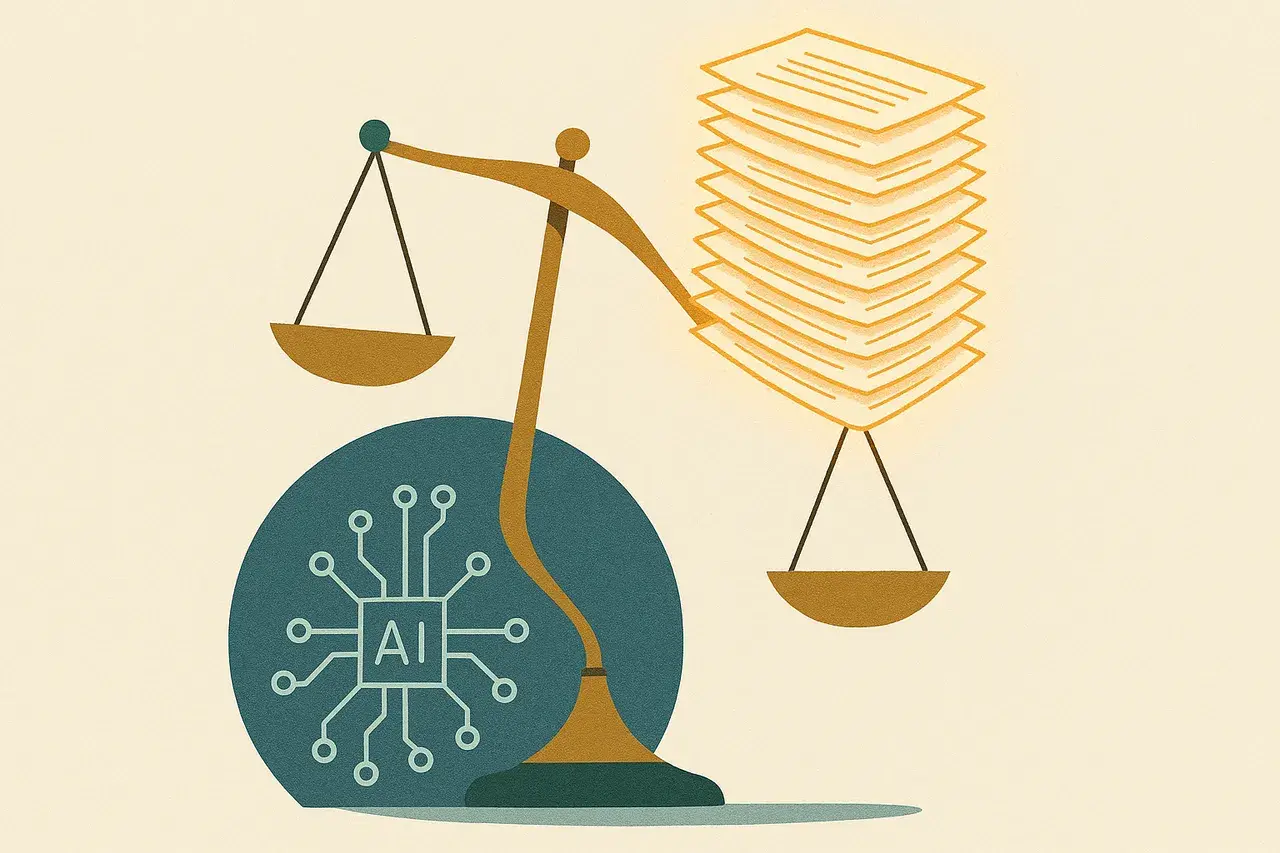
The honest answer is that wellbeing programmes, though valuable, do not address the root cause: volume. The most effective lever legal teams have for protecting contract quality while reducing cognitive load on lawyers is intelligent automation applied to the right parts of the contract lifecycle.
AI contract review tools can absorb the first-pass reading of incoming agreements, flagging non-standard clauses, missing provisions, and jurisdiction-specific risks before a lawyer ever opens the document. AI drafting assistance can generate first drafts that already reflect a company's preferred positions, so lawyers spend their time refining rather than constructing from scratch. Automated playbooks can enforce consistent clause standards without requiring a senior lawyer to check every negotiation.
This is not a replacement of legal judgment. It is a redistribution of cognitive effort so that lawyers apply their training where it is genuinely irreplaceable, namely to judgment calls, client relationships, and novel legal questions, rather than to rote extraction and reformatting tasks that software can handle reliably.
Jurisdiction, Voice, and the Practical Case for AI-Assisted Contracting
One objection to AI contract tools is that they produce generic output that does not reflect a company's commercial posture or a jurisdiction's specific legal requirements. That objection is legitimate when applied to generic large-language-model prompting. It is less persuasive when applied to purpose-built contract AI that is trained on a company's own prior agreements, understands its risk tolerance, and is calibrated to the law of the relevant jurisdiction.
An Illinois-governed supply agreement carries different implied terms and dispute resolution norms than an English-law equivalent. A technology licensing contract drafted for a regulated financial services client requires different default positions than one for a consumer goods company. Lawyers should not have to reconstruct that institutional knowledge from scratch on every matter, and under current conditions, many are doing exactly that because the knowledge lives in their heads rather than in a system.
The Illinois Supreme Court study is, among other things, a document about institutional memory being stored in exhausted human beings. The contract risk that flows from that arrangement is manageable. But managing it requires treating the problem as an operational design question, not a personal resilience question.
A Moment for Legal Ops to Lead
General counsel and legal operations leaders are well placed to respond constructively to the findings emerging from Illinois. The business case for investing in contract automation has always been grounded in speed and cost. It now has a third pillar: protecting the professional health and judgment of the lawyers who remain responsible for high-stakes decisions.
Organisations that reduce routine cognitive burden on their legal teams are not just buying efficiency. They are investing in the reliability of the decisions their lawyers make on the matters that cannot be automated. Given what the Illinois study reveals about the state of the profession, that is an investment with unusually clear returns.
Frequently asked questions
- What did the Illinois Supreme Court study find about lawyer mental health?
- The study, commissioned by the Illinois Supreme Court, found that Illinois lawyers experience anxiety, depression, burnout, and problematic alcohol use at rates that exceed the general population. The findings reflect a systemic crisis driven by workload and structural pressures rather than individual failings.
- Does lawyer burnout affect contract quality?
- Yes. Chronic stress and cognitive depletion reduce the sustained attention and working memory that careful contract review requires. Research on legal malpractice consistently shows that drafting errors and missed provisions cluster around periods of high workload and fatigue.
- How can AI help reduce lawyer burnout while protecting contract quality?
- AI contract tools can handle first-pass review, flag non-standard clauses, and generate compliant first drafts, freeing lawyers to focus on judgment-intensive work. This redistribution of cognitive effort reduces routine workload without removing lawyer oversight from decisions that genuinely require it.
- Is the lawyer mental health crisis only a US problem?
- No. Similar findings have emerged from studies in the UK, Australia, and Canada. The underlying causes, including high billing targets, client pressure for faster turnaround, and lean in-house teams, are features of legal practice globally rather than any single jurisdiction.
- What contract errors are most common when lawyers are overworked?
- The most common errors include poorly scoped limitation of liability clauses, ambiguous definitions, misaligned renewal and termination notice periods, and missing jurisdiction-specific provisions. These mistakes often do not stem from lack of knowledge but from insufficient attention under time and workload pressure.
See how Adira drafts in your voice and reads contracts from your side.
Explore the showroomWorking through a contract like this? Weave is Adira’s free tool to read, mark up, and connect any contract in your browser — no account needed.
Try Weave — free