legaltech
Harvey AI and LexisNexis Join Forces: What It Means for AI Contract Review and Legal Teams
The Harvey and LexisNexis Tie-Up Explained
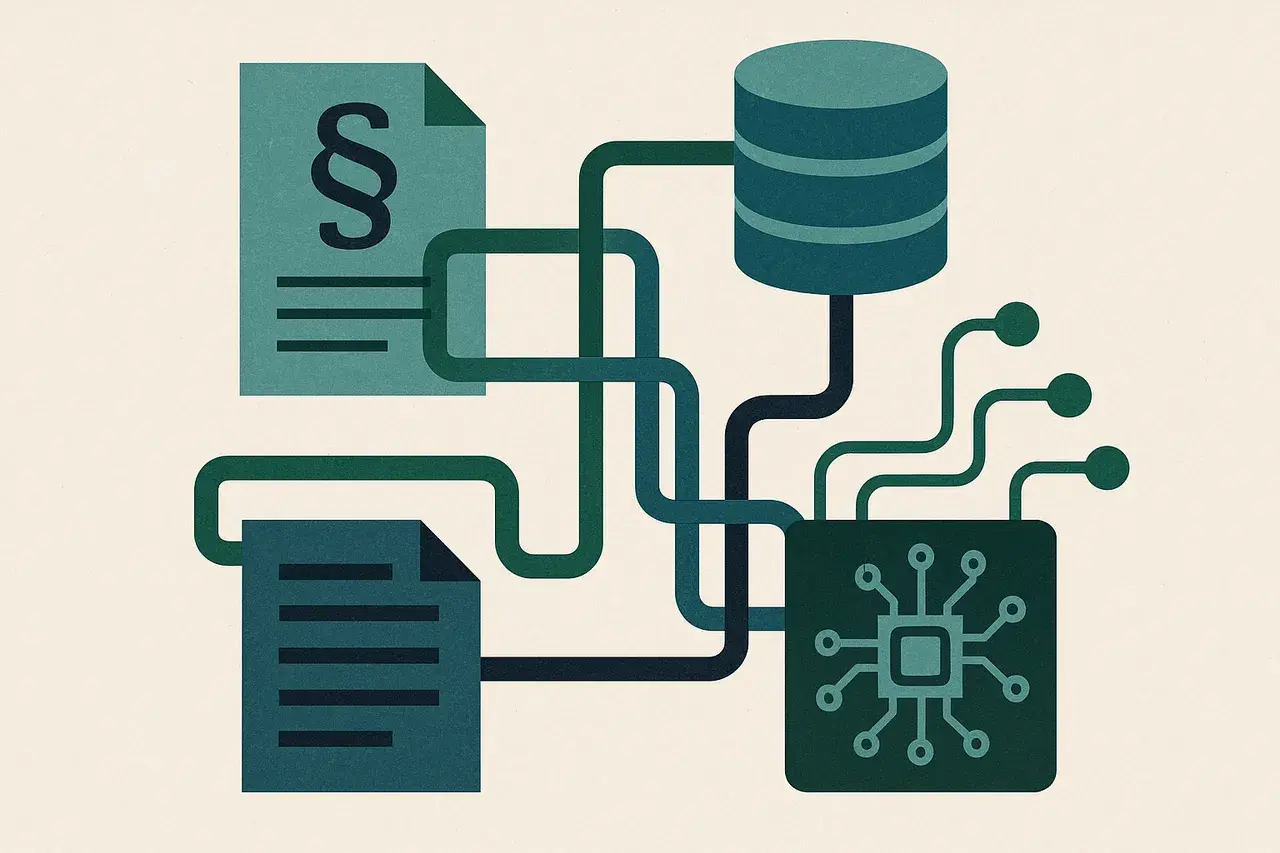
The legal AI sector has produced another significant integration worth examining carefully. Harvey, the large-language-model platform built specifically for legal work, has announced a jointly developed capability with LexisNexis that connects Harvey's contract and document analysis with LexisNexis's authoritative legal research database. The practical effect is that a lawyer using Harvey can now surface relevant case law and statutory context without leaving their drafting or review workflow. This is not a simple API hand-off. The two companies describe it as a capability built together, meaning the retrieval and reasoning layers are designed to work in concert rather than bolt onto each other.
For legal teams evaluating AI contract review tools, this matters because one of the persistent criticisms of pure generative AI in legal work has been the hallucination risk when the model reaches beyond its training data for legal authority. Grounding Harvey's outputs in a curated, regularly updated legal database addresses that concern directly, though it does not eliminate it entirely.
Where This Fits Inside Contract Lifecycle Management
AI contract lifecycle management covers a wide spectrum, from initial drafting and negotiation through execution, obligation tracking and renewal. The Harvey and LexisNexis integration is most immediately relevant to the review and negotiation stages, where legal research is most frequently needed to assess whether a clause is enforceable, whether a jurisdiction imposes mandatory terms, or whether a recent court decision has shifted the risk profile of standard boilerplate.
For in-house legal teams in particular, the ability to get a research-backed read on contract language without escalating every question to external counsel has obvious cost and speed implications. The integration also reinforces the broader direction of contract lifecycle management software: moving from document storage and workflow automation toward genuine legal reasoning support. Platforms that can draft in a company's own playbook language, apply jurisdictional knowledge, and flag legal risk with cited authority are converging on what legal teams actually need rather than what was technically feasible five years ago.
The Google and Cooley Collaboration: A Parallel Signal
Almost simultaneously, reporting emerged about a collaboration between Google and the law firm Cooley. Details remain limited, but the pairing of a hyperscale technology company with an elite firm known for technology-sector clients is itself a signal. Google has its own AI infrastructure ambitions, and Cooley operates at the intersection of venture capital, startups and complex transactional work where AI contract review tools are most eagerly adopted.
The broader pattern is clear: large technology companies and large law firms are no longer observing legal AI from a distance. They are building with it, which accelerates the maturity of the underlying tools and raises the baseline expectation for what competent AI-assisted legal work looks like. For legal operations teams benchmarking their own technology stacks, these partnerships compress the timeline for when capable AI legal research and contract review becomes a standard rather than a differentiator.
Honest Adoption Challenges for Legal Teams
None of this means adoption is straightforward. Legal teams considering AI contract review tools face several genuine obstacles that enthusiastic vendor announcements rarely address with candour.
First, data governance remains a serious concern. Feeding client contracts or sensitive commercial agreements into a third-party AI system requires a clear understanding of how that data is stored, used for training, and protected. Both Harvey and LexisNexis have made enterprise data commitments, but legal teams should review these carefully rather than assume.
Second, the quality of output is highly dependent on the quality of input. A legal AI tool is only as useful as the instructions, playbooks and context it is given. Teams that invest in configuring the system, building clause libraries, and training their lawyers on effective prompting will see substantially better results than those who treat AI as a search box.
Third, jurisdictional coverage is uneven. AI legal research tools trained predominantly on US and UK materials can produce unreliable results when applied to contracts governed by civil law systems, emerging markets, or specialist regulatory regimes. Any global legal team should test coverage in the jurisdictions that matter to its business before committing.
What Legal Teams Should Do Now
The Harvey and LexisNexis integration, alongside the Google and Cooley collaboration, is a useful prompt for legal teams to revisit their AI contract lifecycle management strategy rather than wait for the market to settle.
A practical starting point is to map where legal research currently slows down contract review. If lawyers routinely pause to check enforceability, regulatory compliance or jurisdiction-specific requirements, a tool that embeds research into the review workflow will deliver measurable time savings. That is the use case this integration is designed for.
Legal teams should also think about the read-from-your-side principle: the most valuable AI contract review capability is one that understands your company's risk appetite, your standard positions and your preferred language, not just the abstract legal landscape. Integrations with authoritative legal databases are valuable precisely because they inform that company-specific reasoning rather than replacing it.
Frequently asked questions
- What does the Harvey AI and LexisNexis partnership actually do?
- The partnership creates a jointly built capability that connects Harvey's AI legal drafting and review tools with LexisNexis's legal research database. This allows lawyers to get research-backed answers and cited legal authority within their existing AI workflow, reducing the need to switch between separate platforms.
- Can AI tools like Harvey accurately review contracts?
- AI contract review tools have become substantially more reliable, particularly when grounded in authoritative legal databases and configured with a company's own playbook. However, accuracy depends heavily on the quality of instructions given to the system, and human review remains essential for high-stakes or complex agreements.
- How does AI contract review fit into contract lifecycle management?
- AI contract review is most commonly applied at the drafting, negotiation and risk-assessment stages of contract lifecycle management. More advanced platforms also support obligation tracking, renewal alerts and clause benchmarking across the full contract lifecycle.
- What are the main risks of using AI for legal research and contract review?
- The key risks are hallucination in legal citations, uneven jurisdictional coverage, and data governance concerns around feeding sensitive contracts into third-party systems. Legal teams should verify data handling commitments, test coverage in relevant jurisdictions, and maintain qualified human review of AI outputs.
- Is legal AI adoption growing in large law firms and in-house teams?
- Yes, adoption is accelerating, evidenced by partnerships such as Harvey with LexisNexis and Google with Cooley. In-house legal teams are particularly active adopters because AI contract review tools offer meaningful cost and speed advantages compared with escalating every question to external counsel.
See how Adira drafts in your voice and reads contracts from your side.
Explore the showroomWorking through a contract like this? Weave is Adira’s free tool to read, mark up, and connect any contract in your browser — no account needed.
Try Weave — freeRelated reading
AI Contract Review Tools in 2025: What Legal Teams Need to Know Before Adopting
17 October 2026
Legal AI Integration Ecosystems: What Legora's 30-Plus Partner Strategy Means for Contract Lifecycle Management
15 October 2026

AI Legal Intake Tools for In-House Teams: What Harvey's New Product Means for Contract Lifecycle Management
14 October 2026