contract drafting
Writing That Hurts: Why Authentic Legal Voice Still Matters in the Age of AI Drafting
The Discomfort of Originality
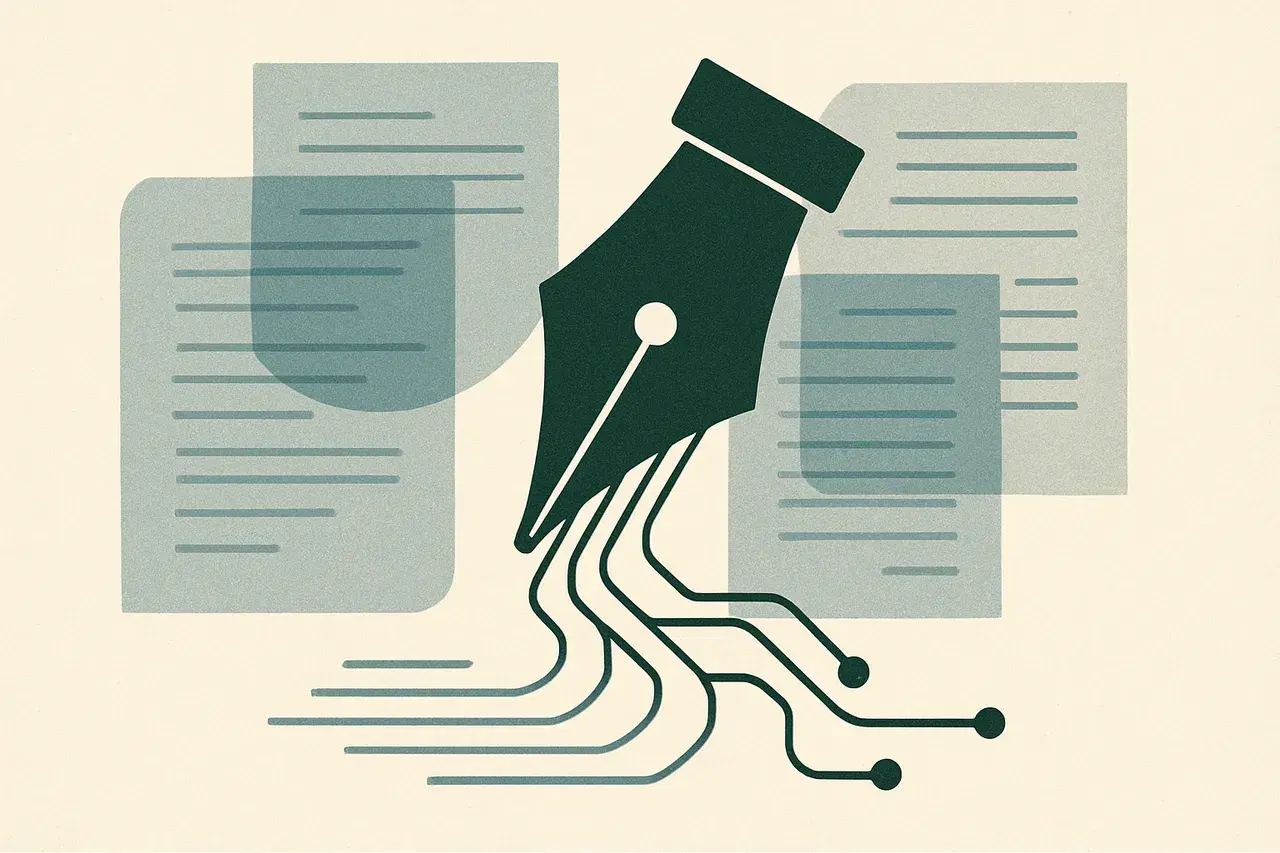
A German rapper named Vega reportedly wrote that he disappears for a year because he only writes when it hurts. The line resonates far beyond music. There is something in the friction of genuine expression, the resistance of finding the precise word for a precise situation, that produces language with real grip. Legal drafting is not exempt from this truth. The contracts that protect a company most effectively are rarely the ones assembled from generic clause libraries. They are the ones that reflect how that company actually thinks about risk, relationship and obligation.
This is the tension that generative AI introduces into contract lifecycle management, and it deserves an honest answer rather than a sales pitch.
What Generic Drafting Actually Costs
In-house legal teams under pressure have long reached for precedent banks and template packs. The result is a kind of contractual grey porridge: technically adequate, rarely wrong in any glaring way, but disconnected from the commercial realities of the business it is supposed to serve. A limitation of liability clause calibrated for a manufacturing company in 2019 does not automatically serve a SaaS business operating across the EU in 2025. A data processing addendum copied from a competitor's public-facing template may not reflect how your company's engineering team has actually configured its sub-processor relationships.
When AI drafting tools accelerate this pattern, the costs multiply. Speed is gained, but the resulting documents carry the voice of nobody in particular. They are, to borrow the instinct behind Vega's lyric, written without pain, and the absence of that productive struggle shows.
Reading from Your Side, Not the Middle
The distinction that matters in AI-assisted contract review is not simply whether the tool can find a missing indemnity cap. It is whether the tool understands whose interests it is serving. A contract read from the middle, as though both parties have equal standing in the analysis, produces balanced commentary that is strategically useless. Your procurement team does not need to know that a supplier's payment terms are reasonable from the supplier's perspective. They need to know whether those terms create cash flow risk for your business given your own payment cycles.
This is what it means to read a contract from your side. It requires the AI to hold a stable understanding of your company's risk appetite, your standard positions, your regulatory obligations and your commercial priorities before it opens the document. Without that grounding, even a technically impressive review is commentary without counsel.
Jurisdiction Is Not a Footnote
European in-house teams have learned this the hard way through years of receiving contracts drafted under New York or English law that were then used, with minimal adaptation, in transactions governed by German, French or Dutch law. The governing law clause changes. The substance rarely does. This creates documents that are formally compliant but practically fragile, because the drafting assumptions built into the original template do not hold in the new jurisdiction.
AI tools that are not trained on, and continuously updated for, the specific legal system in which a contract will operate reproduce this problem at scale. The EU's evolving data regulation landscape, the Platform-to-Business Regulation, the AI Act's contractual implications for providers and deployers, the nuances of good faith obligations across civil law systems: none of these can be handled adequately by a model treating jurisdiction as a variable to be noted rather than a framework to be understood.
The Case for Voice as Infrastructure
There is a practical argument, not merely a philosophical one, for treating company voice as a core component of contract infrastructure. When your AI drafting tool has been trained on your own executed agreements, your negotiation positions, your playbooks and your fallback clauses, the output it produces is recognisably yours. Counterparties notice. Negotiation cycles shorten when the other side can see that the draft in front of them was not assembled from a public template but reflects considered, consistent positions.
More importantly, your own lawyers can review and improve AI-generated drafts faster when those drafts already speak in a familiar register. The cognitive load of translating generic language into company-appropriate language is real, and it accumulates across hundreds of contracts a year. Removing that translation step is a compounding efficiency gain that pure speed metrics rarely capture.
Authentic voice in contract drafting is not a luxury for companies with large legal teams and time to spare. It is, in fact, the thing that makes AI assistance genuinely useful rather than merely fast. The hurt of finding the right word, to return to where we started, is not inefficiency. It is the process by which language becomes reliable. The goal of good legal AI is to carry that process forward, not to skip it.
Sources
See how Adira drafts in your voice and reads contracts from your side.
Explore the showroomWorking through a contract like this? Weave is Adira’s free tool to read, mark up, and connect any contract in your browser — no account needed.
Try Weave — free