legal ai
The Cost Savings Question: What AI in Legal Actually Owes Its Clients
The Survey Nobody Wanted to Answer Honestly
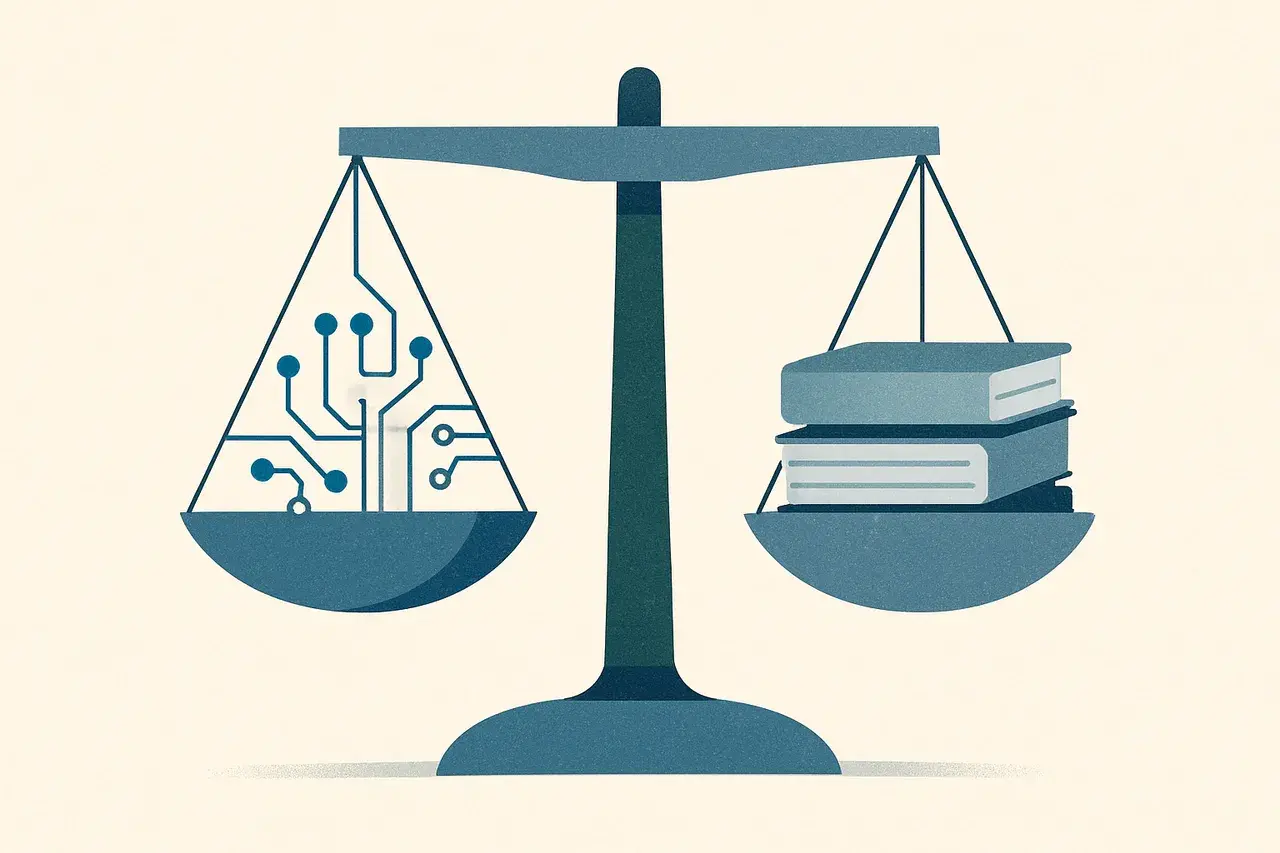
A question is circulating in legal AI circles this week: has law firm AI use actually delivered cost savings for clients? The framing alone is revealing. It presupposes that savings exist somewhere in the system, and the only dispute is about where they have landed. That is, in fact, exactly right.
Law firms adopting AI tools are, by and large, doing so to improve internal throughput. Associates review documents faster. Due diligence takes fewer hours. First drafts arrive before the partner has finished a second coffee. All of that is genuine operational progress. But operational progress at the firm level does not automatically translate into a reduced invoice for the client. The billable hour is a remarkably durable container.
Where the Value Goes When Nobody Is Watching
The economic logic here is straightforward. If an associate previously spent twelve hours on a contract review and now spends four, and the firm bills by the hour, the client saves eight hours of associate time. In theory. In practice, firms face pressure to maintain revenue per matter, and there is no external mechanism forcing the efficiency gain to be passed on.
This is not necessarily cynical. Firms argue, with some justification, that AI investments carry real costs: licensing, training, quality control, and the professional judgment required to verify outputs. Those costs need to go somewhere. But the client has no visibility into that calculus, and the engagement letter signed eighteen months ago certainly did not address it.
In-house legal teams are now asking the right question. The next step is insisting on structural answers rather than goodwill gestures.
What Contracts Should Say, But Rarely Do
The engagement letter between outside counsel and client is, ironically, one of the least scrutinised contracts in any legal department's portfolio. It is often short, written in favour of the firm, and reviewed cursorily because the relationship feels collaborative rather than adversarial.
That needs to change. In-house teams should be requesting explicit provisions covering AI tool usage: what tools are in use on the matter, whether AI-assisted work is billed at the same rate as purely human work, and whether efficiency gains trigger any form of cost-sharing or fixed-fee adjustment. None of this is radical. It is basic commercial hygiene applied to a relationship that has historically avoided scrutiny.
Reading an engagement letter from your side, rather than accepting it as a firm-authored document, surfaces these gaps immediately. The clauses that are missing are often more instructive than the ones that are present.
The In-House Parallel: Are You Asking the Same Question Internally?
Before in-house teams direct all their scrutiny outward, it is worth turning the question inward. Legal departments that have adopted AI tools for contract review, drafting, or triage face exactly the same accountability challenge. Has the investment delivered measurable throughput improvement? Has that improvement translated into faster commercial cycles, reduced outside counsel spend, or more matters handled without headcount growth?
The honest answer in many departments is: probably yes, but we have not measured it rigorously. AI adoption in legal has often been driven by enthusiasm, peer pressure, or board mandate, and the baseline data required for genuine before-and-after comparison was never captured. That makes it very difficult to defend the investment when budget scrutiny arrives, and budget scrutiny always arrives.
Building measurement into the deployment from day one is not optional. It is how legal earns credibility with the CFO and how it demonstrates that AI is a genuine operational lever rather than an expensive experiment.
The Standard That Should Emerge
What the legal industry needs is a clearer norm: AI use on a matter should be disclosed, the pricing model should reflect the actual cost of delivery rather than a legacy assumption about hours, and both firms and in-house teams should be able to show their working when asked whether the technology has paid its way.
This is not about distrust. It is about the industry growing up around a genuinely transformative set of tools. The survey question circulating this week is an early symptom of that maturation process. Clients are starting to ask. Firms should be ready with transparent answers, and in-house teams should be building the contractual and measurement infrastructure to hold everyone, including themselves, accountable.
The cost savings are real. The question is simply whether they are being shared, tracked, and evidenced. That is a contract and governance problem as much as a technology problem, and it is exactly the kind of problem that precise, jurisdiction-aware contract intelligence is built to surface.
See how Adira drafts in your voice and reads contracts from your side.
Explore the showroomWorking through a contract like this? Weave is Adira’s free tool to read, mark up, and connect any contract in your browser — no account needed.
Try Weave — free