legaltech
AI Legal Transaction Management: What the Legatics and Harvey Integration Means for Contract Workflows
What the Legatics and Harvey Connection Actually Does
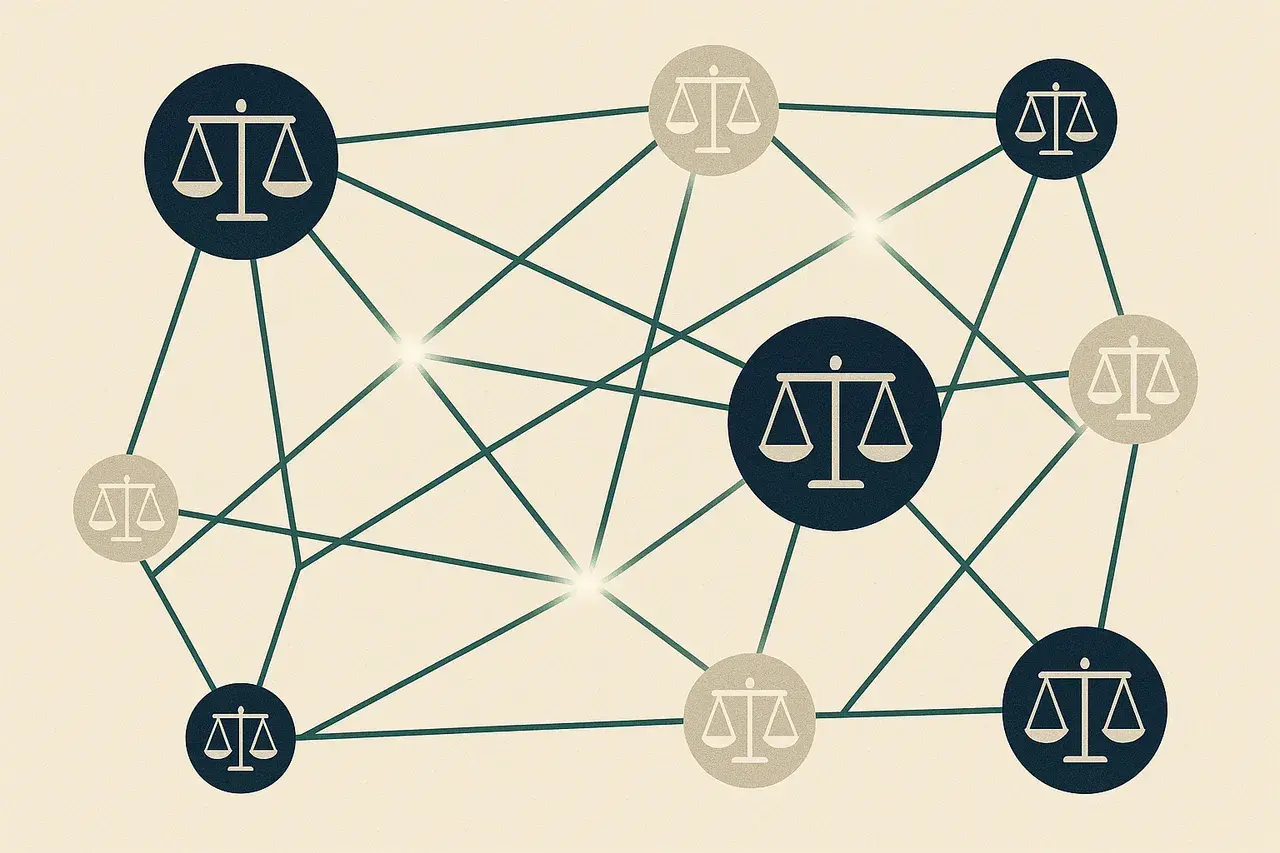
Legatics, the transaction management platform used widely in corporate and banking practices, has joined Harvey's Connector Library, allowing lawyers to call Harvey's generative AI capabilities from within their existing deal environment. The practical effect is that a lawyer coordinating a transaction checklist, managing conditions precedent, or tracking closing deliverables can invoke AI drafting and analysis without switching between separate tools. That reduction in context-switching is not a minor convenience. In high-volume deal work, every tool-hop costs time and introduces the risk of version confusion.
Harvey's Connector Library is the mechanism Harvey uses to extend its large-language-model layer into third-party legal platforms. By joining that library, Legatics positions itself as part of a connected legal AI stack rather than a standalone product. The significance is architectural: the industry is moving from point solutions toward integrated environments where AI assistance is ambient rather than episodic.
Where This Fits in the Contract Lifecycle Management Picture
Contract lifecycle management covers a wide arc, from initial instruction and drafting through negotiation, execution, and post-signature obligation tracking. Transaction management, as Legatics handles it, sits primarily in the pre-signature phase of complex deals, coordinating the many workstreams, parties, and documents that a large M&A or finance transaction requires.
Generative AI tools like Harvey address a different layer: the substance of the documents themselves, including drafting, review, summarisation, and issue-spotting. When a transaction management platform connects to an AI drafting and review layer, the two halves of the deal workflow start to converge. Lawyers can, in theory, identify an outstanding condition on their checklist and immediately ask the AI to draft or review the relevant document, with the context of the deal already present.
For legal teams evaluating CLM software, this matters because it changes the question from "which tool does what" to "how well does the stack communicate." Interoperability is now a first-order procurement consideration.
The Honest Adoption Picture for Legal Teams
Integration announcements in legaltech deserve careful scrutiny. A connection between two platforms can mean anything from a deep, bidirectional data exchange to a lightweight single sign-on. Legal teams considering this stack should ask specific questions: what deal data flows between the platforms, how is privilege and confidentiality maintained across the connection, and which user permissions govern access to each layer.
The legal AI adoption curve also remains uneven across firm sizes and practice areas. Large transactional practices at major firms are the natural early adopters here, because they already use Legatics-style coordination tools and have the volume to justify investment in Harvey licences. Smaller teams or those in advisory-heavy practices may find that the integrated stack is more infrastructure than their workflow requires.
There is also a training question. AI contract review tools for lawyers are only as useful as the prompts and processes built around them. A platform connection does not automatically produce better outputs. Firms need to invest in prompt governance, quality control, and supervision protocols if they want the combination to deliver consistent, reliable results rather than impressive demos.
What This Signals for the Broader Legaltech Market
The Harvey Connector Library model reflects a broader pattern in enterprise software: platform companies building ecosystems rather than trying to own every surface themselves. Salesforce did this with its AppExchange; Microsoft did it with Teams integrations. Harvey is making a similar bet that its AI layer becomes more valuable as more workflow tools connect to it.
For the legaltech market specifically, this creates competitive pressure on platforms that have not yet connected to a leading AI layer. Transaction management tools, document management systems, and CLM platforms that remain isolated will increasingly look incomplete alongside competitors that offer ambient AI assistance. The integration race is, in effect, already underway.
Adira's own view is that the contract lifecycle is most effectively served when AI capabilities are native to the workflow rather than bolted on through a connector. Connectors are a pragmatic step forward, but they introduce dependency on third-party roadmaps, API stability, and pricing decisions that firms do not control. Legal teams should weigh the convenience of today's integration against the strategic question of where they want AI ownership and control to sit in their technology stack.
Questions Legal Teams Should Ask Before Adopting This Stack
Before committing to any integrated AI legal workflow, legal teams should work through a structured set of questions. First, data residency and confidentiality: where does deal data sit when it passes through the connector, and what contractual protections govern that transit? Second, model transparency: which version of Harvey's model is being used, how is it updated, and how are hallucination risks mitigated in a transaction context where factual precision is non-negotiable? Third, cost structure: connector integrations often involve licensing fees at both the platform and AI layer, and the combined cost may surprise teams that evaluated each product in isolation.
Finally, consider workflow fit before technical fit. The best AI contract review tool is the one that maps to how your team actually works, not the one with the most impressive partner list. Run a genuine pilot on real deal documents, measure the time saved against the supervision overhead, and make the adoption decision on that basis.
Frequently asked questions
- What is the Legatics and Harvey integration?
- Legatics, a transaction management platform, has joined Harvey's Connector Library, allowing lawyers to access Harvey's generative AI capabilities directly within their Legatics deal environment. This means AI drafting and review assistance is available alongside transaction checklists and closing workflows without switching tools.
- How does Harvey AI work for lawyers in a transaction context?
- Harvey uses large language models trained on legal materials to assist with drafting, reviewing, summarising, and issue-spotting in legal documents. In a transaction context, it can help lawyers produce or check documents that correspond to outstanding items on a deal checklist, reducing the time spent moving between platforms.
- What should legal teams consider before adopting AI transaction management tools?
- Legal teams should evaluate data confidentiality across any platform connector, the cost structure of combined licences, and the quality control processes needed to supervise AI outputs. A structured pilot on real deal documents is the most reliable way to assess whether the workflow benefit justifies the investment.
- How does transaction management software fit into contract lifecycle management?
- Contract lifecycle management covers the full arc from drafting to post-signature obligations, while transaction management tools like Legatics focus on coordinating the pre-signature phase of complex deals. When connected to an AI review layer, they allow document substance and deal coordination to be managed in a more unified environment.
- Is generative AI ready for high-stakes legal transaction work?
- Generative AI can meaningfully accelerate drafting and review tasks in legal transactions, but it requires robust supervision, clear prompt governance, and firm-level quality control protocols. The technology is capable, but consistent and reliable results depend on how well the legal team builds processes around it, not on the tool alone.
See how Adira drafts in your voice and reads contracts from your side.
Explore the showroomWorking through a contract like this? Weave is Adira’s free tool to read, mark up, and connect any contract in your browser — no account needed.
Try Weave — freeRelated reading
Legal AI Integration Ecosystems: What Legora's 30-Plus Partner Strategy Means for Contract Lifecycle Management
15 October 2026

AI Legal Intake Tools for In-House Teams: What Harvey's New Product Means for Contract Lifecycle Management
14 October 2026
AI Legal Research Meets Contract Lifecycle Management: What the Harvey–LexisNexis Integration Means for Legal Teams
10 October 2026