legaltech
AI Contract Review Tools in 2025: What Legal Teams Need to Know Before Adopting
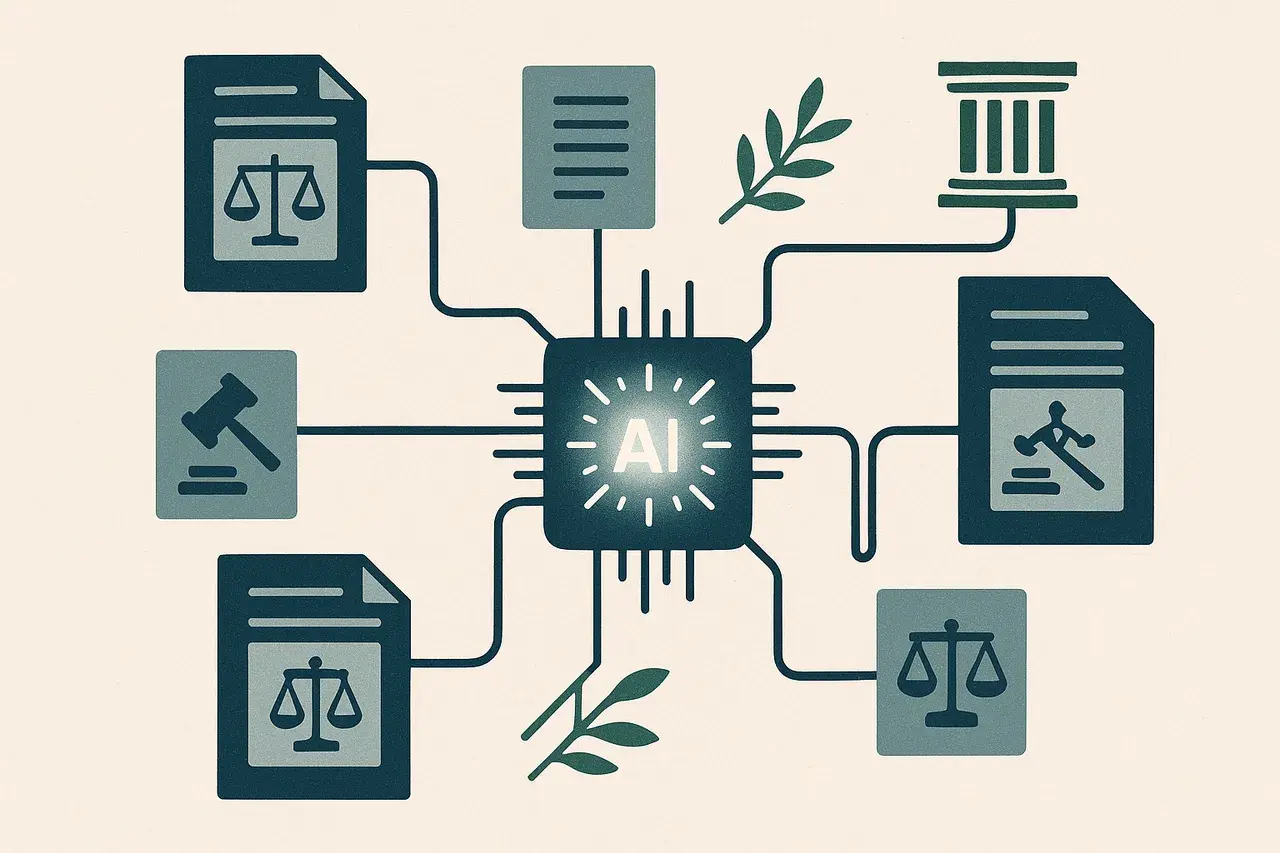
Why AI Contract Review Is Suddenly Everywhere in Legaltech
Conferences devoted to legal technology have multiplied sharply in recent years, and the conversations at each one are converging on the same question: which AI contract review tools are actually ready for production use? Events such as Legal Innovators New York have become useful barometers, not so much for the announcements made on stage, but for the sponsors who choose to invest and the sessions that fill up fastest. When contract AI platforms compete to put their names on the same event, it signals that the market has moved past curiosity and into competitive buying cycles. Legal teams evaluating AI contract analysis software need to understand what that shift means for their procurement decisions.
What AI Contract Review Tools Actually Do
At its core, an AI contract review tool reads a contract document and returns structured insight: flagged clauses, deviations from a preferred playbook, risk scores, and suggested alternative language. The better platforms go further. They compare incoming counterparty paper against a company's own standard positions, identify jurisdiction-specific issues, and accelerate the redline process by drafting responses in the organisation's preferred tone and style. This is the proposition that separates genuinely useful contract lifecycle management AI from simple keyword search dressed up with a chatbot interface. The key technical capability to probe during any vendor evaluation is whether the model has been trained, or at minimum grounded, on legal language rather than general web text. Generic large language models can summarise contracts competently. They struggle with the fine-grained legal reasoning required to spot a liability cap that interacts badly with an indemnity clause two schedules away.
Where Contract AI Fits Into the Full CLM Workflow
Contract lifecycle management covers the entire arc from first draft through signature, obligation tracking, renewal, and termination. AI tools have historically entered at the review and negotiation stage because that is where manual effort is most visible and where the ROI case is easiest to make. The more mature platforms now extend their reach. Pre-signature, they assist with drafting from templates and generating first drafts from a brief. Post-signature, they extract obligations, index key commercial terms, and flag upcoming renewal windows. Legal operations teams should map any AI contract analysis software against their specific bottlenecks rather than assuming the tool will solve every stage equally well. A platform that excels at counterparty paper review may have a thin post-execution module, and vice versa.
The Honest Adoption Challenges Legal Teams Face
Adoption rates for AI legal technology remain lower than the volume of conference sponsorship might suggest. Several structural reasons explain the gap. First, legal teams carry professional responsibility for the advice and documents they produce, which makes them appropriately cautious about delegating substantive review to a model they cannot fully audit. Second, many organisations lack the clean contract data needed to configure a playbook-driven review tool properly. If your standard positions live in the heads of three senior lawyers rather than in a documented fallback matrix, the AI has nothing to compare against. Third, integration with existing matter management and document management systems is rarely as frictionless as vendor demos imply. Realistic timelines for a meaningful deployment, including data preparation, playbook configuration, and user training, run to several months rather than the weeks sometimes implied in sales conversations.
How to Evaluate AI Contract Review Software Without Being Misled
The most useful evaluation technique is a blind parallel review. Take twenty to thirty real contracts that your team has already reviewed manually, run them through the candidate platform, and compare outputs clause by clause. This surfaces false positives (clauses flagged as risky when they are standard), false negatives (genuine issues the tool missed), and the quality of suggested redlines. Pay particular attention to performance on jurisdiction-specific language. An AI contract review tool trained predominantly on US commercial paper will behave differently on English law agreements or civil-law governed contracts, and many vendors understate this variation. Also ask specifically how the platform handles confidentiality: where contract text is processed, whether it is used to train shared models, and what data residency options exist. These are not secondary concerns for legal teams; they are threshold questions.
What the Legaltech Conference Circuit Tells Us About Market Direction
The increasing density of AI contract review platforms at major legaltech events reflects genuine product maturation, but it also reflects a crowded market searching for differentiation. Legal teams can use this moment constructively. Competition among vendors is driving down price and driving up feature depth. Platforms that were out of reach for mid-market legal departments two years ago are now within budget. The risk is selection fatigue: too many plausible options, too little internal capacity to evaluate them properly. The most effective legal operations teams are responding by defining their requirements with unusual precision before they speak to any vendor. They know which contract types consume the most review hours, which clause categories generate the most negotiation cycles, and what their acceptable risk tolerance is for AI-assisted output. That specificity transforms a vendor conversation from a demo into a genuine fit assessment.
Frequently asked questions
- What is AI contract review and how does it work?
- AI contract review is the use of machine-learning models to read, analyse, and flag issues in legal contracts automatically. The software compares contract language against a configured playbook of preferred positions, identifies risky or non-standard clauses, and often suggests redlined alternatives. The accuracy of the output depends heavily on whether the underlying model has been trained on legal text and how well the playbook reflects the organisation's actual standards.
- Can AI replace a lawyer for contract review?
- AI contract review tools can accelerate and scale the first-pass review of contracts, but they do not replace legal judgment on complex or high-stakes matters. Lawyers remain responsible for the final analysis, particularly where clauses interact across a document or where context outside the four corners of the contract is relevant. The most effective use of these tools is as a triage layer that lets lawyers focus their attention on genuinely contested issues.
- How accurate is AI contract review software?
- Accuracy varies significantly between platforms and depends on the contract type, governing law, and the quality of the playbook configuration. In independent benchmarks, leading tools identify the majority of standard high-risk clauses reliably, but false negative rates increase on complex or unusual drafting. Legal teams should run a parallel review exercise on their own contract population before relying on any tool in a live workflow.
- What should legal teams look for when choosing a CLM platform with AI?
- Prioritise platforms that have been trained on legal language rather than general text, offer transparent explanations for their flags, and can be configured against your organisation's specific playbook. Integration capability with your existing document and matter management systems is also critical. Ask every vendor explicit questions about data residency, confidentiality, and whether your contract text is used to train shared models.
- How long does it take to implement an AI contract review tool?
- A realistic implementation timeline for a meaningful deployment, covering data preparation, playbook configuration, integration, and training, is typically three to six months for a mid-sized legal team. Vendors frequently demonstrate faster onboarding in sales contexts, but those timelines usually assume that standard positions are already documented and that integration complexity is low. Teams without a formal contract playbook should budget time to build one before or alongside the technical deployment.
See how Adira drafts in your voice and reads contracts from your side.
Explore the showroomWorking through a contract like this? Weave is Adira’s free tool to read, mark up, and connect any contract in your browser — no account needed.
Try Weave — freeRelated reading
AI Contract Review Tools in 2025: What Legal Teams Need to Know Before Adopting
17 October 2026
Legal AI Integration Ecosystems: What Legora's 30-Plus Partner Strategy Means for Contract Lifecycle Management
15 October 2026

AI Legal Intake Tools for In-House Teams: What Harvey's New Product Means for Contract Lifecycle Management
14 October 2026