regulatory change
Trump Vaccine Schedule Executive Order: Legal and Contractual Fallout for Healthcare and Life-Sciences Companies
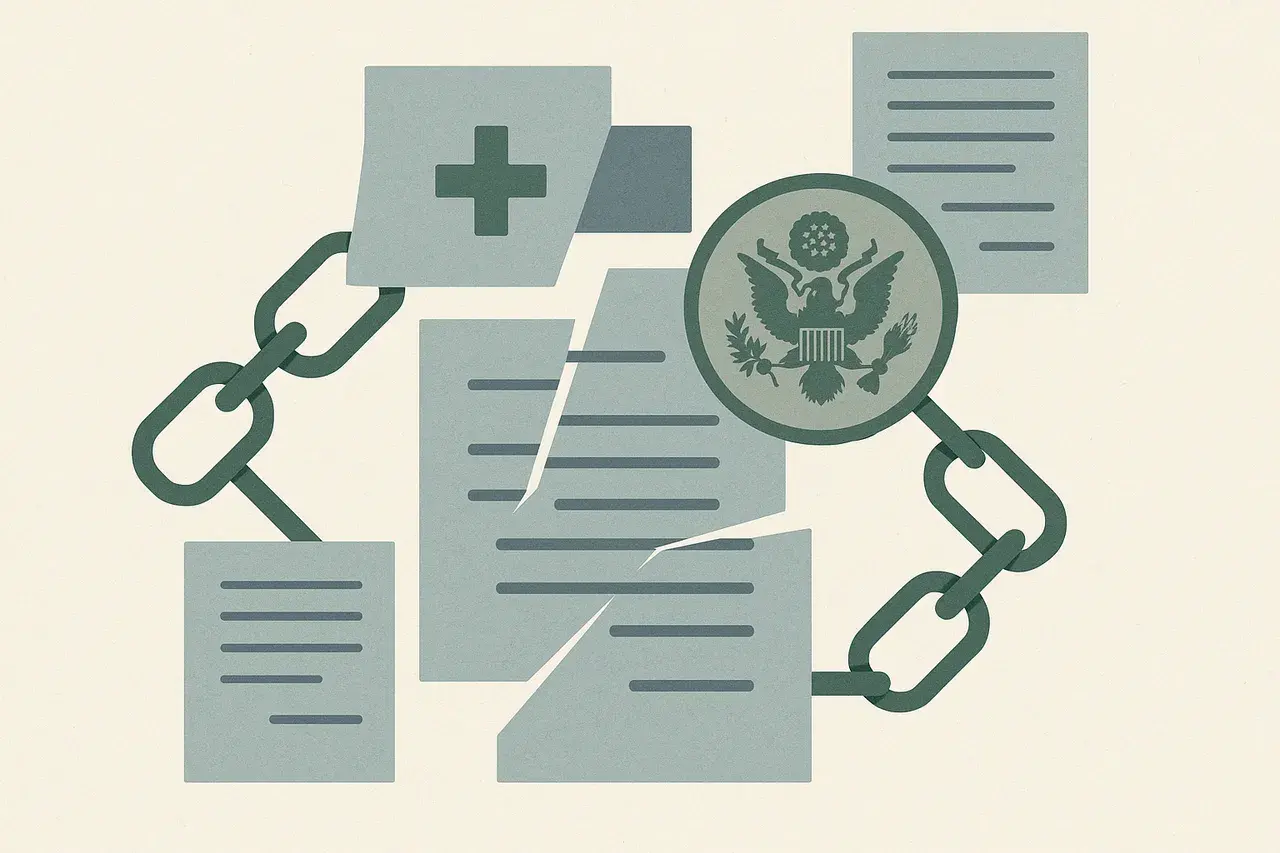
Why the Vaccine Schedule Executive Order Creates Immediate Legal Uncertainty
The Trump administration's push to alter the childhood vaccine schedule by executive order has drawn sharp criticism from the medical community. Physicians and public-health bodies argue that the schedule is set by the Advisory Committee on Immunisation Practices (ACIP), a body of independent experts whose recommendations carry scientific, not merely political, weight. The legal question for in-house teams is whether an executive order can override those recommendations in a way that triggers downstream compliance obligations across healthcare, insurance, and pharmaceutical contracts.
The short answer is: it depends on how the order is drafted and what agencies it instructs. An executive order directing the Department of Health and Human Services to review or restructure the schedule does not, by itself, change FDA approval status for individual vaccines. But it can instruct agencies to alter coverage mandates, procurement priorities, and the language used in federal programmes, and that is precisely where contract risk emerges.
Regulatory Change: What Could Actually Shift and When
The childhood vaccine schedule is not a single statute; it is a composite of ACIP guidance, state-level school-entry requirements, and federal programme rules under Medicaid and the Vaccines for Children (VFC) programme. An executive order can reshape federal programme rules relatively quickly. If VFC formulary changes follow, suppliers and distributors operating under government contracts will face amended scope-of-work terms, altered volume commitments, and potential termination-for-convenience clauses being exercised on existing purchase orders.
State requirements present a slower but equally significant pressure point. States set their own immunisation requirements for school entry. If federal guidance shifts, states may amend those requirements over the next one to three legislative cycles. Healthcare providers and school-health contractors operating under multi-year service agreements should identify now which obligations in those agreements are tied to "applicable immunisation schedules" as defined by reference to federal or state authority. A change in the referenced authority can silently alter what a party is required to deliver without any formal contract amendment.
Supply-Chain and Procurement Contracts: The Clauses That Will Be Tested
Pharmaceutical manufacturers and distributors supplying childhood vaccines under long-term offtake agreements need to review three categories of clause urgently. First, regulatory-change provisions: many supply contracts include force-majeure-adjacent language covering "changes in applicable law or regulation." Whether a presidential executive order qualifies as a triggering event under such a clause will depend on precise drafting and, ultimately, on litigation if parties disagree.
Second, volume and forecast commitments. If hospitals or pharmacy chains reduce orders in response to anticipated demand shifts caused by policy uncertainty, they may breach minimum-purchase obligations. Suppliers should examine whether changed-circumstances or material-adverse-change clauses offer any relief, and whether advance notice requirements have already started running.
Third, indemnification and product-liability allocation. If the schedule changes and a provider administers a vaccine not currently recommended under an amended federal schedule, questions arise as to whether the National Childhood Vaccine Injury Act's liability protections still apply in the same way. Contracts that allocate indemnity by reference to "properly administered vaccines in accordance with the recommended schedule" may need renegotiation to clarify the applicable standard.
Employer and Workplace Vaccine Policy Contracts
Many employers, particularly in healthcare and long-term care, have collective-bargaining agreements or individual employment contracts that reference compliance with "current CDC or ACIP vaccine recommendations" as a condition of employment. A formal change to the schedule or to the agencies' public positions could affect whether employer vaccine requirements remain enforceable as written, or whether unions can argue that the contractual trigger no longer applies.
In-house employment counsel should map every policy document, collective agreement, and employment contract that uses language tied to external schedule references, and consider whether those references should be updated to cite specific vaccines by name rather than by reference to a schedule that is now politically contested.
Compliance Obligations for Insurers and Managed-Care Organisations
Under the Affordable Care Act, preventive services given an ACIP recommendation must be covered without cost-sharing by most private insurers. A 2023 Supreme Court ruling in Braidwood Management v. Becerra added procedural complexity to how those mandates operate. If the executive order results in ACIP recommendations being revised, withdrawn, or institutionally restructured, insurers face real uncertainty about which vaccines they are legally required to cover without a co-pay.
Managed-care contracts with employer plan sponsors typically pass through this coverage obligation by reference to federal law. If the federal baseline moves, plan sponsors and insurers will need to negotiate whether coverage levels are maintained voluntarily or whether contract language is amended. Failing to anticipate this creates exposure on both sides: insurers who over-cover may seek cost recovery; those who under-cover face member and regulatory claims.
What In-House Teams Should Do Right Now
The prudent response is not to wait for the executive order's final text before acting. Contract audits should begin immediately across four areas: government procurement and VFC-linked supply agreements; employer and workforce health-service contracts referencing external immunisation standards; managed-care and insurance agreements tied to ACA preventive-care mandates; and pharmaceutical distribution agreements containing regulatory-change or volume-adjustment clauses.
For each contract, the key questions are whether the obligation is triggered by a reference to an external schedule, who bears the risk if that schedule changes, and whether notice obligations have commenced. Companies using AI contract-lifecycle-management tools can accelerate this triage significantly, running clause-level searches across large portfolios to surface every agreement that references the CDC schedule, ACIP recommendations, or "applicable immunisation requirements" before the regulatory ground shifts beneath them.
Frequently asked questions
- Can a US president change the childhood vaccine schedule by executive order?
- A president cannot directly rewrite the ACIP recommendations, which are set by independent scientific experts. However, an executive order can instruct federal agencies to restructure related programmes, alter coverage mandates, and change procurement priorities, all of which have practical effects on what vaccines are promoted, covered, or purchased under federal programmes.
- How does a change to the vaccine schedule affect supply contracts?
- Long-term vaccine supply contracts that include minimum-purchase commitments, regulatory-change clauses, or indemnification tied to the recommended schedule may all be affected. If demand shifts or federal procurement priorities change, parties need to assess whether force-majeure, changed-circumstances, or material-adverse-change provisions apply to their specific agreements.
- Do insurers have to cover vaccines if the ACIP schedule changes?
- Under the Affordable Care Act, private insurers must cover preventive services recommended by ACIP without cost-sharing. If ACIP recommendations are amended or the body is restructured, the legal basis for mandatory coverage of specific vaccines becomes uncertain, creating risk for both insurers and plan sponsors with contracts tied to federal preventive-care mandates.
- What should in-house legal teams do about the vaccine schedule executive order?
- In-house teams should audit all contracts that reference external immunisation schedules, ACIP recommendations, or CDC guidance, including supply agreements, employment contracts, collective-bargaining agreements, and managed-care contracts. The goal is to identify obligations that could shift automatically if the referenced standard changes, and to prioritise renegotiation or clarifying amendments before regulatory changes take effect.
- Are employer vaccine requirements still enforceable if the federal schedule changes?
- Employer vaccine requirements drafted by reference to current CDC or ACIP recommendations may become legally ambiguous if those recommendations change. Requirements that name specific vaccines explicitly are more likely to remain enforceable as written, which is why in-house employment counsel should review and update policy language now.
Sources
See how Adira drafts in your voice and reads contracts from your side.
Explore the showroomWorking through a contract like this? Weave is Adira’s free tool to read, mark up, and connect any contract in your browser — no account needed.
Try Weave — freeRelated reading

Childhood Vaccine Schedule Executive Order: The Regulatory and Contractual Fallout for Healthcare and Life Sciences Companies
14 October 2026

Wolf Management Executive Order: Regulatory and Contract Risks for Ranchers and Agribusiness
13 October 2026

Deep Sea Mining Contracts and the Legal Fallout from Trump's 2025 Executive Order
16 October 2026