rule of law
When the Executive Attacks the Judiciary: What Trump's Supreme Court Criticism Means for the Rule of Law and Contracts
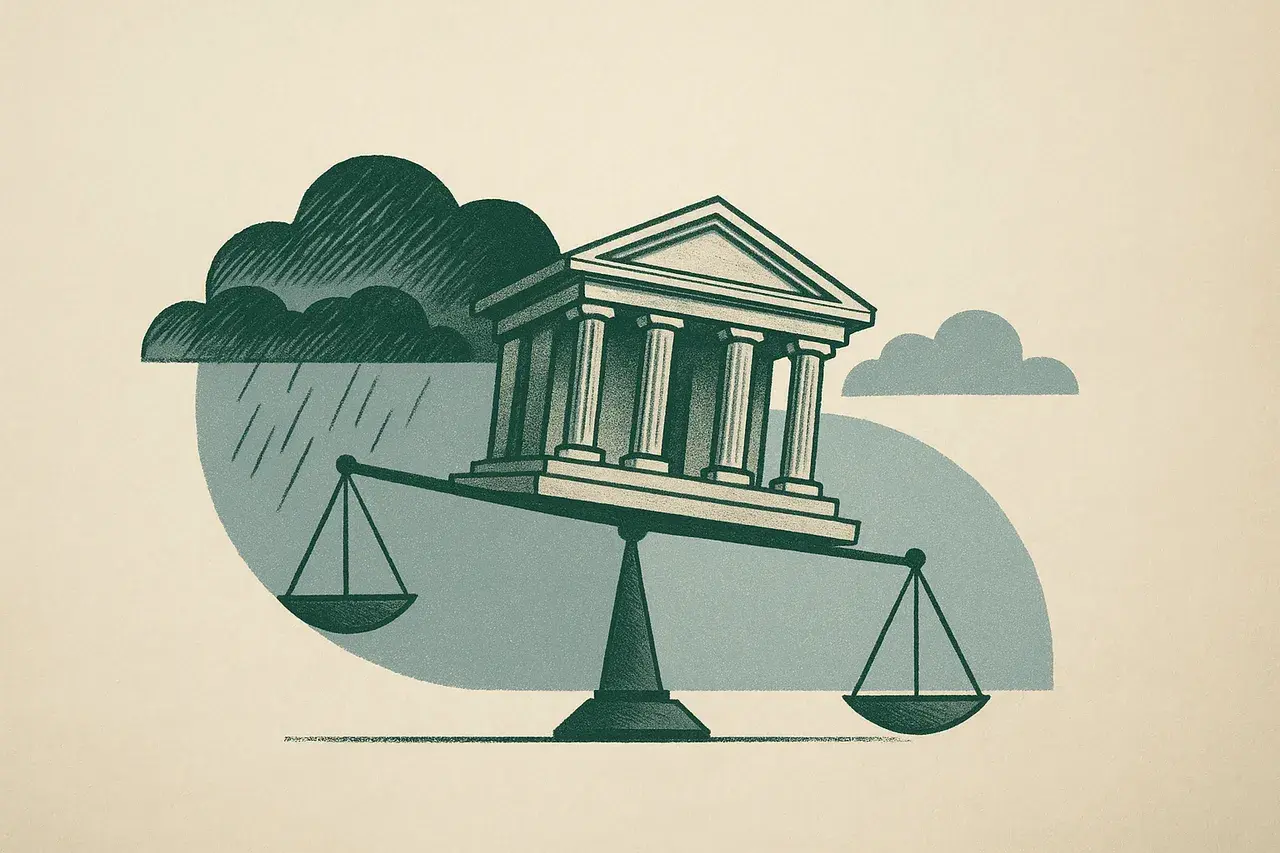
Why Executive Criticism of the Supreme Court Is More Than Political Theatre
When a sitting president publicly slams Supreme Court rulings as wrong, illegitimate, or politically motivated, the instinct for many observers is to treat it as noise. Political leaders have always grumbled about courts. Andrew Jackson, Franklin Roosevelt, and Richard Nixon all had fraught relationships with the judiciary. But the current pattern of Trump's Supreme Court criticism is qualitatively different in one important respect: it is sustained, it is public, and it is accompanied by broader executive actions that test the limits of what courts can actually enforce. For businesses that rely on US law to anchor their contracts, that combination deserves careful attention.
Judicial Independence and Why It Underpins Every Contract You Sign
Judicial independence is not an abstract constitutional virtue. It is the practical foundation on which contract enforceability rests. A contract is only as good as the court system that will interpret and uphold it. When counterparties choose a governing law clause, they are making a bet that the courts of that jurisdiction will apply the law predictably, impartially, and without fear of political consequence. The US has historically been one of the most reliable choices for that bet, which is why New York and Delaware law govern an enormous share of global commercial agreements.
The risk being priced into contracts right now is not that the Supreme Court will be abolished, but something subtler: that persistent executive pressure on the judiciary erodes the predictability of outcomes, lengthens litigation timelines, and introduces a political variable into disputes that should be resolved purely on legal merit. For long-duration contracts, infrastructure deals, and agreements where enforcement may be years away, that erosion matters.
What Landmark Rulings Under Fire Actually Signal for Contract Drafters
The Supreme Court rulings that have drawn presidential criticism in 2025 span areas including executive power, immigration, and agency authority. Each of these areas has a direct commercial dimension. Rulings on agency authority, for instance, affect how federal regulators can interpret statutes, which in turn affects compliance obligations written into supplier contracts, financial agreements, and government procurement deals. When a president signals that he regards such rulings as illegitimate, the practical question for contract counsel is: what happens to obligations that depend on a stable regulatory interpretation?
The answer, for now, is that the rulings stand and must be followed. Courts at every level remain bound by Supreme Court precedent. But the reputational and institutional pressure being placed on the judiciary is already affecting how some judges approach politically sensitive cases, according to legal scholars who study court behaviour under stress. Contract drafters should note that force majeure clauses rarely cover "political uncertainty" as a triggering event, meaning that if regulatory obligations shift because of executive non-compliance with court orders, the commercial consequences will almost certainly fall on the contracting parties themselves.
Governing Law Clauses and the Case for Jurisdiction Diversification
Multinational businesses negotiating agreements in 2025 are increasingly asking a question that would have seemed alarmist five years ago: should we be diversifying away from US governing law for certain categories of contract? The honest answer is that it depends on the type of agreement and the timeline. For contracts where enforcement is likely to be quick, domestic, and straightforward, US law remains highly reliable. For long-term agreements, cross-border arrangements, or contracts where one party is a US government entity, it is reasonable to at least review whether English law, Singapore law, or another stable common-law jurisdiction offers a more neutral forum.
This is not a counsel of panic. It is basic contract risk management. Governing law and jurisdiction clauses are among the most consequential choices in any commercial agreement, and they deserve revisiting when the external environment shifts materially. The current environment, characterised by open tension between the executive and judicial branches, qualifies as such a shift.
How AI Contract Tools Can Help Businesses Navigate Legal Uncertainty
One practical response to legal and political uncertainty is to increase the rigour of contract review. When external predictability decreases, internal contract clarity becomes more valuable. AI contract lifecycle management platforms can help in several ways. First, they can systematically audit existing contract portfolios to identify agreements where governing law, dispute resolution mechanisms, or regulatory compliance obligations may be exposed to the current uncertainty. Second, they can flag force majeure, material adverse change, and regulatory out clauses that may need updating. Third, they can ensure that new contracts are drafted with jurisdiction-specific knowledge, reflecting what the law actually says rather than what political actors claim it should say.
Adira is built to read contracts from your side of the table, draft in your organisation's own voice, and apply the law of the relevant jurisdiction accurately. In a moment when the gap between political rhetoric and legal reality is widening, that kind of grounded, jurisdiction-aware drafting is not a luxury. It is a risk management tool.
What Businesses Should Do Right Now
The practical steps are straightforward. Review governing law and jurisdiction clauses in your most material contracts, particularly those with long durations or regulatory dependencies. Assess whether your dispute resolution clauses, whether litigation or arbitration, remain fit for purpose given the current environment. Revisit force majeure and regulatory change provisions to ensure they allocate risk appropriately. And ensure that any new agreements being drafted reflect current legal reality, not an assumption that the US regulatory and judicial environment will remain static.
Political pressure on courts is not new, and courts have historically proven more resilient than their critics expect. But resilience is not the same as immunity, and businesses that treat legal certainty as a fixed background condition rather than something to be actively managed will be the ones caught out if conditions deteriorate further.
Frequently asked questions
- Does Trump criticising the Supreme Court affect the legal validity of court rulings?
- No. Presidential criticism does not alter the legal force of Supreme Court rulings. All lower courts and executive agencies remain legally bound to follow Supreme Court precedent regardless of what the president says publicly. The risk is to institutional predictability over time, not to the immediate validity of decisions.
- How does political pressure on the judiciary affect business contracts?
- It introduces uncertainty into the enforceability and predictability of long-term agreements, particularly those with regulatory dependencies. Contracts governed by US law remain legally enforceable, but businesses should review governing law clauses, force majeure provisions, and dispute resolution mechanisms to ensure they are robust enough to handle a less stable legal environment.
- Should international businesses stop using US governing law in their contracts?
- Not categorically, but it is worth reviewing. US law, especially New York and Delaware law, remains highly reliable for most commercial agreements. For long-duration contracts, government-related deals, or agreements where enforcement may be years away, it is reasonable to consider whether English law or Singapore law offers a more neutral and stable alternative.
- What is judicial independence and why does it matter for contracts?
- Judicial independence means courts decide cases on legal grounds without fear of political interference or consequence. It is the foundation of contract enforceability because it ensures that disputes are resolved predictably and impartially. Without it, the governing law clause in a contract loses much of its value.
- Can force majeure clauses protect businesses if political instability affects contract performance?
- Rarely. Standard force majeure clauses cover events like natural disasters, wars, or government actions that make performance impossible. General political uncertainty or regulatory unpredictability is typically not a triggering event. Businesses concerned about this risk should consider adding specific regulatory change or political risk provisions to new agreements.
See how Adira drafts in your voice and reads contracts from your side.
Explore the showroomWorking through a contract like this? Weave is Adira’s free tool to read, mark up, and connect any contract in your browser — no account needed.
Try Weave — freeRelated reading
Sex Offender Registry Reform and Retroactive Laws: What the Michigan Supreme Court Ruling Means for Compliance Contracts
17 September 2026
When Courts Reshape the Rules: What Israel's Supreme Court Crisis Means for Contract Enforceability and Legal Risk
31 August 2026

California Supreme Court Product Liability Ruling: What It Means for Your Contracts
7 August 2026