judicial independence
When a Supreme Court Is Put Under Legal Siege: What Judicial Independence Means for Commercial Contracts
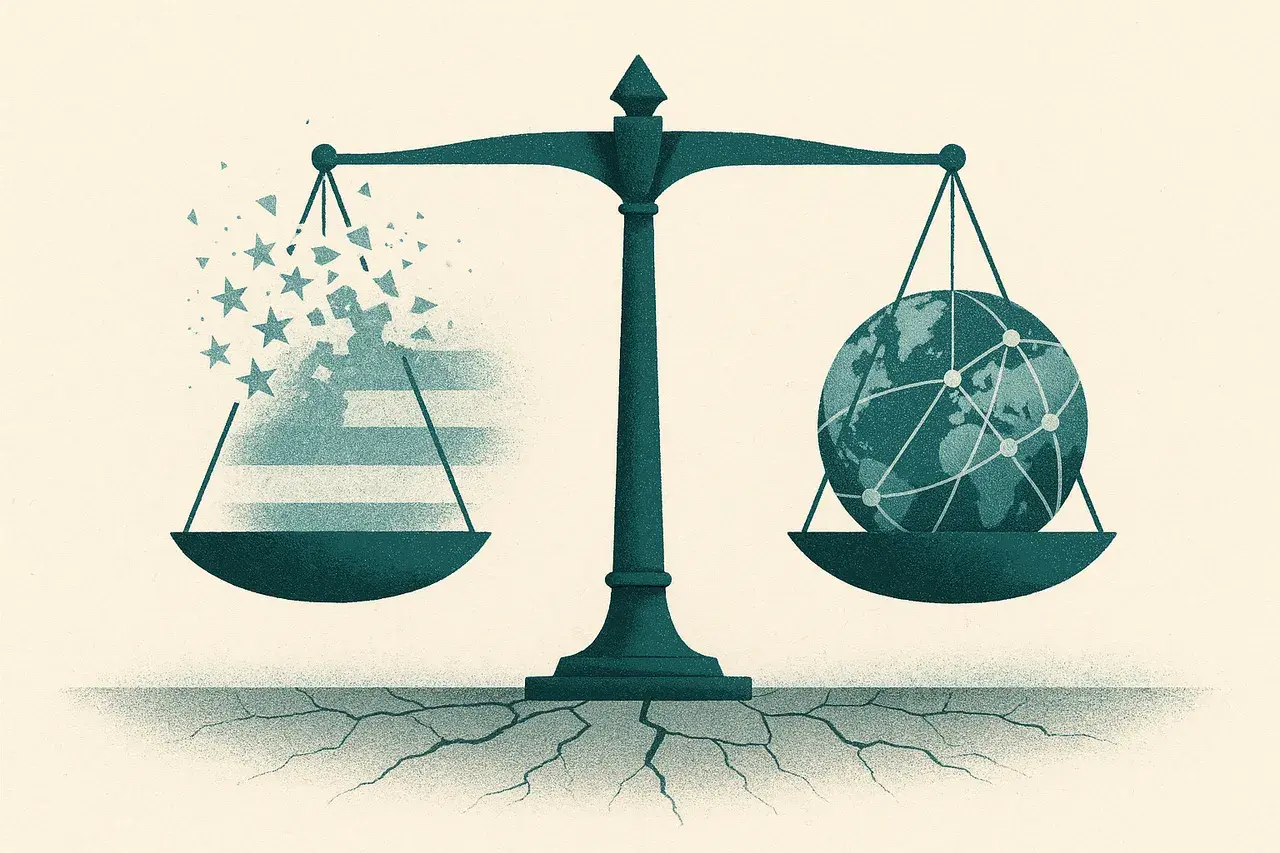
Why the Israeli Supreme Court Crisis Matters Beyond Politics
The standoff between Israel's government and its Supreme Court has attracted comparisons to judicial independence battles in Hungary and Poland, drawing attention from legal observers well beyond the region. SCOTUSblog, which typically limits its focus to the United States Supreme Court, recently covered the Israeli court's situation, which signals how seriously the global legal community is watching. For businesses with operations, investments or counterparties in Israel, this is not a constitutional curiosity. It is a live commercial risk that belongs in your contract review process right now.
Judicial independence is not an abstract principle. It is the mechanism by which a signed contract becomes enforceable. When that mechanism is contested, the entire downstream chain of commercial obligations becomes harder to rely on.
What Judicial Independence Actually Does for Your Contracts
Every commercial contract rests on an implicit assumption: that a neutral, independent court (or arbitral tribunal) will enforce its terms if one party defaults. Judicial independence means judges reach decisions based on law rather than political instruction. Remove that assurance and the governing law clause in your agreement quietly loses much of its value.
The Israeli crisis is a pointed reminder that judicial independence can be dismantled not by coup but by legislation, by budget control, by altering the composition of appointing bodies. The process can be gradual enough that counterparties and their lawyers do not notice until a dispute is already live. By then, the choice of forum clause has already locked you into a jurisdiction where judicial outcomes may be harder to predict.
How to Read Sovereign and Political Risk in a Governing Law Clause
Most in-house counsel treat governing law clauses as boilerplate. They are not. Choosing Israeli law, or any jurisdiction currently experiencing judicial reform pressure, requires an assessment that goes beyond which legal system offers the most favourable substantive rules. The practical question is: if this contract ends in a dispute, will an Israeli court be free to apply Israeli law as written, without political interference?
The same question applies, with varying degrees of urgency, to Hungary, Poland, and several other jurisdictions that have experienced executive pressure on their judiciaries in recent years. Sophisticated counterparties and their insurers already price this risk. Contracts that fail to address it leave value on the table and create exposure that does not show up until it is expensive to fix.
Force Majeure, Material Adverse Change and Political Risk Clauses
One practical response is to ensure that contracts with meaningful exposure to politically volatile jurisdictions contain well-drafted political risk provisions. A force majeure clause that covers only natural disasters and pandemics will not help a party whose contract has become unenforceable because a court system has been restructured mid-dispute. Similarly, a material adverse change clause that fails to capture judicial or regulatory instability may leave acquirers exposed in M&A transactions touching affected markets.
The better approach is to draft these clauses with jurisdiction-specific awareness: naming the categories of governmental or constitutional change that would trigger renegotiation rights or termination options, and including a clear dispute resolution path that routes serious disagreements to international arbitration rather than local courts. Institutions such as the ICC, LCIA and SIAC offer forums that are structurally insulated from national political pressures.
International Arbitration as the Practical Backstop
When judicial independence in a counterparty's home jurisdiction is in doubt, an international arbitration clause is not merely a preference. It is a form of contractual insurance. Arbitral awards made under recognised institutional rules are enforceable in over 170 countries under the New York Convention, bypassing the local court system almost entirely at the enforcement stage.
For existing contracts that rely on Israeli courts (or any similarly pressured jurisdiction), this is the moment to consider whether a renegotiation to insert an arbitration clause is achievable. Many counterparties will agree, particularly where both sides face the same jurisdictional uncertainty. The conversation is easier before a dispute than during one.
What AI Contract Review Can Do With Jurisdiction Risk
This is precisely the kind of systemic, jurisdiction-level risk that AI contract review platforms are increasingly built to surface. Adira reads contracts from your side, understands the governing law in context, and flags clauses where the chosen forum or dispute resolution mechanism creates exposure given current conditions in that jurisdiction. Rather than treating governing law as background noise, Adira treats it as a live legal and commercial variable.
As the Israeli Supreme Court situation continues to develop, businesses with any contractual nexus to Israel, including technology licensing agreements, supply chain contracts, joint ventures and financing arrangements, should conduct a focused review. The question to ask is simple: if this agreement ends in a dispute tomorrow, how confident are you that the forum you chose will deliver an enforceable, impartial outcome? If the answer is uncertain, the clause needs work.
Frequently asked questions
- What does judicial independence mean for the enforceability of commercial contracts?
- Judicial independence ensures that courts apply the law as written rather than as political actors prefer. When it is undermined, governing law clauses and jurisdiction clauses in contracts lose practical reliability, because the court that would enforce the agreement may no longer operate with full impartiality. This is why political pressure on a judiciary is treated as a form of sovereign risk by sophisticated counterparties.
- How does the Israel Supreme Court crisis affect cross-border business contracts?
- Businesses with contracts governed by Israeli law or requiring disputes to be resolved in Israeli courts face uncertainty about whether those courts will deliver independent, predictable outcomes during and after the constitutional crisis. This affects technology licensing deals, supply chain agreements, and investment contracts with Israeli counterparties. A review of governing law and dispute resolution clauses is advisable for anyone with significant Israeli contractual exposure.
- Should I use international arbitration instead of local courts when contracting in politically unstable jurisdictions?
- Yes, in most cases international arbitration provides stronger protection when local judicial independence is in doubt. Awards from institutions such as the ICC or LCIA are enforceable in over 170 countries under the New York Convention, meaning you can bypass the local court system at the enforcement stage. This makes arbitration clauses a practical form of political risk management in contracts touching volatile jurisdictions.
- What is a political risk clause in a commercial contract?
- A political risk clause is a contractual provision that allocates the consequences of governmental or constitutional change, including judicial restructuring, expropriation, currency controls or regulatory reversals. It may take the form of a specially drafted force majeure provision, a material adverse change clause, or a specific renegotiation or termination right triggered by defined political events. Well-drafted political risk clauses name the categories of change that activate the right rather than relying on general language.
- Which jurisdictions currently pose the highest judicial independence risk for commercial contracts?
- The jurisdictions most frequently cited by legal risk analysts for judicial independence concerns include Hungary, Poland (though recent reforms have improved the picture), Israel, and several countries in Latin America and Southeast Asia. The specific risk level depends on the nature of the contract and the likelihood that a dispute would require local court involvement. International arbitration clauses and careful governing law selection are the standard mitigants.
See how Adira drafts in your voice and reads contracts from your side.
Explore the showroomWorking through a contract like this? Weave is Adira’s free tool to read, mark up, and connect any contract in your browser — no account needed.
Try Weave — free