ai contracts
Supreme Court AI and Contract Law: What the Highest Courts Are Starting to Signal
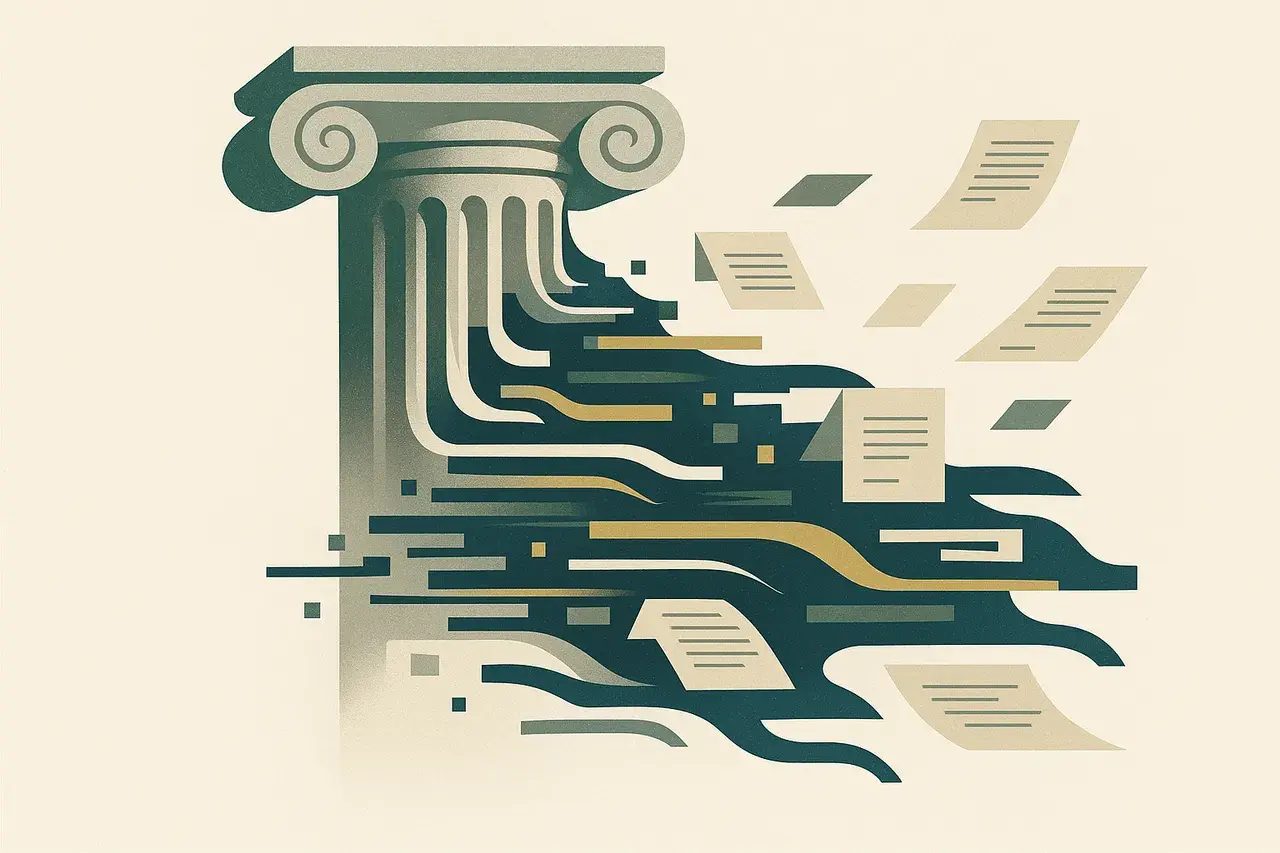
Why Supreme Courts Are Now Relevant to Every Contract Team
For years, the question of whether AI-generated contracts are legally binding lived mostly in law review articles and conference panels. That comfortable distance is closing. Supreme courts in multiple jurisdictions, most visibly in the United States but also in appellate-level decisions across the UK, EU member states, and Singapore, are increasingly confronted with disputes in which AI tools played a material role in drafting, reviewing, or executing the agreement at the centre of the case. Contract managers and general counsel who have been watching from the sidelines now have a genuine legal reason to pay attention.
The core issue is not whether AI is clever enough to write a contract. Most practitioners already accept that modern large-language models can produce commercially competent first drafts. The question the courts are beginning to answer is much more consequential: when something goes wrong in an AI-assisted contract process, who bears responsibility, and does the contract itself hold?
The Three Contract Questions Courts Are Circling
Judicial scrutiny tends to cluster around three recurring fact patterns. First, there is the accuracy problem: an AI tool misreads or misrepresents a clause, and a party later claims it was misled about what it was agreeing to. Second, there is the authority problem: did the human who accepted an AI-generated output actually have authority to bind the organisation, particularly where the speed of AI drafting compressed or bypassed traditional approval workflows? Third, there is the disclosure problem: was the counterparty informed that AI had a material role in producing the document, and does non-disclosure affect consent?
None of these questions has a definitive universal answer yet, but the direction of travel is becoming clearer. Courts are applying existing doctrines, namely offer and acceptance, misrepresentation, agency, and good faith, to AI-assisted fact patterns rather than creating entirely new law. That matters enormously for how businesses structure their AI contract workflows today.
What "Reading Contracts from Your Side" Actually Means in a Courtroom
One of the most commercially significant judicial signals concerns the standard of review applied to a contracting party. A court assessing whether a business understood what it signed will increasingly ask whether that business used available tools to check the document. As one legal commentator has noted, "the reasonableness standard does not freeze at 1995." If AI-powered contract review is widely available and affordable, a sophisticated commercial party that failed to use any systematic review process may find its claims of surprise harder to sustain.
This is precisely why the architecture of a contract intelligence platform matters legally, not just operationally. A system that reads agreements from the client's perspective, flags deviations from standard positions, and logs that review process creates a contemporaneous record of due diligence. That record can be material evidence if a dispute reaches a senior court.
Jurisdiction Still Matters: The Global Patchwork of AI Contract Rules
There is no single global answer to whether an AI-drafted contract is enforceable. In the United States, the Uniform Commercial Code and common law offer and acceptance principles apply, and federal courts have begun penalising parties whose lawyers submitted AI-generated filings containing fabricated citations, a related but instructive data point. In the European Union, the AI Act introduces a risk-classification regime that will touch high-stakes automated contract processes. In England and Wales, the Law Commission has signalled that existing contract law is broadly adequate to handle AI involvement but that evidence of human authorisation remains essential.
For businesses operating across borders, the practical implication is that your AI contract platform must be jurisdiction-aware. Generating a contract that is valid under New York law but inadvertently non-compliant with French mandatory disclosure rules is a foreseeable and avoidable failure mode.
Liability Allocation: The Clause Your AI Contract Needs Right Now
As courts work through these issues, commercially sophisticated parties are already responding at the drafting table. AI-related liability clauses are appearing with increasing frequency in technology procurement contracts, professional services agreements, and platform terms. These clauses typically address three things: which party is responsible for verifying AI-generated content, whether the use of AI tools constitutes a representation about accuracy, and how disputes about AI-assisted errors will be escalated.
If your standard template library does not yet include considered language on AI tool usage, you are behind the curve. More to the point, the absence of such language means that a court will be left to imply terms or apply default rules, neither of which is likely to reflect what the parties actually intended.
What Businesses Should Do Before the Case Law Solidifies
The window in which businesses can shape their own AI contract governance, before courts impose it through adverse decisions, is open but not indefinitely so. The practical steps are straightforward. Audit which AI tools currently touch your contract lifecycle and at which stages. Document the human review and approval steps that sit alongside those tools. Update your standard templates to address AI involvement explicitly. Ensure your chosen contract platform is transparent about how it applies jurisdictional rules and logs its outputs.
The Supreme Court-level attention now being paid to AI and legal documents is not a reason for alarm. It is a reason for preparation. Businesses that treat AI contract tools as a governance matter, rather than purely a productivity matter, will be far better positioned when the definitive cases arrive.
Frequently asked questions
- Are AI-generated contracts legally binding?
- In most jurisdictions, a contract drafted by an AI tool can be legally binding provided the fundamental requirements of contract law are met: offer, acceptance, consideration, and the authority of the parties to agree. Courts apply existing legal doctrine to AI-assisted processes rather than treating AI involvement as automatically invalidating an agreement. The key risk areas are misrepresentation about content and whether the right human authorised execution.
- Who is liable if an AI makes an error in a contract?
- Liability for AI contract errors generally falls on the party that deployed the AI tool, particularly if that party presented the output as accurate without adequate human review. Courts are increasingly treating sophisticated commercial parties as having a duty to check AI-generated documents using available tools. Contracts can also allocate AI-related liability explicitly between the parties, and well-drafted technology agreements now routinely do so.
- What are courts saying about AI in legal documents?
- Senior courts across the US, UK, and EU are applying traditional contract and tort doctrines to AI-assisted fact patterns rather than creating entirely new law. Key themes include whether AI involvement affected informed consent, whether human authorisation was properly obtained, and whether non-disclosure of AI's role constitutes misrepresentation. No definitive Supreme Court ruling has yet resolved all these questions, but the direction of travel favours human oversight and transparency.
- Does it matter which jurisdiction governs my AI-drafted contract?
- Yes, jurisdiction matters significantly. The US, EU, UK, and Singapore each have different frameworks governing AI tools used in legal processes, and the EU AI Act will impose risk-classification obligations on certain automated contract workflows. A contract valid under one system may face compliance issues under another, which is why jurisdiction-aware contract platforms are increasingly important for cross-border businesses.
- Should I add an AI clause to my standard contracts?
- Yes, and many sophisticated businesses already are. An explicit AI clause can clarify which party is responsible for verifying AI-generated content, whether AI usage constitutes a warranty of accuracy, and how AI-related disputes will be handled. Without such a clause, courts will apply default rules that may not reflect what either party intended, creating unnecessary legal risk.
See how Adira drafts in your voice and reads contracts from your side.
Explore the showroomWorking through a contract like this? Weave is Adira’s free tool to read, mark up, and connect any contract in your browser — no account needed.
Try Weave — freeRelated reading
Stripe and Clerky: What Big Tech's Move into Legal Tech Means for AI Contract Management
1 September 2026
Intimate Partner Violence and Contract Law: What the Landmark Ruling Means for Legal Agreements
20 August 2026

Dark Money, Campaign Finance Law, and What the Supreme Court's Citizens United Legacy Means for Contracts in 2026
18 August 2026