legal marketing
Why Rising Legal Ad Costs Are a Contract Problem in Disguise
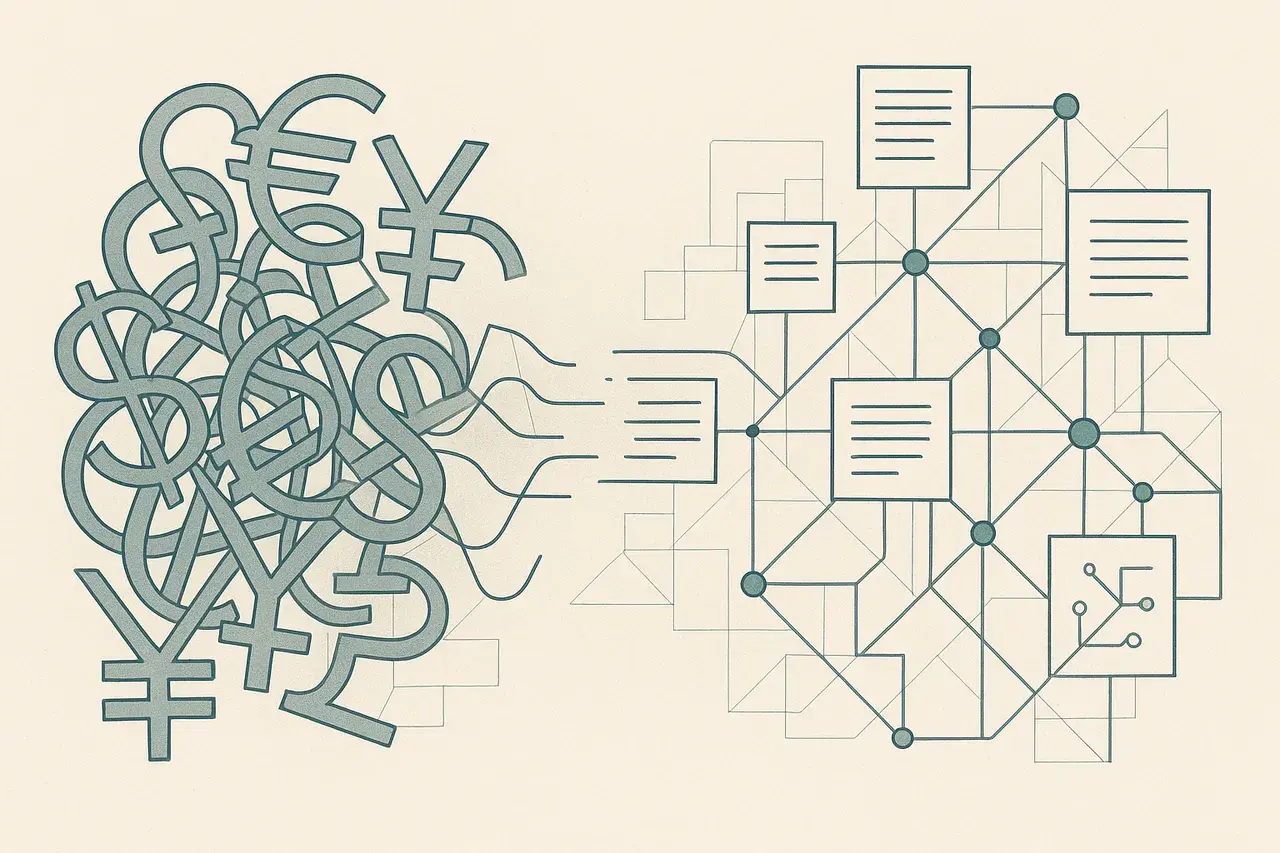
The Budget Signal Everyone Is Misreading
Cost-per-click figures for legal keywords have been edging upward for several years, and the instinctive response from most firms is to treat the increase as simple market inflation. More firms bidding, higher prices. That reading is comfortable because it requires no structural change. It is also, increasingly, incorrect.
What is actually happening is a redistribution of search visibility driven by generative AI. When a prospective client asks an AI assistant which solicitor handles complex cross-border employment disputes, the answer does not come from the highest bidder in an auction. It comes from the firm whose content, expertise signals, and structured knowledge the AI has been trained on or can retrieve with confidence. Paid search budgets fund clicks from humans who type queries. They do nothing to purchase presence in an AI-generated answer. Firms spending heavily on the former while neglecting the latter are, in effect, subsidising the visibility of competitors who have made the other investment.
What AI Visibility Actually Requires
For a law firm or in-house legal team, credible AI visibility rests on three foundations: depth of demonstrated expertise, structured and machine-readable content, and a coherent voice that runs consistently across every client-facing document.
The third point is where most organisations quietly fail. A firm may publish excellent articles, but its engagement letters read like they were drafted by a different organisation in a different decade. Its NDAs use boilerplate that contradicts the tone and risk posture communicated elsewhere. Its Master Service Agreements contain clauses that a well-informed AI would flag as inconsistent with the jurisdiction the firm claims to specialise in.
AI systems, whether consumer-facing assistants or enterprise procurement tools, are increasingly good at detecting incoherence. A potential client whose own AI reads a proposed contract and finds language that conflicts with the drafting norms of English law, or that appears copied from a foreign jurisdiction template, will notice. The confidence signal is broken before the relationship has started.
Contracts as the Coherence Layer
This is precisely the problem that a contract lifecycle management platform built around drafting in a consistent voice is designed to solve. When every contract a firm produces reflects the same legal positioning, the same risk tolerances, and the same jurisdictional awareness, the organisation projects coherence. That coherence is readable by humans and, increasingly, by machines.
Adira drafts in a company's own voice because a firm's contractual output is not a back-office administrative function. It is a primary signal of expertise and reliability. When a counterparty's legal team or AI tool reads a contract from your organisation, it forms a view about how sophisticated you are, how clearly you understand the governing law, and how seriously you take the other side's interests. Contracts drafted from generic templates, or assembled by cutting and pasting from previous deals, fail that test consistently.
For in-house teams specifically, the stakes are sharper. Procurement and legal operations leaders are now evaluating external counsel partly on the basis of how smoothly contract review integrates with their own AI tooling. A law firm whose documents are poorly structured, inconsistently formatted, or jurisdictionally ambiguous creates friction in that workflow. That friction has a cost, and in-house teams are beginning to internalise it when deciding which panel firms to retain.
Reading Contracts from Your Side
There is a second dimension worth addressing directly. While much attention goes to what a firm produces, equal attention should go to what it receives. AI visibility is not only about being found. It is about being a sophisticated participant in a world where counterparties, clients, and regulators are all deploying AI to review the documents you send them.
A CLM that reads contracts from your side of the table, flagging clauses that deviate from your standard positions or that carry risk profiles inconsistent with the governing law, is not just an efficiency tool. It is a reputational safeguard. Firms that send out contracts containing provisions that are unenforceable under English law, or that routinely miss non-standard indemnity language in incoming agreements, will find that reputation travels. AI makes those failures more visible, not less.
The Firms That Will Benefit
The firms and in-house teams that come out ahead in an AI-mediated legal market will not necessarily be the ones with the largest advertising budgets. They will be the ones whose expertise is demonstrably consistent across every document they produce, whose contracts reflect genuine jurisdictional knowledge, and whose processes reduce friction for the sophisticated clients and counterparties they want to work with.
Rising cost-per-click is a symptom. The underlying condition is that the mechanisms through which legal expertise is signalled and evaluated are changing faster than most firms have adjusted to. Contracts are not peripheral to that change. They are central to it.
See how Adira drafts in your voice and reads contracts from your side.
Explore the showroomWorking through a contract like this? Weave is Adira’s free tool to read, mark up, and connect any contract in your browser — no account needed.
Try Weave — freeRelated reading

The Hidden Tax on Legal Marketing: Why Rising Ad Costs Signal a Deeper Shift in How Clients Find Legal Help
2 August 2026

When the Leak Is the Contract: What Legal AI Fiction Tells Us About Real Confidentiality Risk
1 August 2026
When the Contract Becomes Evidence: Lessons for In-House Teams from Legal AI Fiction
30 July 2026