legal privilege
Privilege Hunting and the Duty of Care: What In-House Teams Must Learn from the Court of Appeal's Warning
A Sharp Rebuke from the Court of Appeal
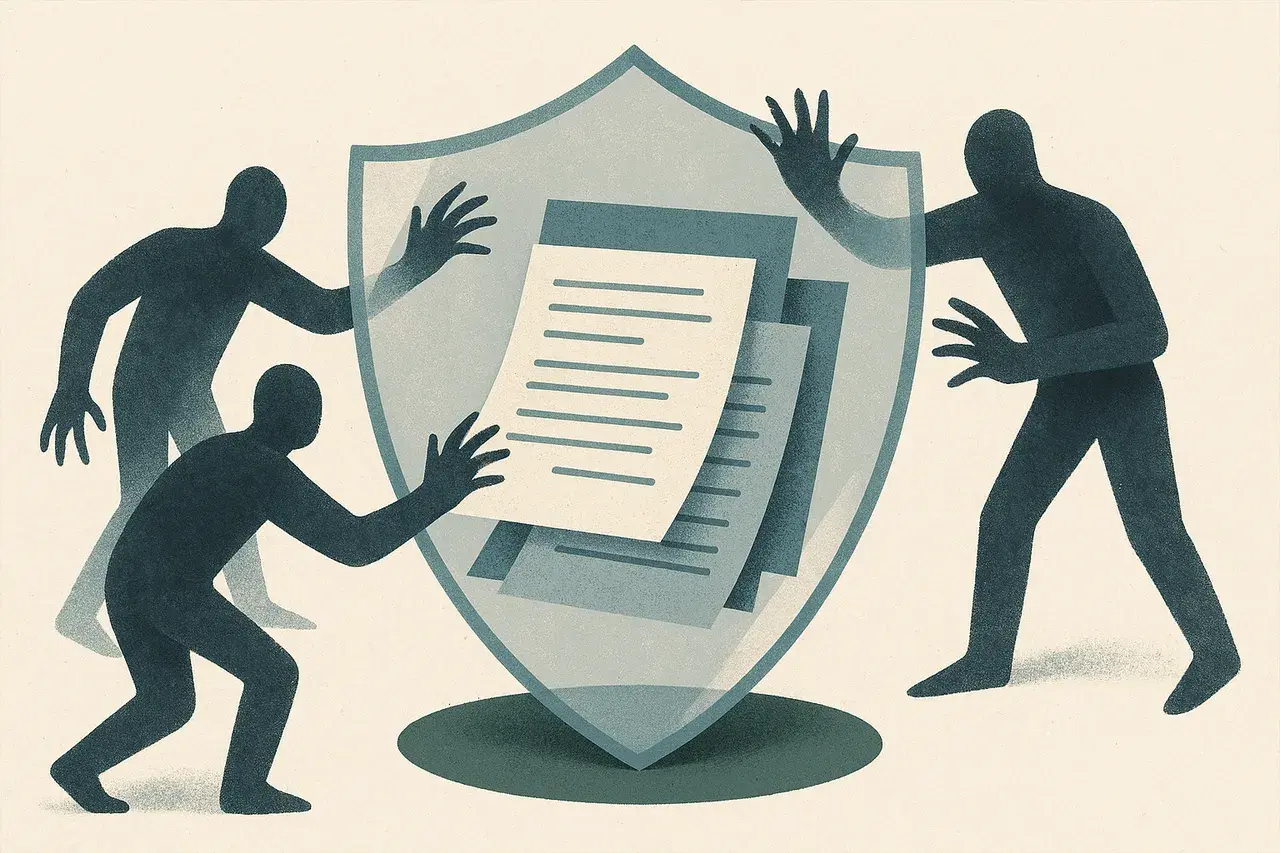
The Court of Appeal has issued a pointed condemnation of so-called privilege hunting, a practice in which a party to litigation uses deceptive or illicit methods to extract privileged information from the other side. The case that prompted the rebuke involved a law firm partner who was duped into disclosing information that should have remained protected under legal professional privilege. The court was unambiguous: such tactics are an affront to the administration of justice.
For most in-house legal teams, the immediate reaction will be a mixture of alarm and recognition. Sophisticated adversaries in contentious matters do not always play by the rules. And while the judgment focuses on litigation conduct, its implications reach well beyond the courtroom into the everyday handling of confidential legal information.
What Legal Professional Privilege Actually Protects
Legal professional privilege is one of the most fundamental safeguards in the English legal system. It protects communications between a lawyer and client made for the purpose of giving or receiving legal advice, as well as documents prepared in contemplation of litigation. Once privilege is waived, whether voluntarily or through deception, it is extremely difficult to claw back.
The vulnerability exposed in this case is instructive. A skilled interlocutor, posing under false pretences, was able to draw out information that a trained solicitor would ordinarily guard carefully. The lesson is not that lawyers are careless. It is that privilege can be lost through social engineering just as easily as through a document leak. Sophisticated adversaries know this. Litigation strategy increasingly includes an intelligence-gathering phase, and not all of it is above board.
The Structural Problem for In-House Teams
In-house lawyers occupy a particularly exposed position. Unlike their private practice counterparts, they operate within organisations where the boundary between legal advice and commercial decision-making is blurry. Contracts, internal memos, negotiation notes and risk assessments pass through multiple hands. The question of what is privileged and what is not is genuinely contested territory, even within well-resourced legal departments.
Add to this the growing volume of contracts and correspondence that in-house teams are expected to manage, and the risk surface becomes significant. Information about a company's legal position, its exposure under a particular contract, or its internal assessment of a dispute can sit in dozens of files across multiple systems. In a world where privilege hunting is a documented litigation tactic, disorganisation is not merely inefficient. It is a liability.
How Contract Infrastructure Reduces Exposure
This is precisely the terrain where AI-driven contract lifecycle management has a structural role to play. When a platform reads contracts from the client's perspective and maintains a clear, searchable record of legal obligations, risk positions and negotiation history, it does two things at once. First, it makes genuine legal advice easier to identify and segregate. Second, it reduces the likelihood that privileged analysis becomes accidentally conflated with routine commercial correspondence.
Adira, for example, works within a company's own voice and applies jurisdiction-specific legal knowledge to flag risk and generate drafts. That combination matters here because it means the legal reasoning embedded in contract work product is purposeful and traceable. When a piece of analysis is prepared in contemplation of a dispute or in response to a legal question, it is far easier to assert privilege over it when its provenance is clear. The alternative, documents produced by generic AI tools without legal grounding, creates precisely the ambiguity that adversaries can exploit.
A well-governed contract repository also limits who can access sensitive legal assessments. Role-based permissions, audit trails and structured metadata are not glamorous features, but they are the building blocks of a privilege-aware information environment.
Practical Steps for Legal Teams Today
The Court of Appeal's judgment is a prompt to review information hygiene across the board. In-house teams should consider several concrete measures.
First, audit where privileged legal analysis currently lives. If risk assessments and legal opinions are filed alongside ordinary commercial correspondence, the privilege case for them is weakened from the outset.
Second, brief non-legal colleagues on the basics of privilege. The solicitor in the reported case was deceived. The risk to an account manager or procurement officer who receives a cleverly worded enquiry is considerably higher.
Third, ensure that any AI tooling used in contract and legal work maintains a clear distinction between legal advice functions and administrative ones. Platforms that apply jurisdiction-specific legal knowledge, rather than producing generic text, produce outputs whose legal character is easier to define and defend.
Privilege is not an abstract procedural nicety. It is a practical shield, and the Court of Appeal has reminded everyone that others are actively looking for gaps in it.
See how Adira drafts in your voice and reads contracts from your side.
Explore the showroomWorking through a contract like this? Weave is Adira’s free tool to read, mark up, and connect any contract in your browser — no account needed.
Try Weave — freeRelated reading

When Verbal Promises Replace Written Contracts: A Warning for In-House Teams
31 July 2026

When Metrics Drive Decisions: What Prosecution Quotas Teach In-House Counsel About Incentive Design
15 July 2026

India Supreme Court Protest Rights Ruling: What GCs and Multinationals Must Know About Campus Dissent, Police Powers, and Contract Risk
12 August 2026