government contracts
Injunctions Against Government Construction Projects: What the White House Ballroom Case Tells Contractors and Counsel
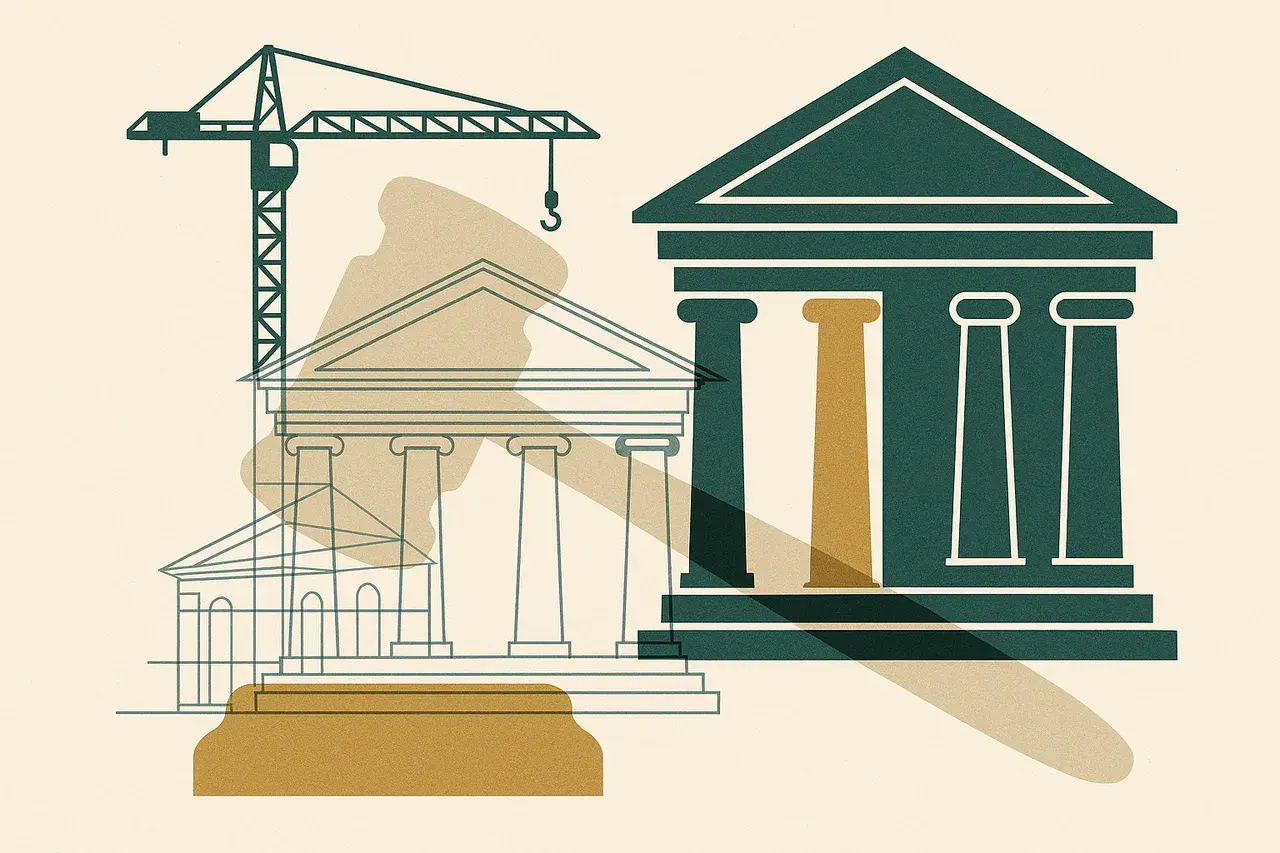
Why a Ballroom Dispute Has Serious Contract-Law Consequences
The push to persuade the Supreme Court of the United States to leave in place a lower-court order blocking construction of a White House ballroom has attracted attention well beyond Washington. For lawyers and commercial teams working on government or public-sector contracts anywhere in the world, the underlying legal mechanics, specifically when a court will freeze a project mid-build and what that costs all parties, matter far more than the political theatre surrounding the particular structure at issue.
The case is a sharp reminder that injunctive relief is not a theoretical remedy reserved for textbooks. Courts grant it, they sustain it on appeal, and they occasionally ask the highest court in the land to weigh in on whether it should survive. Understanding how that process works is essential for anyone signing or managing a public construction contract.
What Courts Actually Weigh When Issuing a Construction Injunction
An injunction blocking a government construction project does not arrive automatically. A claimant must ordinarily satisfy a multi-factor test: a likelihood of success on the merits of the underlying claim, a risk of irreparable harm if the works continue, a balance of convenience that favours a pause, and, critically in public-sector cases, whether the public interest supports stopping the build.
That last factor creates a distinctive tension in government contract disputes. Ministers and agencies routinely argue that a public facility serves the nation and that delay is itself a public harm. Challengers counter that unlawful construction, whether procedurally irregular or substantively ultra vires, is itself contrary to the public interest. Courts must referee that clash with limited evidence and tight timescales, which is why emergency applications to appellate and supreme courts are relatively common in high-profile public works disputes.
The Irreparable Harm Calculus in Mid-Build Injunctions
In ordinary commercial construction disputes, parties often argue that damages are an adequate remedy and that a court should therefore decline to grant an injunction. That argument is harder to sustain once concrete has been poured. Partly built structures create sunk-cost pressures that distort the legal analysis: defendants argue that stopping now causes more harm than completing the works, while claimants argue that completing an unlawful structure makes the wrong permanent.
The White House ballroom litigation illustrates this vividly. Once a significant portion of a project is complete, the equitable calculus shifts. Courts exercising discretion will look at whether continuation would render any eventual judgment hollow. Counsel advising clients on construction contracts, whether public or private, should flag this inflection point explicitly: the window in which injunctive relief is both available and practically effective is often narrow, and delay in seeking relief can itself be used against a claimant as evidence that the harm is not truly irreparable.
Government Contracts and the Limits of Contractual Dispute Mechanisms
Most government construction contracts contain elaborate dispute-resolution clauses: staged negotiations, adjudication, expert determination, arbitration. Those mechanisms are designed to keep disputes out of court and projects on schedule. They work well for ordinary delay and variation claims. They work less well when the challenge is not commercial but constitutional or administrative, questioning whether the project should exist at all.
When the legal challenge is rooted in public law rather than contract, the contractual dispute ladder is largely irrelevant. A claimant is not bound by an arbitration clause when alleging that the decision to commission the works was itself unlawful. This distinction matters enormously when drafting government contracts: boilerplate dispute-resolution provisions do not insulate a project from judicial review, and parties that assume otherwise discover the gap at the worst possible moment.
What Contract Managers and In-House Teams Should Take Away
Three practical points deserve prominence. First, pre-contract due diligence on a government project should include a public-law risk assessment, not just a commercial risk register. If a project is politically contested or sits in legally ambiguous territory, the probability of injunctive challenge is material and should be priced accordingly.
Second, the choice of governing law and jurisdiction clause affects how a freeze order is likely to be handled. Different legal systems apply different tests for interlocutory injunctions, and in some common-law jurisdictions cross-undertakings in damages from the claimant provide a degree of contractual protection to the defendant that civil-law systems may not replicate.
Third, force majeure and suspension clauses need to address court-ordered stoppages explicitly. Many standard-form construction contracts treat injunctions as a neutral suspension event and pause time-bars and liquidated damages accordingly. Others are silent, leaving the allocation of delay costs to be fought out separately. Adira's contract-review engine flags these gaps at the drafting stage rather than after a court order lands.
The Bigger Picture: When Courts Become Part of the Project Risk
The trajectory of the White House ballroom case toward the Supreme Court is a useful stress test for how legal systems handle the intersection of executive action, public procurement, and judicial oversight. For global practitioners, the lesson is not jurisdiction-specific. Courts in the United Kingdom, the European Union, Canada, and Australia have all, in recent years, issued injunctions pausing significant public-sector construction on various grounds, from environmental law to procurement irregularity.
The legal principle that no project, however politically significant, is automatically beyond judicial pause is not new. What is new is the speed at which such challenges can now escalate through court hierarchies and generate real commercial consequences while doing so. Contract teams that treat litigation risk as a post-signature problem are already behind. The smarter approach is to identify exposure early, draft contracts that allocate suspension risk clearly, and monitor the legal environment around public projects with the same rigour applied to programme and cost.
Frequently asked questions
- Can a court issue an injunction to stop a government construction project?
- Yes. Courts can and do issue injunctions pausing government construction projects where a claimant demonstrates a serious legal challenge, a risk of irreparable harm if works continue, and that the balance of convenience favours a stop. The public interest is an additional factor courts weigh heavily in public-sector cases.
- What is the legal test for a preliminary injunction in a construction dispute?
- Most common-law courts apply a four-part test: likelihood of success on the merits, irreparable harm without relief, balance of hardships favouring the claimant, and consistency with the public interest. In government construction cases the public interest limb often dominates the analysis and can cut either way.
- Does an arbitration clause in a government contract stop someone from seeking an injunction?
- Not where the challenge is grounded in public or constitutional law rather than the contract itself. A claimant arguing that the decision to commission a project was unlawful is not bound by the contract's dispute-resolution mechanism and can seek judicial review and injunctive relief directly from the courts.
- What happens to contractors if a court order freezes a construction project mid-build?
- The answer depends on the suspension and force majeure clauses in the contract. Some standard forms treat a court-ordered stop as a neutral suspension, pausing time-bars and adjusting the programme without immediate cost liability. Others are silent, leaving parties to dispute delay damages separately, which makes explicit drafting on this point essential.
- Why is the White House ballroom case at the Supreme Court?
- The case reached the Supreme Court because a party sought an emergency application to lift or preserve a lower-court injunction blocking the construction. Supreme courts regularly receive such emergency applications when a project pause has significant and time-sensitive consequences. The substantive legal question being litigated concerns whether the lower court was correct to freeze the works.
See how Adira drafts in your voice and reads contracts from your side.
Explore the showroomWorking through a contract like this? Weave is Adira’s free tool to read, mark up, and connect any contract in your browser — no account needed.
Try Weave — free