remote working
When the Office Goes Dark: What Hybrid Disruptions Reveal About Contract Continuity
The Fragility Behind the Flex
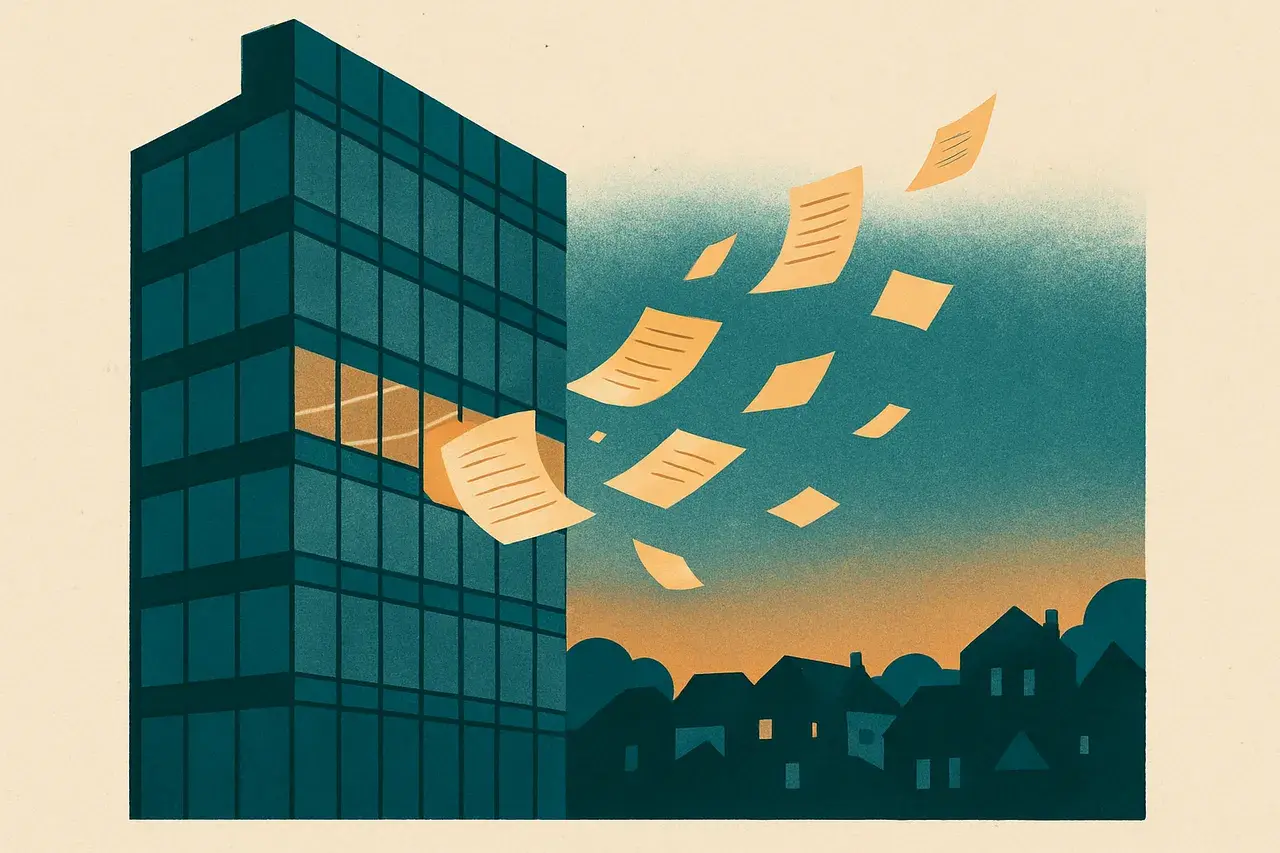
When a major transatlantic firm recently sent its London lawyers and staff home for a fortnight because of a broken air conditioning system, the immediate story was one of workplace pragmatism. The deeper story is about whether legal operations are genuinely portable or whether they merely appear to be.
Most law firms and in-house legal teams believe they have solved the remote-working question. Laptops are issued, VPNs are configured, video calls replace conference rooms. But contract work in particular has a way of exposing the gaps. Drafting, negotiation, review and signature each carry dependencies that a comfortable hybrid routine can obscure until the moment something forces a full and unplanned switch to remote.
Where Contract Workflows Break Down
The vulnerabilities tend to cluster in three places.
First, institutional knowledge is often stored in people rather than systems. A senior associate who knows that this particular counterparty always pushes back on limitation of liability clauses, or that a specific client wants Scottish law governed agreements rather than English, carries that knowledge in their head. When the office is unavailable and informal corridor conversations disappear, that knowledge does not automatically travel home with them in a usable form.
Second, version control becomes precarious. Many teams still rely on email chains and shared drives to manage contract drafts. That approach tolerates a certain level of ambient coordination when people are physically present. Remove the ambient coordination and the same approach produces conflicting versions, missed redlines and genuine legal risk.
Third, jurisdiction-specific requirements can be handled inconsistently when oversight is distributed. A contract that needs to comply with the UK's specific consumer rights framework, or that must reflect post-Brexit regulatory positions, requires consistent application of the relevant legal standards regardless of where the lawyer happens to be sitting.
What AI-Native CLM Changes About This Picture
The argument for AI-native contract lifecycle management has always included efficiency gains, but the more important case is resilience. A platform that holds your organisation's drafting standards, clause libraries, negotiation preferences and jurisdictional rules in a single governed environment does not care whether the person accessing it is in a City office or a home study.
Adira is built on this principle. The drafting voice it uses is the company's own, drawn from the organisation's existing contracts and standards rather than generic templates. The legal knowledge it applies is jurisdiction-specific, which in the UK context means it reflects English and Scots law as appropriate, and it remains consistent regardless of which team member is leading the matter. That consistency is not just a quality benefit in normal conditions. It is an operational lifeline when normal conditions do not apply.
The Legal Cheek report noted that the firm went into "fully-remote mode" as though that were a distinct and somewhat exceptional state. For organisations whose contract infrastructure lives in the cloud and is governed by AI, there is no mode switch. There is simply work, conducted wherever the lawyer happens to be.
The In-House Angle
In-house legal teams face a particular version of this challenge. They are often smaller than their external counsel counterparts, carry broader responsibility across the business, and have less tolerance for the kind of informal knowledge transfer that larger teams can absorb. When an in-house lawyer is unexpectedly working from home, their colleagues in procurement, finance or sales may not know who holds the current version of a supplier agreement or whether a renewal deadline is approaching.
This is where CLM infrastructure shifts from a productivity tool to a governance tool. When contracts are stored, tracked and managed within a single AI-informed system, the question of who has the latest version becomes trivial. The question of whether a renewal is due becomes automated. The question of whether the agreed standard terms were applied becomes auditable.
None of this requires a dramatic investment programme. It requires a decision to treat contract infrastructure with the same seriousness that firms and in-house teams already apply to their matter management and financial systems.
Building for the Unplanned
The honest lesson from a two-week remote working episode caused by broken air conditioning is not that firms should stress-test their office equipment more rigorously. It is that legal work should be structured to tolerate disruption without degrading in quality.
Contracts are the legal record of commercial relationships. They carry financial exposure, regulatory obligations and reputational weight. Allowing their quality to vary based on whether the office is open or closed, whether the right person is available, or whether the team happens to be in the same building is a risk that good governance should not accept.
The firms and in-house teams that emerge from the next unplanned disruption in best shape will be those that built for portability before they needed it.
See how Adira drafts in your voice and reads contracts from your side.
Explore the showroomWorking through a contract like this? Weave is Adira’s free tool to read, mark up, and connect any contract in your browser — no account needed.
Try Weave — free