force majeure
When Geopolitical Instability Rewrites Your Contract Risk Map
The Ground Is Shifting Beneath Standard Boilerplate
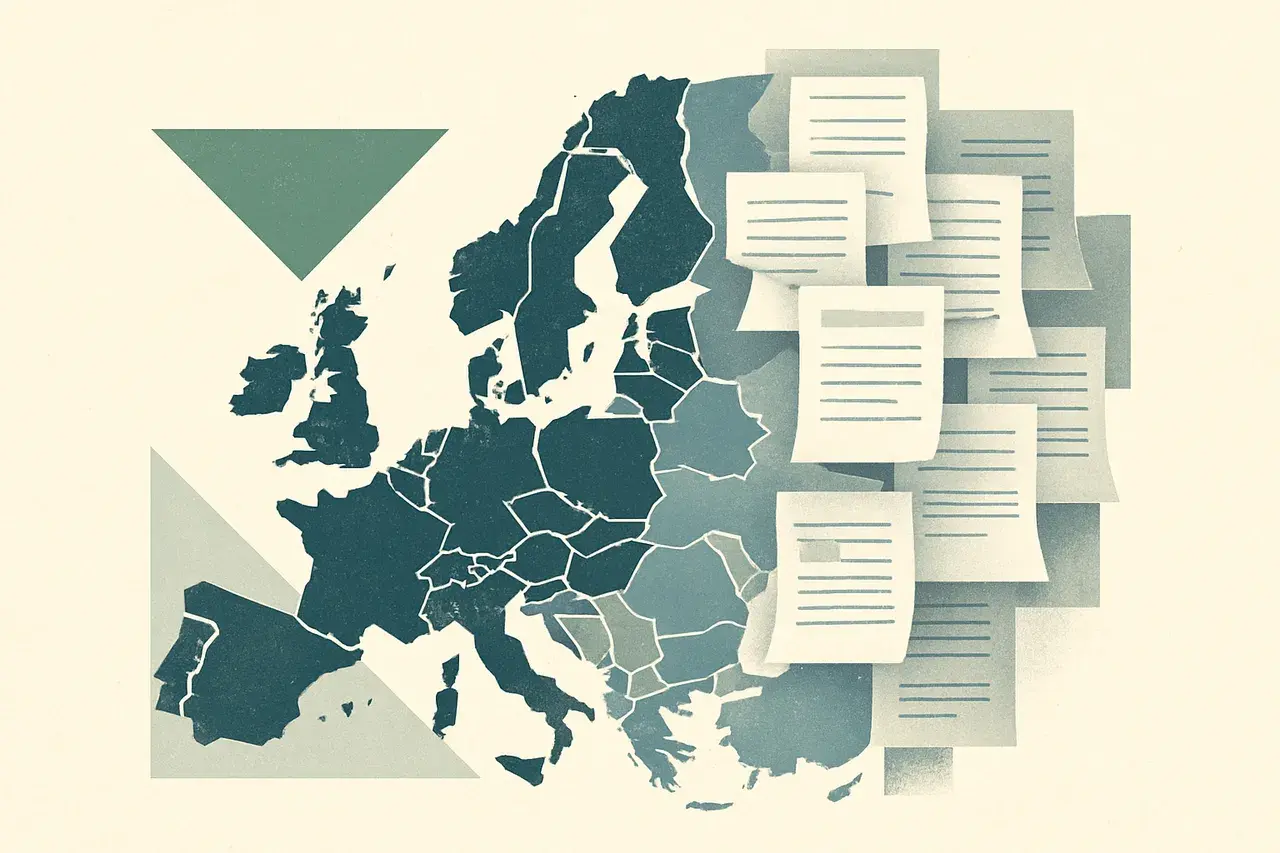
Legal teams have spent decades treating force majeure as a clause that almost never fires. It sits in the back of a contract like a spare tyre: reassuring to have, rarely inspected. Recent events in Eastern Europe are changing that calculus. Reporting from Verfassungsblog notes that Russia's state rituals and commemorative practices are visibly disrupted by the expanding reach of the conflict, a sign that war is no longer geographically contained in the ways counterparties once assumed when they signed long-term supply, services or licensing agreements.
For in-house counsel and their external advisers, that observation carries a practical implication: the contracts signed in 2021 or 2022 were drafted against a particular mental map of where risk lived. That map is now outdated.
Force Majeure Clauses Were Not Built for Prolonged Ambiguity
Most force majeure provisions anticipate a clean, dateable event: a hurricane, a government embargo, a declared war. They are far less comfortable with what practitioners are increasingly encountering, namely a sustained, mutating conflict that disrupts logistics, insurance availability, correspondent banking and counterparty solvency without ever producing a single trigger event that all parties agree upon.
The drafting problem is compounded by jurisdiction. A clause governed by English law reads differently from one governed by French, German or Ukrainian law, and courts in each system will apply their own doctrines of hardship, impossibility or changed circumstances alongside whatever the contract actually says. Adira's jurisdiction-aware drafting engine exists precisely to surface these divergences at the point of drafting, not at the point of dispute. Knowing that a clause will be construed narrowly by an English court but expansively under a civil-law system should influence the language chosen, not the arguments made three years later.
Sanctions Clauses: The Sleeper Provision That Woke Up
Beyond force majeure, sanctions representations and termination rights have moved from boilerplate to live risk. Supply chains that touch Russian, Belarusian or certain third-country intermediaries now require active monitoring, not just a one-time compliance tick at signing. The practical difficulty is that many contracts do not clearly allocate the cost of sanctions compliance: who bears the expense of an alternative routing? Who has the right to terminate without penalty if a sanctions designation makes performance unlawful in one party's home jurisdiction but not the other's?
Adira reads contracts from your side of the table. That matters here because the same sanctions clause looks very different depending on whether you are the party with geopolitical exposure or the party relying on a counterparty that has it. Extracting and comparing those provisions across an entire portfolio, rather than contract by contract, is the kind of task that historically took weeks. It should not.
Governing Law and Dispute Resolution: A Renewed Priority
One quieter consequence of prolonged conflict is that forum selection and governing law choices made in better times can become practically unenforceable. Arbitration seats in certain jurisdictions become complicated. Recognition of awards becomes uncertain. Courts in some EU member states have shown willingness to disapply contractual choice-of-law provisions where they conflict with overriding mandatory rules introduced in response to the conflict.
For contracts being drafted or renewed now, governing law should be selected with explicit attention to enforcement risk, not just familiarity or client preference. This is not a counsel-of-perfection argument: it is a basic risk-management step that contract review tools should be surfacing as a matter of routine. Adira flags governing law and dispute resolution provisions as standard outputs in any contract analysis, precisely because these provisions are invisible until they are not.
What In-House Teams Should Do Before the Next Escalation
Geopolitical risk rarely arrives with a timetable. The practical response for legal operations teams is to act on the portfolio they have today, rather than wait for a specific trigger.
A sensible starting point is a targeted audit: identify contracts with counterparties, assets or performance obligations connected to conflict-affected regions, then assess whether the force majeure, sanctions, governing law and termination provisions in those contracts are adequate for the environment that now exists, not the one that existed at signing.
Second, update your standard forms. If your template force majeure clause still reads as though conflict is a distant abstraction, revise it. Build in explicit provisions for prolonged armed conflict, multi-jurisdictional sanctions regimes and supply-chain disruption that does not produce a clean trigger event.
Third, use the tools available to do this at scale. The combination of AI-assisted contract reading and jurisdiction-aware drafting means that a portfolio review which once required an army of associates can now be completed in a fraction of the time, with consistent outputs and a clear audit trail.
The war in Ukraine is a human tragedy first and a legal challenge second. But legal teams serve their organisations best by treating the second with the same seriousness as the first.
Sources
See how Adira drafts in your voice and reads contracts from your side.
Explore the showroomWorking through a contract like this? Weave is Adira’s free tool to read, mark up, and connect any contract in your browser — no account needed.
Try Weave — free