regulatory risk
When the Court Says No: What Executive Overreach Teaches In-House Teams About Contractual Risk
The Instinct to Retry and What It Costs
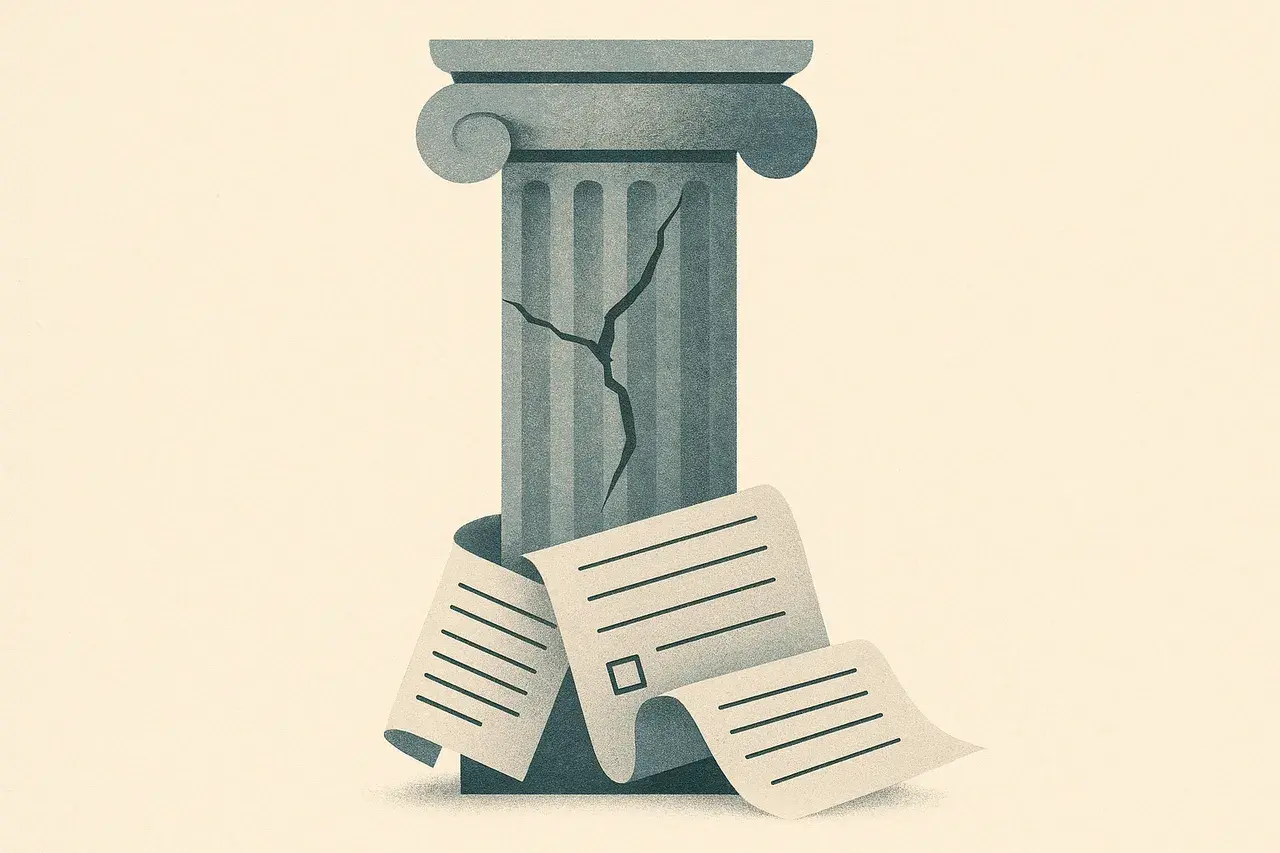
When a significant legal position collapses at the highest level, the tempting response is to reframe, resubmit and hope for a different outcome. The current administration's reported push to have the Supreme Court immediately rehear its birthright citizenship position, having already lost there, is an extreme example of that instinct. For legal and compliance professionals watching from the sidelines, it raises a more practical question: how do your own contracts and policies account for the possibility that the legal ground beneath them can shift, or be authoritatively rejected, without warning?
The answer, for most organisations, is that they do not account for it well enough. Regulatory and constitutional rulings are treated as background noise rather than as live variables inside the contract lifecycle. That is a mistake worth correcting.
Adverse Rulings Are Contract Events
A Supreme Court decision that voids or narrows an executive order does not only matter to constitutional scholars. It matters to any commercial agreement whose performance, pricing or compliance obligations were structured around the assumption that the order would stand. Government contractors, employers who adjusted hiring procedures, healthcare providers who revised reimbursement models, and technology companies that restructured data flows on the basis of a regulatory position now need to revisit those documents.
In practice, in-house teams rarely have a clean picture of which contracts carry that kind of regulatory dependency. Obligations are buried in schedules, representations are tucked into boilerplate, and change-of-law clauses are either missing or drafted so broadly as to be unenforceable. The result is that when a ruling lands, the legal team is conducting a manual triage exercise under pressure.
AI-assisted contract review changes that calculus. A system that reads agreements from the client's perspective, flagging clauses that reference specific regulatory regimes or government programmes, can surface exposure in hours rather than weeks. That matters enormously when the political and legal environment is moving as fast as it currently is in Washington.
The Bar Complaint Dimension: Reputation Risk Runs Through Documents Too
The reported bar complaint against Roberta Kaplan, filed by a conservative watchdog group as the administration continues contesting its obligation to pay the Carroll judgment, is a reminder that litigation conduct itself can become a reputational and regulatory event. Law firms and their clients are not insulated from that dynamic.
For in-house counsel, this surfaces a specific contracting concern: engagement letters, outside counsel guidelines and litigation management agreements rarely contain provisions that address how reputational developments at a firm affect the client relationship. If a firm becomes a target of organised complaints or political pressure, what obligations does the client have, and what rights does it hold? Most outside counsel guidelines are silent on the point.
Building clearer terms around firm conduct, conflicts and material changes in a firm's circumstances is not paranoia. It is prudent contract hygiene, and it is easier to achieve at the drafting stage than through a dispute years later.
Drafting for Uncertainty Rather Than Certainty
One of the consistent failures in commercial contracting is the assumption that the legal environment at signing will persist throughout the term. Sophisticated parties negotiate price, term and liability, but they often negotiate those terms against a static picture of applicable law. The current moment, in which executive orders are being issued, challenged and in some cases struck down within the same news cycle, should put that assumption to rest.
Change-of-law provisions deserve more attention than they typically receive. They should be specific about which regulatory regimes they cover, what the trigger threshold is (a proposed rule, a final rule, a court decision, a Supreme Court ruling), what obligations each party has to notify and renegotiate, and what happens if the parties cannot agree. A clause that simply says "if applicable law changes, the parties will negotiate in good faith" is almost worthless in practice.
AI-assisted drafting that understands jurisdiction-specific law can identify where a proposed clause falls short of the standard for that market and offer alternatives calibrated to the client's risk appetite. That is a different capability from a generic template library, and it matters more as regulatory volatility increases.
The Practical Takeaway for Legal Teams
The spectacle of constitutional litigation being relitigated at the highest court, combined with ancillary pressure campaigns against opposing counsel, is unusual in its visibility. The underlying dynamic, where legal positions collapse and organisations scramble to assess the downstream consequences, is not unusual at all.
In-house teams and law firms that build systematic contract intelligence into their operations will respond faster, identify exposure more completely and advise clients more credibly when the ground shifts. Those that rely on periodic manual review and institutional memory will continue to discover problems after the fact.
The lesson is not complicated. Contracts live in the real world, and the real world does not stay still. Your contract programme should not assume that it will.
See how Adira drafts in your voice and reads contracts from your side.
Explore the showroomWorking through a contract like this? Weave is Adira’s free tool to read, mark up, and connect any contract in your browser — no account needed.
Try Weave — freeRelated reading
When the Government Argues Against Itself: What Unitary Executive Overreach Means for Contract Certainty
14 July 2026

Can Legal AI Do Judgment? How the 'Judgment Layer' Is Reshaping Contract Lifecycle Management
3 September 2026

Why the Legal AI ROI Conversation Is Still Broken (And How to Fix It)
2 September 2026