regulatory compliance
Executive Order 14420 and the Bulk-Power System: What In-House Teams Must Do Now
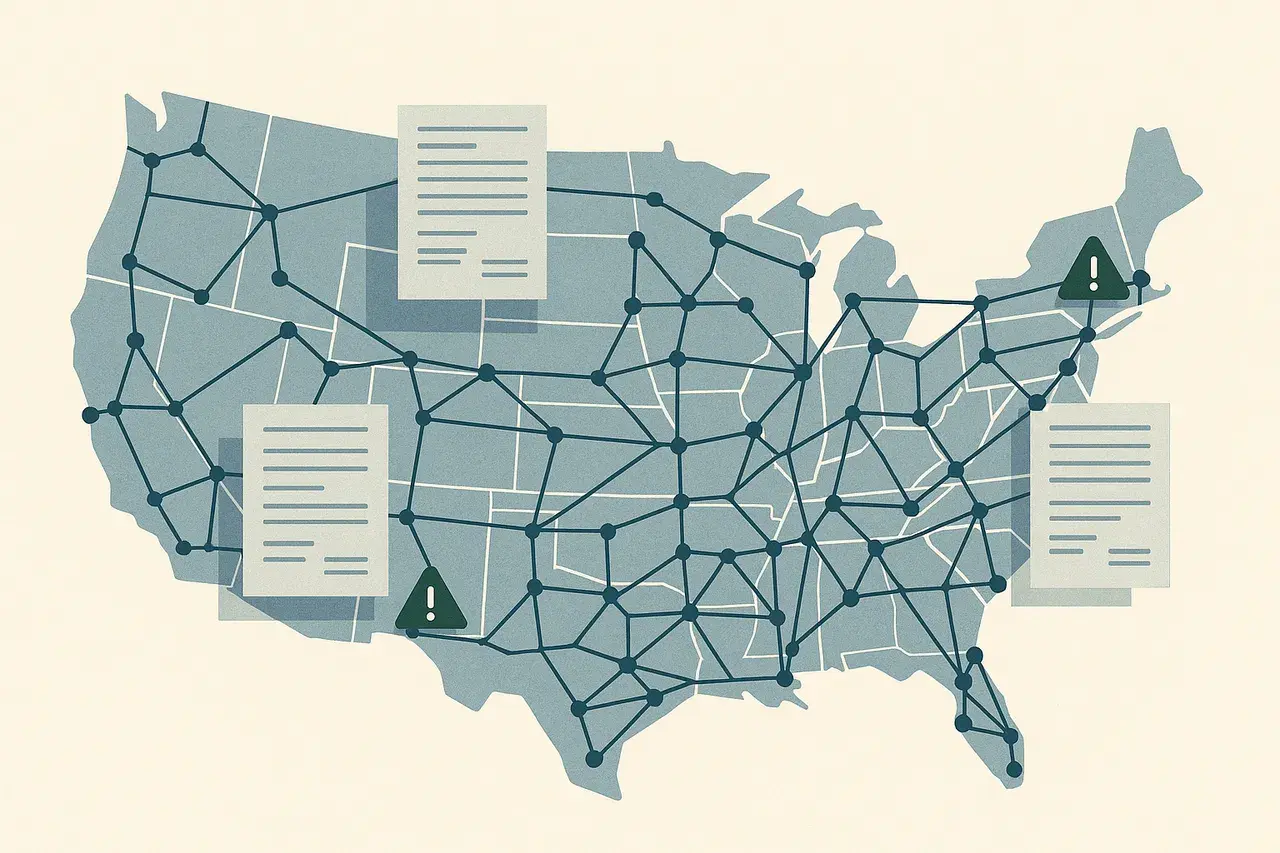
What Executive Order 14420 Actually Does
Signed in 2025, Executive Order 14420 extends and sharpens the United States government's authority to block transactions involving bulk-power system equipment where that equipment originates from, or is controlled by, foreign adversaries. The order sits within a lineage that began with EO 13920 in 2020, but it goes further by tightening the definitions of covered equipment, broadening the scope of parties subject to review, and signalling that enforcement will be more active than under its predecessor. For any business that manufactures, procures, installs, or maintains components connected to the US electricity grid, this is not background noise. It is a direct regulatory intervention that rewrites the risk calculus in existing and future contracts.
The order directs the Department of Energy to identify transactions that pose an undue risk to the bulk-power system and to prohibit or condition them accordingly. It also coordinates with the broader sanctions and export controls architecture, meaning that a piece of grid equipment sourced from a restricted jurisdiction could simultaneously trigger EO 14420 review, Export Administration Regulations exposure, and Office of Foreign Assets Control liability.
The Contractual Fallout: Where Existing Agreements Now Fall Short
Most procurement contracts written before 2025 were not drafted with EO 14420 in mind. That creates immediate gaps. Country-of-origin representations in equipment schedules may be insufficient because the order focuses on ownership and control, not just manufacture location. A transformer assembled in a third country but designed by a firm ultimately controlled by a designated foreign adversary could still be caught. Representations and warranties that rely solely on place of manufacture are therefore inadequate.
Force majeure and material adverse change clauses are the next pressure point. If a regulator prohibits a transaction mid-delivery, does the supplier bear the cost of substitution? Does the buyer have termination rights without penalty? Contracts that treat regulatory prohibition as a force majeure event shared between parties, rather than as a seller-side risk, leave buyers exposed to both delay and cost.
Indemnification provisions also deserve scrutiny. Where a utility or grid operator is compelled by the Department of Energy to remove already-installed equipment, the question of who bears that cost should be answered contractually before the regulator asks it.
Supply-Chain Due Diligence as a Legal Obligation, Not a Best Practice
EO 14420 effectively converts supply-chain due diligence from a voluntary good practice into something closer to a compliance prerequisite. In-house teams should treat vendor qualification questionnaires as legal instruments. They need to capture beneficial ownership structures, the nationality of key personnel with design authority, the source of intellectual property embedded in covered components, and any sub-tier suppliers that contribute hardware or firmware.
This is the moment to implement contractual audit rights that allow buyers to inspect supplier ownership documentation on demand and to require prompt disclosure of any change in control. A supplier acquired by a foreign adversary entity after contract signature should trigger a buyer right to terminate or substitute, not merely a right to notify. Without that clause, the buyer may find itself holding prohibited equipment with no clean legal exit.
Renegotiation Priorities for Energy Sector In-House Counsel
In-house teams at utilities, independent power producers, grid operators, and their tier-one suppliers should work through existing contracts with the following priorities in order.
First, country-of-origin and beneficial-ownership representations should be upgraded to reflect the control-based standard in EO 14420, not just the place-of-manufacture standard that was previously conventional.
Second, regulatory-prohibition termination rights should be inserted or clarified so that a Department of Energy prohibition order gives the buyer a clean, fee-free exit with a contractual obligation on the supplier to assist with compliant substitution.
Third, compliance covenants should require suppliers to maintain and provide evidence of their compliance with applicable US energy security regulations throughout the contract term, not just at execution.
Fourth, change-of-control provisions should be tightened to treat acquisition by a foreign adversary entity as an automatic material breach, triggering cure or termination rights.
Fifth, new master supply agreements should include a dedicated EO 14420 and bulk-power system compliance schedule that can be updated by reference as the Department of Energy publishes further guidance, without requiring full contract amendment each time.
What AI-Assisted Contract Review Adds Here
The volume of contracts potentially affected by EO 14420 is large. A single grid operator may have hundreds of active procurement and maintenance agreements touching covered equipment. Manual review of each for the gaps described above is time-consuming and inconsistent. AI contract review platforms can flag country-of-origin language, absent regulatory-prohibition termination clauses, and weak change-of-control provisions at scale, surfacing the highest-risk agreements first.
Adira reads contracts from the buyer's side, which matters here. A clause that looks balanced in isolation may be materially inadequate when read against the specific compliance obligations a grid operator carries under EO 14420. Jurisdiction-aware analysis, applied consistently across a contract portfolio, is precisely the kind of tool that turns a regulatory development of this scope into a manageable remediation project rather than an open-ended liability.
The Broader Sanctions and Export Controls Intersection
EO 14420 does not operate in isolation. The bulk-power system security framework intersects with Bureau of Industry and Security export controls on dual-use components, OFAC sanctions programmes targeting specific jurisdictions, and the Committee on Foreign Investment in the United States review process for any transaction that gives a foreign person rights over critical infrastructure. An equipment deal that clears one of these regimes may still be blocked by another.
In practice, this means that the legal sign-off on a major grid equipment procurement now requires coordinated input from trade compliance, sanctions counsel, and corporate M and A teams, not just procurement lawyers. Contracts should reflect that multi-regime exposure by including representations covering all applicable US regulatory frameworks, not just the one most obviously relevant at signing.
Frequently asked questions
- What does Executive Order 14420 prohibit in the bulk-power system?
- EO 14420 authorises the Department of Energy to prohibit or condition transactions involving bulk-power system equipment where the equipment poses an undue risk to US electricity infrastructure, particularly where a foreign adversary owns or controls the manufacturer or designer. It covers hardware, software, and services that are integral to the operation of the grid. The key test is control, not simply country of manufacture.
- How does EO 14420 affect existing procurement contracts?
- Existing contracts that rely on place-of-manufacture representations, rather than beneficial-ownership and control tests, may no longer provide adequate protection. Buyers could find themselves holding equipment that a regulator orders removed, with no clear contractual remedy against the supplier. In-house teams should audit current agreements for termination rights, indemnification gaps, and inadequate country-of-origin language.
- Who needs to comply with EO 14420 bulk-power system requirements?
- Any entity that manufactures, procures, installs, or services equipment connected to the US bulk-power system is potentially within scope, including utilities, independent power producers, grid operators, and their supply chains. Foreign suppliers who sell into the US electricity market are also subject to the order if their transactions involve covered equipment categories.
- What contract clauses should be added or updated because of EO 14420?
- Priority updates include: beneficial-ownership representations that track the control-based standard in the order; regulatory-prohibition termination rights that allow fee-free exit if a government order blocks the transaction; change-of-control clauses treating foreign adversary acquisition as material breach; and ongoing compliance covenants requiring suppliers to evidence adherence throughout the contract term.
- Does EO 14420 interact with OFAC sanctions or export controls?
- Yes. The bulk-power system security framework overlaps with OFAC sanctions programmes, Bureau of Industry and Security export controls, and CFIUS review. A transaction may satisfy one regime and still be blocked by another. Procurement teams should ensure legal sign-off covers all three frameworks, and contracts should include representations addressing the full range of applicable US regulatory requirements.
See how Adira drafts in your voice and reads contracts from your side.
Explore the showroomWorking through a contract like this? Weave is Adira’s free tool to read, mark up, and connect any contract in your browser — no account needed.
Try Weave — free