global legal
Electoral Roll Integrity and Contract Risk: What GCs Must Know When Democratic Institutions Face Legal Challenges
Why Electoral Instability Creates Immediate Contract Exposure
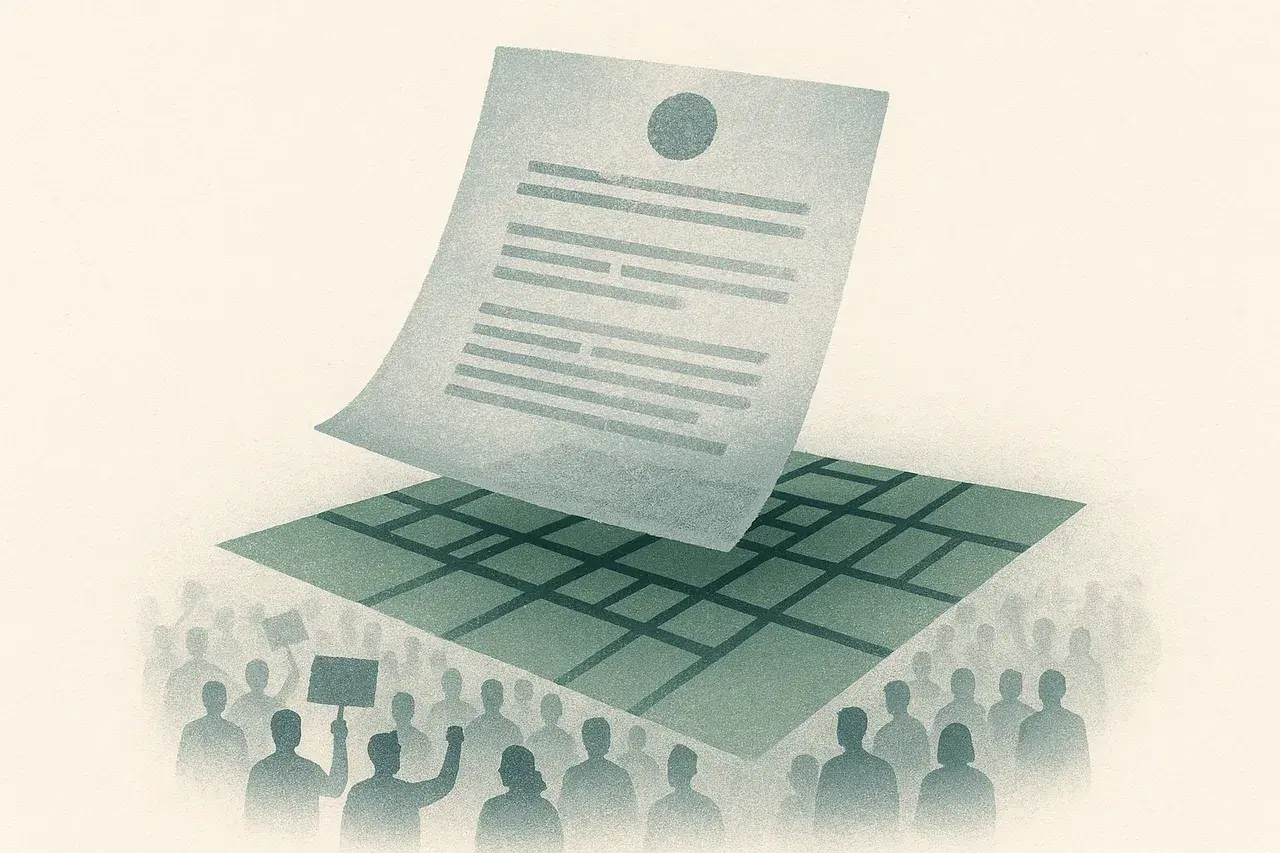
Electoral roll disputes and demands for the resignation of senior election officials may look like purely political events, but for general counsel and law firms advising on cross-border contracts, they carry concrete legal consequences. When large-scale protests over voter list irregularities disrupt capital cities, close transport infrastructure and prompt heightened security measures, the downstream effects on commercial counterparties, public procurement pipelines and regulatory timelines can be swift and material.
India is not an isolated case. From West Africa to South-East Asia, challenges to the legitimacy of electoral bodies have repeatedly created windows of legal uncertainty that freeze government decision-making, delay contract approvals and embolden counterparties to invoke suspension or termination rights. Understanding how those rights operate, and how to draft against them, is now a core competency for any GC with emerging-market exposure.
Which Contracts Are Most Vulnerable During Political Unrest
The contracts most immediately at risk when electoral institutions come under pressure fall into three broad categories.
First, public procurement agreements where a government ministry or statutory body is the counterparty. If the official with authority to approve milestone payments or sign variation orders is suspended, resigns or is politically compromised, the approval chain breaks. Payment delays follow, and in some jurisdictions they trigger interest obligations or dispute mechanisms that neither party anticipated.
Second, private commercial contracts with performance obligations tied to regulatory licences or government-issued permits. A business that needs a fresh environmental clearance, a spectrum allocation or a land-use approval cannot perform if the relevant body is paralysed by political controversy. Force majeure notices become inevitable.
Third, financing agreements that include material adverse change (MAC) representations. Lenders routinely define MAC to include events that have, or could reasonably be expected to have, a material adverse effect on the political or regulatory environment of a specified jurisdiction. Mass protests, metro closures and reports of irregularities in the conduct of a national electoral body can satisfy that threshold, particularly where the lender's legal team is already nervous about country risk.
Force Majeure and MAC Clauses: The Drafting Gap Most Companies Ignore
The single most consequential drafting question is whether "political instability" or "civil unrest" is expressly listed as a force majeure trigger, or whether the clause relies on a generic sweep-up provision. Courts in England and Wales, New York, Singapore and India all approach that question differently.
English law is notably strict: force majeure is a creature of contract, not of common law, and courts read force majeure clauses narrowly. Unless political protest is either named or clearly falls within a listed category such as "government action" or "civil commotion," English-law contracts will not automatically excuse performance. Singapore courts apply a similar purposive but narrow construction.
Indian courts, applying the Indian Contract Act 1872 and the doctrine of frustration under Section 56, are somewhat more willing to consider supervening impossibility, but the bar remains high. Protests and temporary disruptions rarely suffice; the event must render the contract fundamentally different from what was agreed.
The practical lesson is to name the risk. Clauses that specifically reference "actions of governmental or regulatory authorities resulting from political controversy," "suspension of governmental approvals pending investigation of public officials" and "civil unrest materially disrupting the counterparty's ability to perform" leave far less room for dispute.
Jurisdiction-by-Jurisdiction Pressure Points for GCs
For GCs managing multi-jurisdictional portfolios, the analysis cannot be uniform. A few pressure points worth mapping now:
India: The Election Commission of India is a constitutional body. Disputes about its conduct engage not just administrative law but constitutional litigation, which moves slowly and creates prolonged uncertainty. Contracts with central or state government counterparties should be reviewed for step-in rights and for the identity of the authorised signatory.
Sub-Saharan Africa: Several jurisdictions have seen electoral commissioners removed or suspended mid-term following court orders. In those cases, procurement frameworks often require fresh ministerial ratification of contracts, even where the original award was lawful. That re-ratification step is rarely reflected in the contract timeline.
South-East Asia: Political risk insurance is more commonly placed in these markets, but policy wordings vary significantly on whether electoral controversy constitutes a covered political risk event. GCs should review policy language alongside contract language.
Latin America: Constitutional challenges to electoral authorities have in some countries triggered emergency decree powers that directly affect foreign investment contracts, particularly in extractive industries.
Practical Steps GCs Should Take Before the Next Protest Cycle
Political calendars are predictable; protest cycles often are not. The following steps can materially reduce exposure before instability materialises.
First, run a contract audit focused specifically on government counterparties in jurisdictions where electoral or institutional controversy is elevated. Identify the approval chains embedded in those contracts and map which individuals hold contractual authority.
Second, review force majeure and MAC clauses against the specific risk profile of each jurisdiction, not against a generic template. If "civil commotion" is the only relevant listed event, take legal advice on whether it covers organised political protest under the governing law.
Third, consider whether business continuity provisions, such as step-in rights, alternative approval mechanisms or dispute resolution escalation ladders, are operative and practically usable.
Fourth, engage political risk insurers early. Waiting until protests are on the front page means premiums will be prohibitive and coverage will be excluded.
Finally, document any performance impact contemporaneously. If a government approval is delayed because the relevant official is suspended or politically compromised, that documentation becomes essential in any subsequent force majeure or MAC dispute.
How AI Contract Review Helps Identify Political Risk Exposure at Scale
For organisations with large contract portfolios spanning multiple jurisdictions, manual audits are slow and inconsistent. AI-powered contract lifecycle management platforms can read an entire portfolio of agreements, identify force majeure and MAC provisions, flag clauses that do not expressly address political instability, and surface contracts where the counterparty is a government body in a flagged jurisdiction. That triage function is not a replacement for legal judgement, but it compresses the time from "crisis emerging" to "portfolio reviewed" from weeks to hours. In a rapidly developing political situation, that speed advantage is itself a form of legal risk management.
Frequently asked questions
- Does political protest trigger a force majeure clause in a commercial contract?
- It depends entirely on the wording of the clause and the governing law. English-law contracts require force majeure to be expressly agreed, and courts read such clauses narrowly, so protest alone rarely suffices unless civil commotion or government action is listed. Indian and some civil-law jurisdictions may apply frustration doctrines more flexibly, but temporary disruption still sets a high bar.
- What is a material adverse change clause and how does political instability trigger it?
- A MAC clause allows one party, usually a lender or buyer, to withdraw or suspend performance if a defined material adverse change occurs. Many MAC definitions include deterioration in the political or regulatory environment of a jurisdiction, which means sustained protests, suspension of officials or loss of institutional legitimacy can satisfy the trigger. The precise drafting of the definition is critical and should be reviewed against the current risk environment.
- How should GCs respond when a government counterparty cannot approve payments due to political crisis?
- GCs should first identify whether the contract contains an alternative approval mechanism or step-in right. They should document the delay and its cause contemporaneously, serve any required notices promptly, and take jurisdiction-specific legal advice on whether the delay amounts to a breach, a force majeure event or a frustrating event. Delay in serving contractual notices is a common and costly mistake.
- Which jurisdictions present the highest contract risk during electoral disputes?
- Jurisdictions where the electoral body is also a regulatory authority, or where emergency decree powers can directly affect commercial contracts, present the highest risk. India, several sub-Saharan African states and parts of Latin America have seen electoral controversy translate into procurement freezes and regulatory delays. Multi-jurisdictional portfolios should be triaged by both the political risk rating of the jurisdiction and the nature of the government counterparty.
- Can an AI contract platform identify political risk exposure across a large contract portfolio?
- Yes. Modern AI contract lifecycle management platforms can scan large volumes of agreements to identify force majeure clauses, MAC definitions and government counterparties, flagging those that lack express coverage for political instability or civil unrest. This triage function allows legal teams to prioritise manual review and respond faster when a political crisis develops.
See how Adira drafts in your voice and reads contracts from your side.
Explore the showroomWorking through a contract like this? Weave is Adira’s free tool to read, mark up, and connect any contract in your browser — no account needed.
Try Weave — freeRelated reading
ESG Contract Compliance in the Crossfire: What the US Regulatory War Means for Global GCs
15 October 2026
Conflict Zones and Commercial Contracts: What the Tigray Crisis Teaches GCs About Force Majeure and Political Risk Clauses
12 October 2026
ESG Contract Compliance in 2025: What the US Regulatory Battle Means for Global GCs
16 October 2026