legal ai
Context and Governance in Legal AI: Why They Decide Which Tools Actually Stick
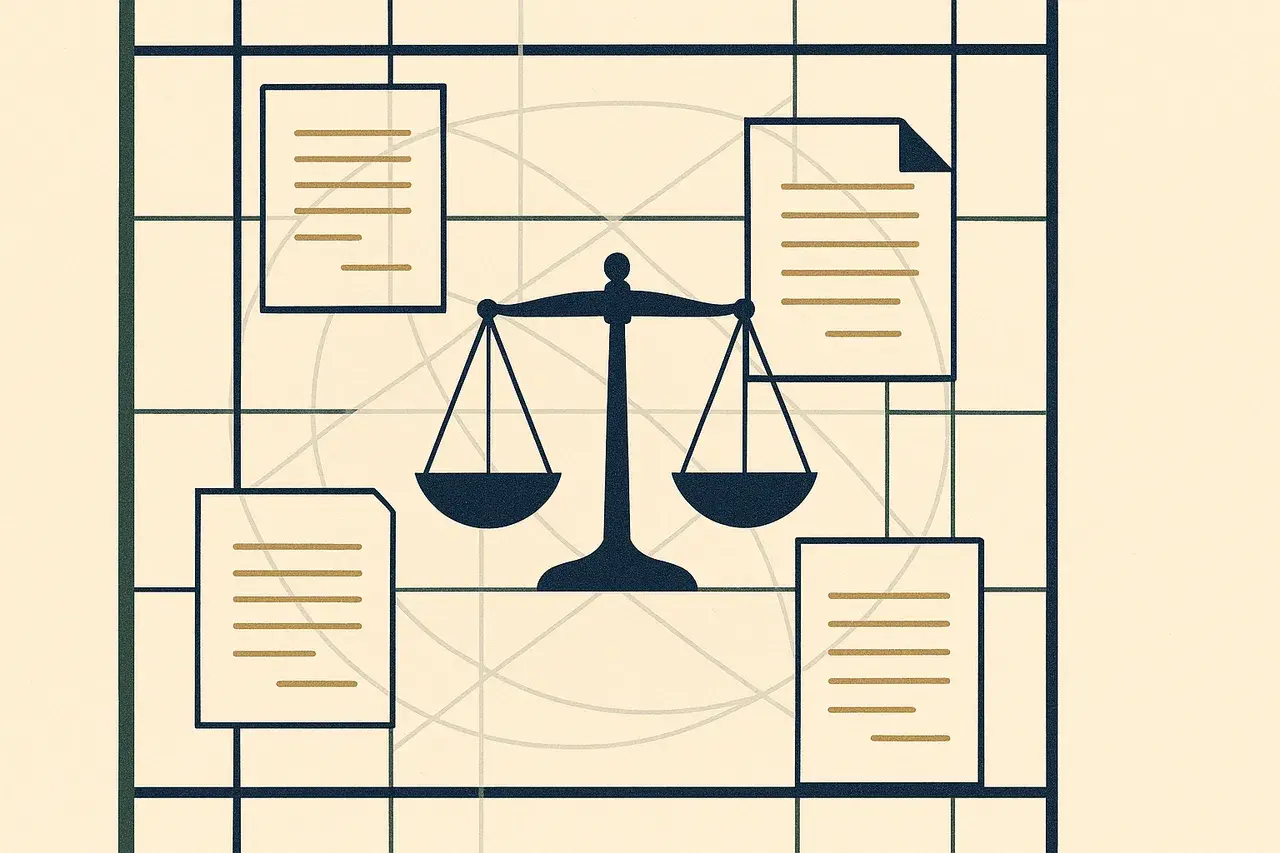
Why Legal AI Without Context Is Just a Faster Mistake
The current wave of legal AI tools has produced something of a paradox. Capabilities have expanded rapidly: contract review, clause generation, risk flagging, and obligation extraction are now table-stakes features. Yet adoption inside legal teams remains patchy, and the teams that do deploy these tools often report a creeping unease about outputs they cannot fully audit. The reason, increasingly, is that most deployments treat AI as a drafting engine rather than as a system that needs to understand the legal and commercial context surrounding every document it touches.
Context, in this setting, means far more than feeding a contract to a model and asking it to summarise. It means the AI understanding which jurisdiction governs the agreement, which counterparty is involved, what the company's negotiating posture is, and how this specific contract sits within a broader portfolio of obligations. Without that layer, an AI tool can produce confident, well-structured text that is wrong for the precise situation it is supposed to address. For legal teams responsible for real liability, that is not a marginal concern.
What Governance Actually Means for AI in Legal Teams
Governance is the word the legal technology industry has reached for, and it is the right one, even if it is sometimes used loosely. In the context of legal AI adoption, governance means three things operating together: control over what data the AI can access, clarity on who can approve or override AI outputs, and audit trails that show how a particular clause or recommendation was generated.
This matters because legal AI risk management is not only about preventing bad outputs. It is also about accountability. When a contract dispute arises eighteen months after signature, the question of whether an AI flagged a problematic indemnity clause, and whether a lawyer reviewed that flag, becomes a professional and potentially a regulatory issue. Governance frameworks create the record that answers those questions.
Legal teams considering AI contract lifecycle management tools should ask vendors not only what the model can do, but what controls exist around its use. Who configures the risk thresholds? Can those settings be adjusted per matter type or per client? What happens when the AI and the lawyer disagree?
Where Context and Governance Intersect in the Contract Lifecycle
The contract lifecycle, from initial request through drafting, negotiation, signature, and post-execution management, is exactly the kind of multi-stage process where context degrades at each handoff. A clause negotiated down to a softer position in week two is not always visible to the team managing renewal obligations in month fourteen. AI contract review tools that operate only at a single point in the lifecycle will capture less value and introduce more risk than those integrated across the full process.
This is one of the core arguments for purpose-built AI contract lifecycle management platforms over point solutions bolted onto existing workflows. When the AI has access to the full history of a contract, the counterparty's prior positions, and the company's standard playbook, its outputs are grounded. When it is working from a single uploaded PDF, it is guessing at context it does not have.
Adira is built on exactly this principle. The platform reads contracts from the client's perspective, drafts in the company's own voice, and applies jurisdiction-specific legal knowledge rather than generic model outputs. Context is not a feature to be added. It is the architecture.
The Honest Adoption Picture for Legal Teams
Legal AI adoption challenges are real and they are not primarily technical. The harder problems are organisational. Legal teams have calibrated levels of trust in different information sources, and an AI system that cannot show its reasoning will sit at the bottom of that trust hierarchy regardless of its accuracy rate.
Best practices for legal AI deployment therefore start with transparency, not capability. Teams that have succeeded tend to begin with narrowly scoped tasks where the AI's output can be checked quickly, build familiarity, and then extend scope as confidence develops. They also involve the people who will use the tools in the configuration decisions, rather than treating governance as an IT or compliance matter to be resolved before rollout.
The organisations that struggle are usually those that deployed a general-purpose large language model with minimal configuration, received outputs that were competent but not quite right for their contracts or their jurisdiction, and concluded that legal AI does not work. The lesson is not that AI is unreliable. It is that context and governance are prerequisites, not afterthoughts.
What Legal Teams Should Look for in AI Governance Tools
When evaluating AI contract compliance and governance capabilities, a practical checklist is more useful than vendor claims. Does the platform maintain a log of every AI-generated suggestion and every human override? Can you set different governance rules for different contract types, so a high-value M&A document gets more human review than a standard NDA? Does the AI apply the law of the relevant jurisdiction, or does it default to US or English law regardless?
These are not edge-case questions. They are the questions that determine whether a legal AI deployment creates real value or creates a new category of risk. The tools that will define the next phase of legal technology adoption are those that treat governance not as a compliance checkbox but as a core design principle, built in from the start rather than layered on when something goes wrong.
Frequently asked questions
- What does 'context' mean when people talk about legal AI tools?
- In legal AI, context refers to the background information that shapes how a contract or clause should be interpreted: the governing jurisdiction, the identity of the counterparty, the company's negotiating history, and how the document fits within a broader portfolio of obligations. An AI tool that lacks this context may produce technically coherent outputs that are wrong for the specific situation. Purpose-built platforms that integrate across the full contract lifecycle preserve context better than point solutions.
- Why do legal AI projects fail?
- Most legal AI projects underperform because of poor configuration rather than poor technology. Teams deploy general-purpose models without tailoring them to their jurisdiction, contract types, or internal playbooks, and then find that outputs are plausible but not quite right. Governance gaps, where there is no clear process for reviewing or overriding AI suggestions, compound the problem by leaving teams uncertain about when to trust the tool.
- What governance framework do legal teams need for AI contract review?
- A practical governance framework for legal AI should include access controls that determine what data the AI can use, defined approval workflows that specify who can accept or override AI outputs, and audit logs that record how each suggestion was generated. Teams should also establish different review thresholds for different contract types, applying more human oversight to high-value or high-risk documents.
- How is AI used in contract lifecycle management?
- AI is applied across the contract lifecycle to automate drafting, flag non-standard clauses during negotiation, extract and track obligations after signature, and identify renewal or termination deadlines. The most effective deployments connect these capabilities so that information from one stage, such as a negotiated carve-out, is visible at later stages such as compliance monitoring. Platforms that integrate AI across the full lifecycle reduce the context loss that occurs when point tools are used in isolation.
- Is legal AI safe to use without human review?
- No current legal AI tool is designed or appropriate for fully autonomous use without human oversight on consequential matters. AI contract review tools are most accurately described as decision-support systems that surface issues and generate drafts for a lawyer to evaluate. The professional and potential regulatory liability for contract errors remains with the legal team, which is precisely why governance frameworks that document human review are essential.
See how Adira drafts in your voice and reads contracts from your side.
Explore the showroomWorking through a contract like this? Weave is Adira’s free tool to read, mark up, and connect any contract in your browser — no account needed.
Try Weave — freeRelated reading

Can Legal AI Do Judgment? How the 'Judgment Layer' Is Reshaping Contract Lifecycle Management
3 September 2026

Legal Innovators UK 2025: What the AI Contract Management Tools on Show Mean for Legal Teams
22 September 2026

AI Productivity Gains in Legal: Why Contract Teams May Be the Exception
21 September 2026