energy contracts
Coal Plant Contracts and Grid Reliability Orders: What the Michigan Court Ruling Means for Energy Procurement Teams
Why the Michigan Coal Plant Ruling Matters Beyond the Headlines
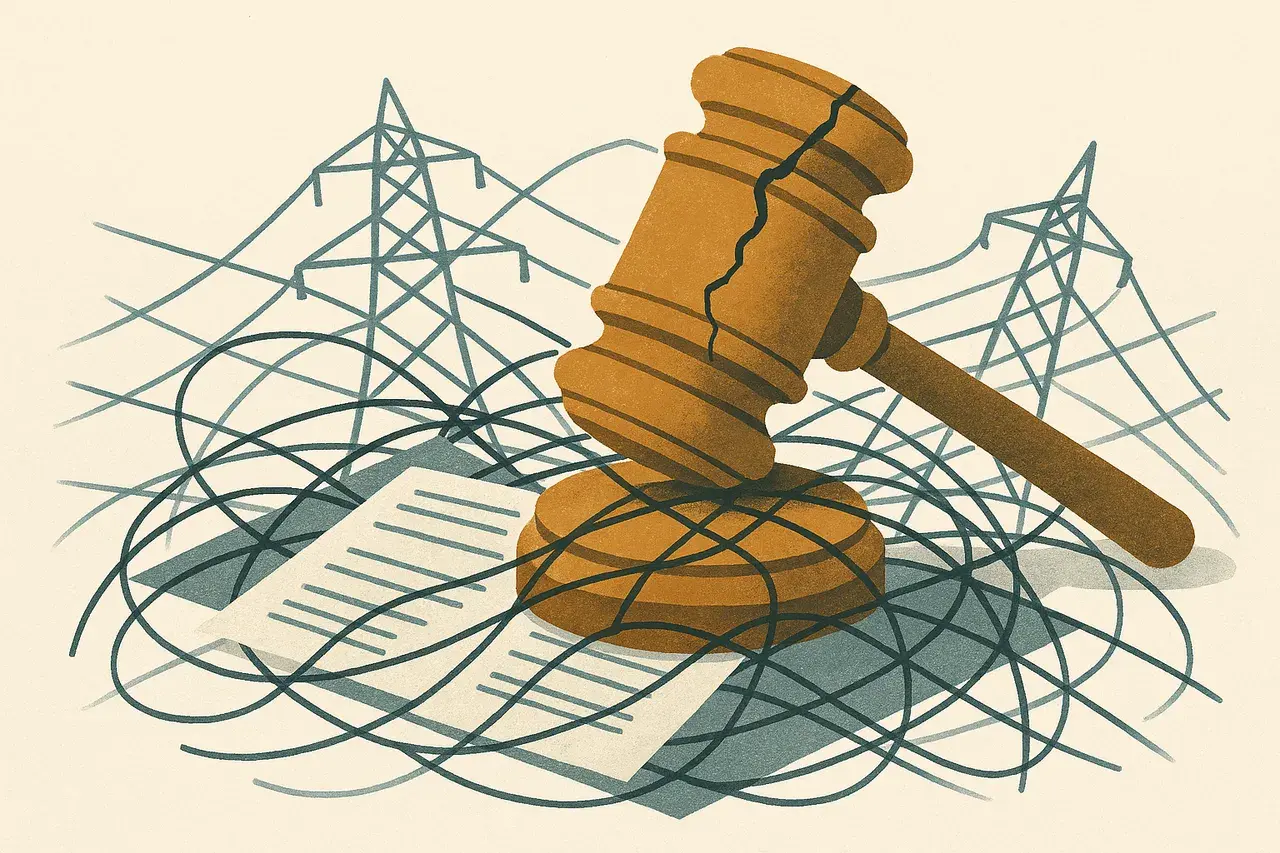
A federal court's decision to reject the Trump administration's emergency order keeping a Michigan coal plant operational is not simply a political story about energy policy. For in-house legal teams, procurement officers, and anyone managing energy supply contracts, the ruling creates immediate, practical questions about contract continuity, regulatory compliance, and the limits of executive authority over private commercial arrangements. The ruling confirms that courts will scrutinise emergency powers invoked under statutes such as Section 202(c) of the Federal Power Act, and that those powers do not automatically override ordinary commercial and regulatory processes.
The core contractual fallout is this: companies that adjusted their energy sourcing, grid interconnection arrangements, or supply-chain logistics in anticipation of the emergency order remaining in force must now reassess those positions. Any side-letters, short-term supply amendments, or operational commitments made on the assumption that the plant would stay online carry legal exposure that needs auditing today.
The Legal Basis That Failed: Section 202(c) and Its Contractual Limits
The administration relied on Section 202(c) of the Federal Power Act, which allows the Secretary of Energy to order continued operation of a facility during a grid emergency. Courts have historically treated this power narrowly. The Michigan ruling reinforces that the emergency trigger must be genuine, documented, and proportionate. Where an emergency order is struck down, any contractual amendments a counterparty agreed to specifically because of that order sit in an uncertain position. The question for in-house teams is whether those amendments survive independently or whether they were expressly conditioned on the regulatory direction continuing.
Power purchase agreements and grid interconnection contracts often contain regulatory-change clauses, sometimes called change-in-law provisions. If a party relied on an executive order to justify a pricing adjustment, an output guarantee, or a delivery schedule change, the reversal of that order may trigger renegotiation rights or, in some drafting, automatic reversion to prior terms.
Force Majeure, Change-in-Law, and the Clauses Now Under Scrutiny
Energy contracts contain several provisions that become relevant when government action forces a sudden operational shift. Force majeure clauses typically cover events beyond a party's reasonable control, but most well-drafted agreements explicitly exclude changes in government policy that were foreseeable or that the affected party could have challenged. A failed emergency order sits in an uncomfortable middle ground: it was government action, but it was also contested and ultimately void.
Change-in-law provisions present a cleaner analysis. Where a contract defines a "change in law" to include the revocation or invalidation of a government direction, the court's ruling may qualify. Procurement teams should check whether the definition in their agreement captures judicial invalidation of an executive order, not merely legislative or regulatory repeal. Many older energy contracts were not drafted with this specific scenario in mind, and that ambiguity creates negotiating leverage for both sides.
Supply-chain contracts sitting downstream of the plant, covering coal transportation, ash disposal, or ancillary services, face their own exposure. A plant closure that was delayed by the emergency order and is now accelerated by its rejection may trigger early-termination provisions, minimum-volume shortfalls, or liquidated-damages clauses in those secondary agreements.
What In-House Teams Should Renegotiate or Watch Right Now
The practical checklist for legal and procurement teams managing US energy contracts in the wake of this ruling has several immediate priorities.
First, audit any contract that was amended, extended, or newly executed in the period between the emergency order being issued and the court striking it down. Identify whether the commercial rationale for that amendment was explicitly tied to the regulatory direction.
Second, review change-in-law and regulatory-change definitions in all active power purchase agreements, grid services contracts, and fuel supply agreements touching facilities that have been subject to federal or state reliability orders in the past two years. The Michigan case will not be the last of its kind.
Third, examine termination-for-convenience and step-in rights. If a counterparty used the emergency order as justification for not proceeding with a planned closure or asset transfer, the removal of that justification may reopen those processes, and your contract may not give you adequate notice periods.
Finally, watch for the grid-operator response. MISO, the regional transmission organisation covering Michigan, will now manage the closure on its own timeline. MISO's tariff provisions and interconnection agreements have their own force-of-law effect, and any party with transmission rights or capacity obligations in that footprint should confirm their exposure with regional counsel.
The Broader Regulatory Signal for Energy Contracting in 2025
The Michigan ruling is part of a wider pattern in which courts are constraining the use of emergency executive powers to override established regulatory processes. For companies negotiating energy contracts in 2025, the signal is clear: do not treat an executive order as a durable contractual foundation. Build regulatory-reversal scenarios into your drafting from the outset.
Specifically, grid reliability contract clauses should now include explicit provisions addressing what happens when a government directive compelling continued operation is subsequently invalidated by a court. Silence on this point, which is common in template agreements, creates exactly the kind of ambiguity that generates expensive disputes.
Adira's contract-review capability flags change-in-law definitions and force-majeure carve-outs automatically, reading agreements from the client's side to identify gaps before they become crises. In a regulatory environment where executive energy orders are being challenged and overturned at pace, that kind of upstream identification is no longer optional for energy-sector legal teams.
Frequently asked questions
- Can a US executive emergency order override a power purchase agreement?
- No. An executive emergency order under statutes such as Section 202(c) of the Federal Power Act compels operational behaviour but does not automatically rewrite the commercial terms of private contracts. If the order is later struck down by a court, any contractual adjustments made in reliance on it may be disputed or reversed.
- What happens to energy contracts when a government emergency order is rejected by a court?
- Change-in-law and regulatory-change clauses in energy contracts may be triggered by the judicial invalidation of an emergency order, depending on how those provisions are drafted. Parties should audit any amendments made during the period the order was in force and assess whether those amendments survive independently.
- What is a grid reliability clause in a contract?
- A grid reliability clause is a contractual provision that addresses a party's obligations when a regulatory authority or grid operator requires a facility to remain operational for system stability reasons. Well-drafted versions specify what happens if that regulatory direction is later withdrawn or overturned.
- Does force majeure cover a failed executive order in energy contracts?
- Generally, no. Force majeure clauses typically exclude foreseeable government actions and policy changes that a party could have challenged. A court-rejected emergency order is unlikely to qualify as force majeure because the legal challenge was itself foreseeable and publicly contested.
- What should in-house legal teams do after the Michigan coal plant ruling?
- Teams should immediately audit contracts amended or executed while the emergency order was in force, review change-in-law definitions in all relevant energy agreements, and check termination and step-in provisions for facilities subject to recent reliability orders. Regional transmission organisation tariff obligations should also be confirmed with specialist counsel.
See how Adira drafts in your voice and reads contracts from your side.
Explore the showroomWorking through a contract like this? Weave is Adira’s free tool to read, mark up, and connect any contract in your browser — no account needed.
Try Weave — freeRelated reading

Trump Vaccine Mandate Compliance: What the Executive Order Means for Supply-Chain and Employment Contracts
15 August 2026
Trump's Vaccine Executive Order: Regulatory, Contractual and Compliance Fallout for In-House Teams
13 August 2026

Coal Plant Emergency Orders and Contract Risk: What the Michigan Federal Court Ruling Means for Energy Lawyers
12 September 2026