regulatory change
Chesapeake Bay Executive Order Repeal: Environmental Compliance Contracts and Supply-Chain Fallout for In-House Teams
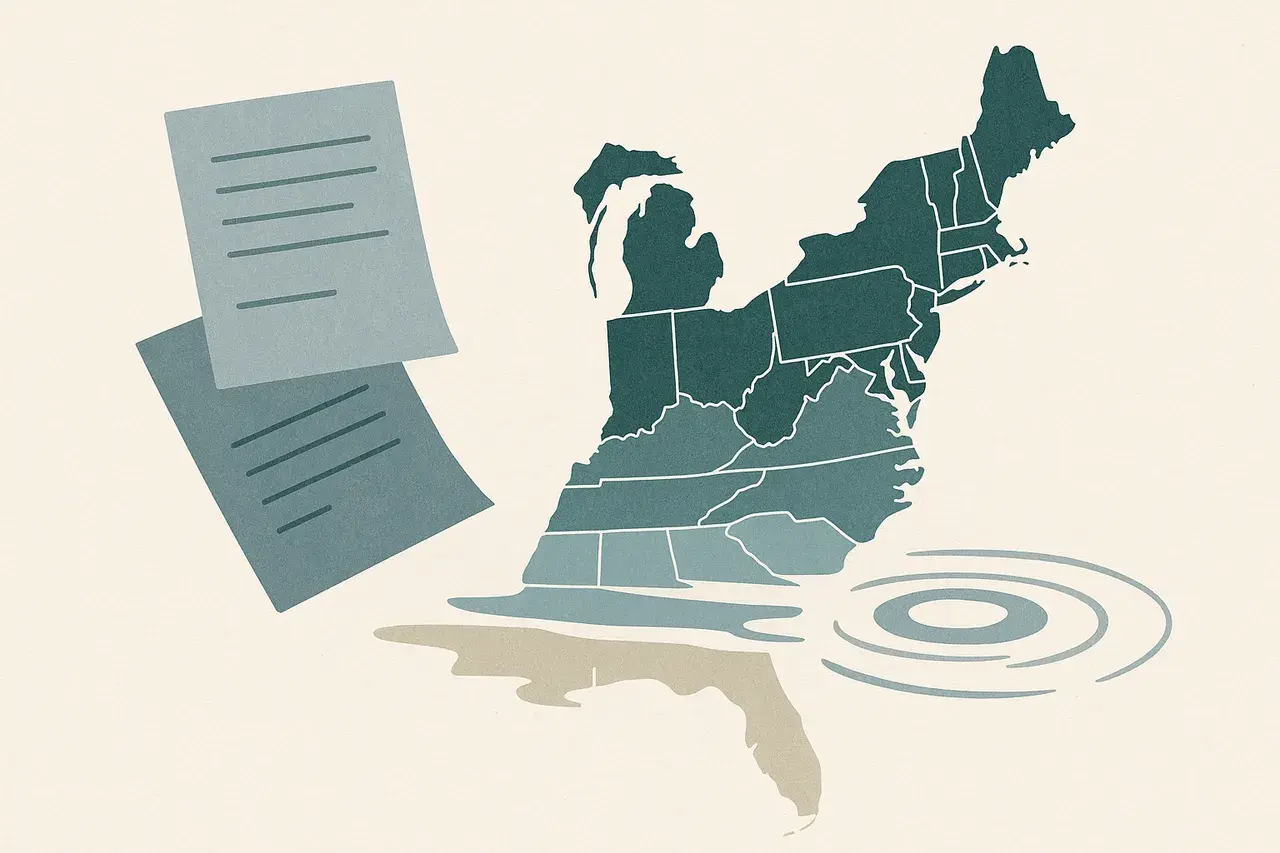
What the Chesapeake Bay Order Repeal Actually Did
The Trump administration has revoked the executive order that coordinated federal agency action on Chesapeake Bay cleanup and restoration. That order, first issued under President Obama and reaffirmed under subsequent administrations, required agencies including the Environmental Protection Agency, the Department of Agriculture, and the Department of Defense to align their programmes, funding, and planning around shared water-quality targets for the Bay and its watershed.
The repeal does not abolish the EPA's Chesapeake Bay Programme outright, nor does it immediately nullify the Total Maximum Daily Load (TMDL) framework that governs pollutant limits across six states and the District of Columbia. However, removing the coordination mandate means federal agencies are no longer obliged to act in concert. Enforcement appetite, grant priorities, and regulatory interpretations can now diverge, creating a patchwork of obligations that is considerably harder for businesses to navigate than a unified federal standard.
The Regulatory Gap Left Behind and Who Falls Into It
The practical consequence of federal discoordination is that state-level rules become the primary driver of compliance for companies operating in the watershed, which stretches across Virginia, Maryland, Pennsylvania, New York, Delaware, West Virginia, and Washington DC. Those states have their own nutrient and sediment reduction plans baked into their TMDL commitments, and several, including Maryland and Virginia, have signalled that they will enforce their obligations regardless of federal posture.
For businesses, this creates a bifurcated compliance environment. A company with operations or supply chains touching agricultural land, construction sites, stormwater systems, or wastewater infrastructure in the watershed now faces a landscape in which federal enforcement may recede while state enforcement intensifies or holds steady. The compliance gap is not a relief from obligation; it is a shift in who will be holding companies to account and under what procedural rules.
Contract Clauses That Are Now Under Pressure
In-house legal teams should treat this repeal as a trigger for contract review across several categories. First, any agreement that references federal environmental standards by incorporation, common in construction, land development, municipal services, and agricultural supply contracts, may now contain conditions that are ambiguous as to which level of government's standard applies. Clauses that simply say "in compliance with applicable federal environmental law" may no longer point to a coherent, coordinated set of requirements.
Second, government contractors who received federal grants or cost-sharing arrangements tied to the Bay coordination framework should audit whether their award conditions remain valid or whether the repeal creates grounds for the awarding agency to modify scope, reduce funding, or exit the agreement entirely. Grant agreements routinely include provisions allowing the federal party to adjust terms following a change in authorising policy.
Third, ESG-linked financing and procurement contracts deserve scrutiny. A number of lenders and institutional buyers have written environmental performance conditions into loan covenants and supplier codes of conduct by reference to federal watershed restoration targets. If those targets lose their federal coordination backstop, counterparties may seek to renegotiate the baseline or argue that conditions precedent have changed.
Supply-Chain Risks in Agriculture and Construction
The Chesapeake Bay watershed is one of the most agriculturally intensive in the eastern United States. Fertiliser application limits, cover-crop requirements, and best-management-practice mandates have shaped procurement terms throughout food and agribusiness supply chains. Buyers who have required suppliers to certify compliance with Bay-friendly farming standards as part of their supplier qualification process should check whether those certification schemes are anchored to the now-repealed federal coordination framework.
Construction and infrastructure companies face a parallel issue. Stormwater management plans and erosion controls on project sites in the watershed have often been designed to satisfy both state permits and federal programmatic goals simultaneously. With the federal coordination layer removed, project owners may find that their existing environmental management plans satisfy one set of rules but not another, or that state agencies apply stricter interpretations than previously expected given the absence of federal guidance.
What In-House Teams Should Do Before Year-End
The immediate priority is a clause-level audit of contracts that include environmental compliance representations, federal programme references, or ESG performance metrics touching the Chesapeake Bay region. Teams should flag any agreement where the applicable standard is defined by reference to federal coordination requirements rather than to specific statutory or regulatory text.
Next, companies should engage with their state regulatory contacts directly. State environmental agencies in Maryland, Virginia, and Pennsylvania are not waiting for federal direction, and understanding each state's current enforcement posture is more operationally valuable right now than tracking federal signals.
Finally, where contracts are up for renewal or renegotiation, in-house counsel should resist the temptation to write looser environmental language simply because federal oversight has loosened. State enforcement and private litigation risk, including citizen suits under the Clean Water Act, remain live. Drafting to the most demanding applicable standard is still the safer contractual position. Adira's jurisdiction-aware drafting tools can map the governing regulatory layer automatically, ensuring that environmental representations in contracts reflect actual legal exposure rather than a misread of which rules still apply.
Frequently asked questions
- Does the repeal of the Chesapeake Bay executive order eliminate environmental compliance obligations for businesses in the watershed?
- No. The repeal removes the federal coordination mandate but does not override state TMDL commitments or EPA programme obligations. Companies in the watershed remain subject to state and federal Clean Water Act requirements, which states like Maryland and Virginia have indicated they will continue to enforce independently.
- How does the Chesapeake Bay order repeal affect government contracts and federal grants tied to Bay restoration?
- Federal grant agreements and contracts that incorporated the coordination framework by reference may now face scope changes, funding adjustments, or termination clauses being invoked by the awarding agency. Contractors should audit their award conditions and seek written clarification from programme officers on whether existing obligations are affected.
- What contract clauses should in-house lawyers review after the Chesapeake Bay executive order repeal?
- Priority clauses include environmental compliance representations that reference federal standards, ESG performance metrics tied to Bay restoration targets, supplier codes of conduct with watershed-specific conditions, and any agreement where compliance is defined by reference to federal agency coordination rather than specific statutory text.
- Will the repeal reduce Clean Water Act enforcement in the Chesapeake Bay region?
- Federal enforcement appetite may diminish, but the Clean Water Act remains in force and citizen suit provisions allow private parties to bring enforcement actions regardless of federal posture. State agencies in the watershed have independent enforcement authority and have shown no intention of standing down.
- How should supply-chain contracts be updated following the rollback of federal Chesapeake Bay environmental coordination?
- Buyers should replace references to federal programmatic standards with citations to specific state permit requirements and statutory thresholds. Supplier qualification criteria should be updated to require certification against the strictest applicable state standard rather than a federal coordination benchmark that no longer has a coordinating body behind it.
Sources
See how Adira drafts in your voice and reads contracts from your side.
Explore the showroomWorking through a contract like this? Weave is Adira’s free tool to read, mark up, and connect any contract in your browser — no account needed.
Try Weave — freeRelated reading

DOGE Dividend and Sovereign Wealth Fund: The Contract and Compliance Fallout for In-House Teams
11 September 2026

When Executive Orders Rename Geography: The Contract and Compliance Fallout of 'Lake America'
31 August 2026
US Vaccine Policy Executive Order: Legal and Contractual Fallout for Life Sciences and Healthcare Companies
20 August 2026