brand legal disputes
Trademark Licence Clause Failures: What the Buc-ee's Logo Litigation Teaches Every Brand Owner
Why the Buc-ee's Logo Cases Keep Happening
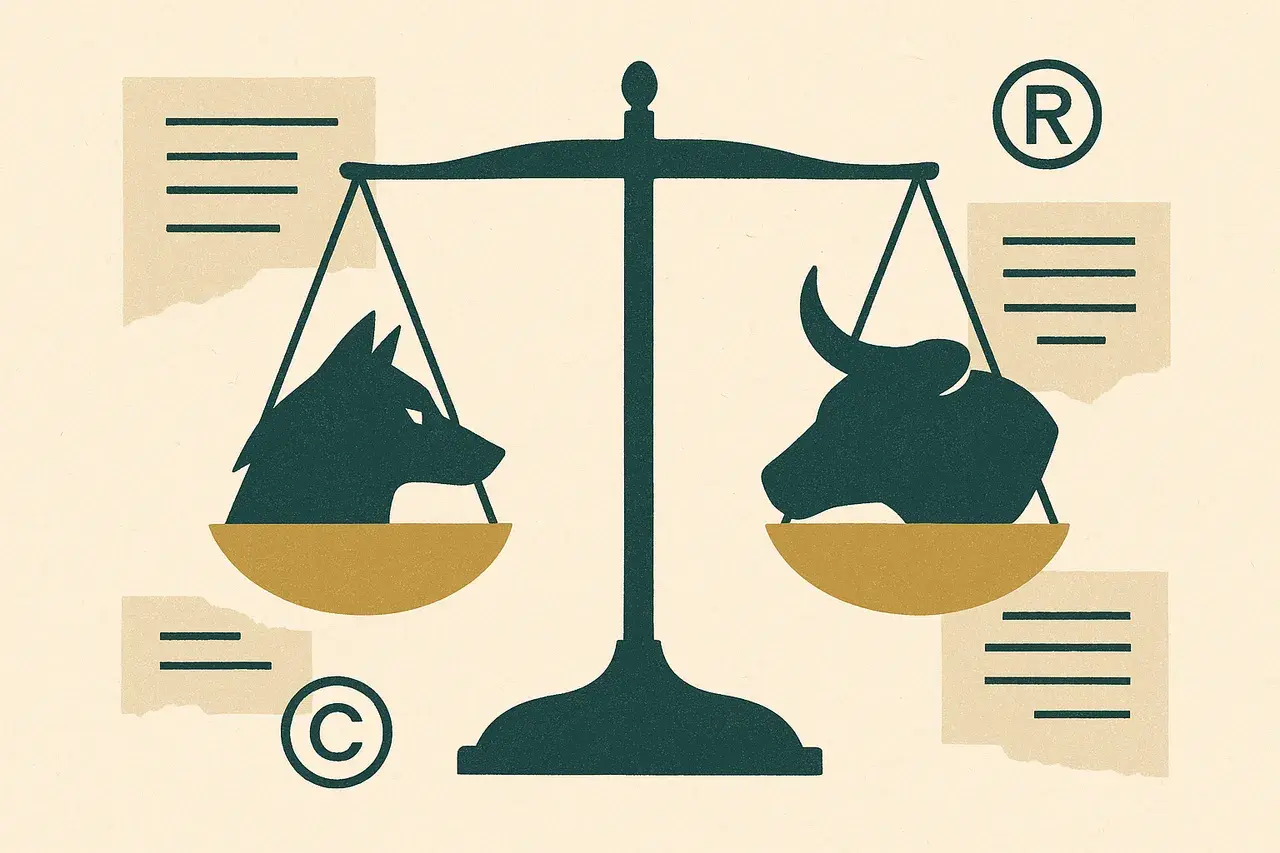
Buc-ee's, the Texas-based travel-centre chain, has become a recurring name in trademark infringement disputes against small businesses over its distinctive beaver logo. After a John Oliver segment drew public attention to its enforcement pattern, the company filed yet another suit against a small operator whose branding allegedly resembles the Buc-ee's mark. The litigation raises a question that matters far beyond any single regional chain: why do these disputes keep arising, and what contract or clearance failure sits at the root of each one?
The answer is rarely that a small business deliberately copied a famous mark. It is almost always that nobody checked, nobody documented the check, and nobody drafted a contractual safety net before the brand launched.
The Clause That Is Missing Most Often: Trademark Clearance and Warranties
In commercial contexts, the closest structural failure is the absence of a robust IP warranty and clearance obligation in the agreements that govern brand creation. When a business hires a designer, a branding agency, or a franchisor, the contract typically contains a short warranty that the deliverable does not infringe third-party rights. That warranty is frequently unaccompanied by any obligation to conduct, document, or disclose the results of a trademark clearance search.
A tighter clause would say something closer to this: the supplier warrants that it has conducted a full clearance search in all relevant classes and jurisdictions, that the results have been disclosed to the client, and that the supplier will indemnify the client against any third-party trademark claim arising from the supplied work. Without that language, the client absorbs the risk of someone else's incomplete diligence.
The Buc-ee's beaver is registered across multiple international classes and is well known in the United States. A competent clearance search in the retail or fuel-station sector would flag it. The fact that disputes still arise suggests that clearance searches are either not being done or not being done properly before new logos enter the market.
The Trademark Policing Obligation and What It Means for Defendants
From the rights-holder's perspective, there is a separate but equally important drafting issue. Trademark owners in common-law jurisdictions face a real risk of weakening or losing their marks if they do not enforce them consistently. This is sometimes called the trademark policing obligation. It is not a formal legal rule in most civil-law systems, but in practice courts use evidence of prior non-enforcement to assess whether a mark has become generic or whether the owner has acquiesced to a competing use.
Buc-ee's aggressive enforcement strategy is therefore legally rational, whatever one thinks of its commercial optics. Any licence or coexistence agreement it enters must contain precise field-of-use restrictions, geographic limitations, and quality control provisions. A coexistence agreement that lacks those terms is not worth the paper it is printed on, because it gives a future infringer a roadmap to argue that the owner tolerated a broad category of similar use.
How a Tighter Contract Would Have Read
Imagine the scenario from the small business side. A new travel-stop brand engages a designer. A well-drafted engagement letter would include at minimum four things. First, a scope-of-work clause requiring the designer to conduct, or procure, a trademark clearance search in the relevant Nice classes before final delivery. Second, a warranty that the proposed mark does not conflict with any registered or unregistered mark of which the designer is aware, or would be aware on reasonable enquiry. Third, an indemnity in favour of the client covering legal costs and damages arising from any third-party trademark claim connected to the supplied logo. Fourth, a step-in right allowing the client to take over defence of any claim and charge the cost back to the designer if the designer fails to respond within a defined period.
None of those provisions is exotic. They appear routinely in sophisticated creative-services contracts. They are simply absent from the short-form agreements that most small businesses sign because they are in a hurry to get their brand to market.
IP Indemnity Clauses and the Likelihood of Confusion Test
The legal standard in most trademark infringement cases is whether the allegedly infringing mark creates a likelihood of confusion in the mind of an average consumer. That is a multi-factor test, and it is assessed at the time of infringement, not at the time the mark was adopted. A well-drafted IP indemnity clause should therefore cover not just the moment of launch but the entire period during which the mark is in commercial use, because the rights landscape changes as the rights-holder expands its registration portfolio.
Contracts that cap the indemnity at a fixed sum or limit it to the fees paid under the engagement dramatically undervalue the actual exposure. A trademark dispute involving an established brand can easily generate legal costs that dwarf a designer's project fee. The indemnity should be uncapped, or at minimum tied to the value of the business risk rather than the value of the contract.
Practical Steps Businesses Should Take Before Launching Any Logo
The Buc-ee's litigation pattern offers a clear checklist for any business commissioning or adopting a brand mark. Conduct a professional trademark clearance search, not just a free online check, before finalising any design. File the mark in all relevant classes and jurisdictions as early as possible, because a pending application creates a priority date even before registration. Ensure that every creative-services agreement contains the warranty, indemnity, and step-in-right provisions described above. Review the trademark register annually to monitor new applications that may conflict with your mark, and document every enforcement decision so that a pattern of consistent policing is on record.
For AI-assisted contract platforms like Adira, these requirements can be built directly into standard templates. A platform that drafts in a company's own voice and reads contracts from that company's perspective can flag every instance where a clearance warranty is missing, where an indemnity is capped too low, or where a coexistence agreement lacks adequate field-of-use restrictions. That kind of systematic review is what separates businesses that absorb trademark risk from those that transfer it appropriately.
Frequently asked questions
- What clause in a contract protects a business from trademark infringement claims over its logo?
- An IP warranty and indemnity clause in the creative-services agreement is the primary protection. It should require the designer or agency to conduct a trademark clearance search, warrant that the delivered logo does not infringe any existing mark, and indemnify the client against any third-party trademark claims arising from the supplied work.
- Why does Buc-ee's keep suing small businesses over its logo?
- Buc-ee's holds registered trademarks in its beaver logo across multiple classes, and trademark law in the United States requires rights-holders to enforce their marks consistently or risk weakening them. Consistent enforcement, even against small operators, protects the distinctiveness of the mark and prevents arguments that the owner acquiesced to competing uses.
- What is the likelihood of confusion test in trademark infringement cases?
- The likelihood of confusion test asks whether an average consumer would be confused about the source or affiliation of goods or services when encountering the allegedly infringing mark. Courts assess multiple factors, including mark similarity, the relatedness of goods or services, and the strength of the original mark.
- How can a small business avoid a trademark infringement lawsuit before launching a new logo?
- The most effective steps are commissioning a professional trademark clearance search before finalising any design, filing a trademark application as early as possible to establish a priority date, and ensuring that the contract with any designer includes a warranty that the logo does not infringe existing marks. Documented diligence is a strong defence and, in many cases, prevents disputes from arising at all.
- What should a trademark coexistence agreement include to be enforceable?
- A robust coexistence agreement should specify precise field-of-use restrictions, geographic boundaries, quality control obligations, and a dispute-resolution mechanism. Without clear limits on how each party may use its mark, a coexistence agreement can actually undermine the rights-holder's ability to enforce against future infringers by demonstrating broad tolerance of similar marks.
See how Adira drafts in your voice and reads contracts from your side.
Explore the showroomWorking through a contract like this? Weave is Adira’s free tool to read, mark up, and connect any contract in your browser — no account needed.
Try Weave — free