ai hallucinations
When AI Hallucinations Reach the Courtroom: What In-House Teams Must Learn from a Federal Misrepresentation Finding
A Court Calls Out an AI Hallucination, Then Does Nothing
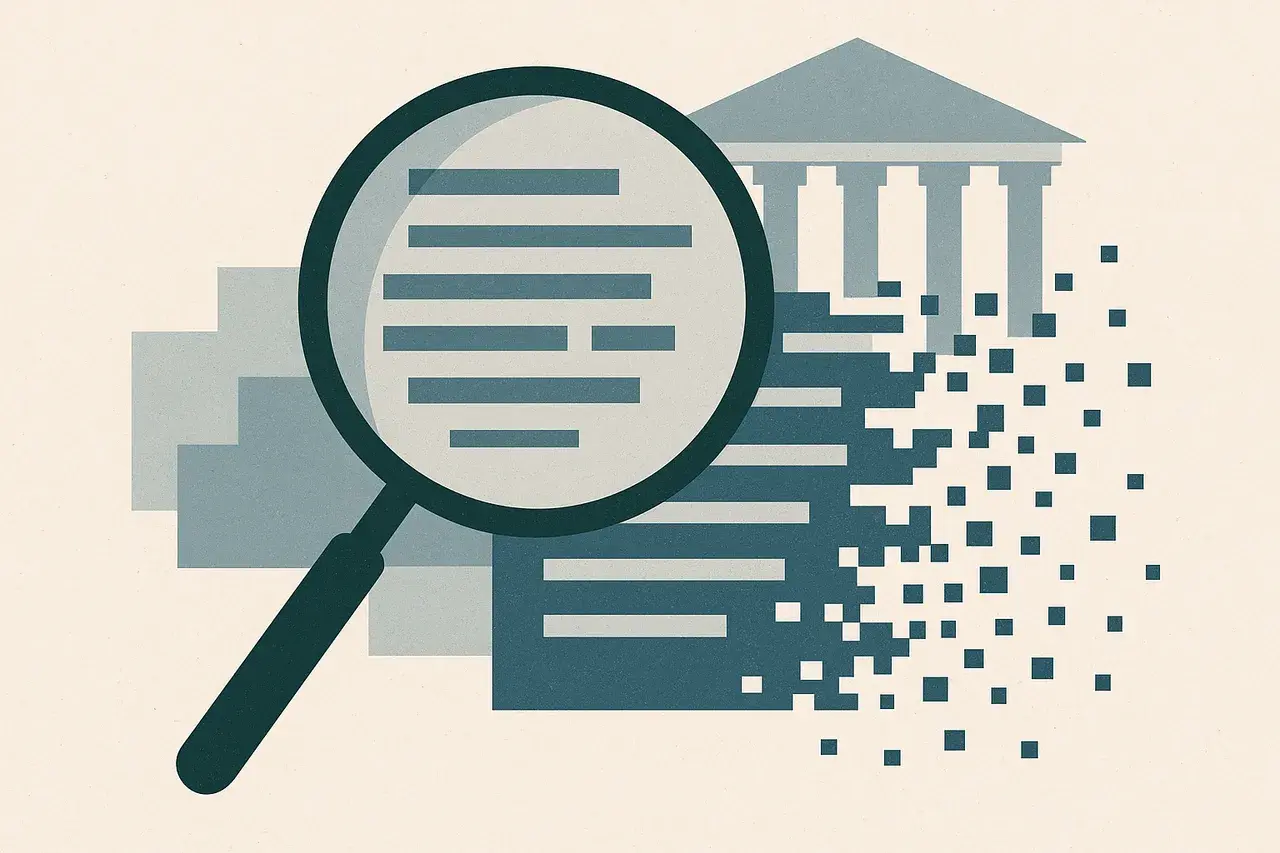
A federal court in Michigan recently identified what it described as an AI hallucination in government submissions, content apparently designed to support keeping a defendant detained. The court called it out. Then it imposed no sanctions whatsoever.
That combination, a finding of AI-generated misrepresentation followed by institutional silence, should alarm every lawyer who uses or plans to use AI in any formal or high-stakes context. It tells us something uncomfortable: the legal system is not yet equipped to respond proportionately to AI-generated error, even when the error is consequential and the court is aware of it.
For in-house counsel and law firms, the takeaway is not that AI is dangerous and should be avoided. The takeaway is that governance, verification and accountability structures are not optional extras. They are the foundation on which any credible legal AI programme must be built.
The Hallucination Problem Is Not a Fringe Concern
Large language models produce confident-sounding text that is sometimes factually wrong. This is not a bug that will be patched in the next software update. It is a structural feature of how these models work. They predict plausible sequences of words, drawing on training data, and they do so without any internal mechanism for checking whether a cited case exists, whether a clause accurately reflects the source contract, or whether a legal standard applies in the jurisdiction at hand.
Lawyers who paste outputs directly into submissions, pleadings or client advice without verification are taking a risk that has now, in at least one documented federal case, produced a finding of misrepresentation before a court. The reputational, professional and legal exposure from that kind of failure is substantial.
This is precisely why Adira is built around a different model. Our system drafts in a company's own voice, reads contracts from the client's side of the table, and applies the law of the relevant jurisdiction rather than producing generic output and leaving verification as someone else's problem. Jurisdiction-awareness and contractual context are baked in, not bolted on.
What In-House Teams Should Be Asking Their AI Vendors
The Michigan case gives in-house legal teams a useful checklist of questions to put to any AI provider they use or are considering.
First, can the system trace its outputs back to source material? If a clause is flagged as non-standard or a legal position is asserted, is there an audit trail linking that output to a specific provision, case or statutory rule? Systems that cannot answer this question leave verification entirely to the user, which is the condition that produces courtroom embarrassment.
Second, does the system know which jurisdiction it is working in, and does that knowledge change its outputs materially? A force majeure clause acceptable under English law may be inadequate under New York law, and vice versa. An AI that treats jurisdiction as a label rather than a substantive input is a liability.
Third, what is the firm's or team's internal protocol when AI output is used in any document that will be seen by a counterparty, regulator or court? If the honest answer is that there is no protocol, that is the most urgent thing to fix.
The Governance Gap Is the Real Risk
The absence of sanctions in the Michigan case is worth dwelling on. Courts are still working out how to treat AI-generated error: is it misconduct, negligence, a novel category requiring new rules, or simply a bad day in the office? That uncertainty cuts both ways. It means practitioners cannot rely on courts to force the issue, and it means the burden of setting standards falls on legal teams themselves.
Regulators in several jurisdictions are beginning to issue guidance on AI use in legal practice, but guidance is not enforcement, and enforcement is still thin. In-house teams that wait for external rules to impose governance standards on their AI use are likely to find themselves managing a reputational crisis before the rules arrive.
Proactive governance means documenting which tasks AI handles, who reviews AI output before it is used, and what the escalation path looks like when something looks wrong. It means training lawyers and paralegals not just to use AI tools but to interrogate them.
Drafting with Accountability Built In
Adira's approach to this problem starts at the drafting stage. When a contract is generated or reviewed, the system works from the client's own precedents and risk positions, applies jurisdiction-specific legal standards, and produces output that is traceable and auditable rather than a black-box assertion. That does not eliminate the need for lawyer review. Nothing does. But it changes the nature of that review from open-ended checking of unknown provenance to structured verification against known parameters.
The Michigan finding is a warning that the legal profession cannot ignore. AI in legal work is not going away, and it should not. But the version of legal AI that simply produces plausible text and leaves lawyers to sort out the consequences is the version that ends up cited in court orders for the wrong reasons. The standard has to be higher, and the responsibility for meeting it sits with the teams deploying the tools.
See how Adira drafts in your voice and reads contracts from your side.
Explore the showroomWorking through a contract like this? Weave is Adira’s free tool to read, mark up, and connect any contract in your browser — no account needed.
Try Weave — freeRelated reading
Google Ad Tech Antitrust Ruling: What the Court's Decision Not to Break Up Google Means for Advertising Contracts
3 September 2026
The Supreme Court's Ballroom Non-Decision: What Religious Exemptions Mean for Commercial Contracts
2 September 2026

EEZ Boundary Disputes and Contract Risk: What the Vanuatu v France ICJ Case Means for Global Businesses
2 September 2026