ai in law
AI Data Sovereignty in Legal Tech: Why Law Firms Must Control Their Contract Intelligence
The Hidden Cost of Generic AI for Contract Work
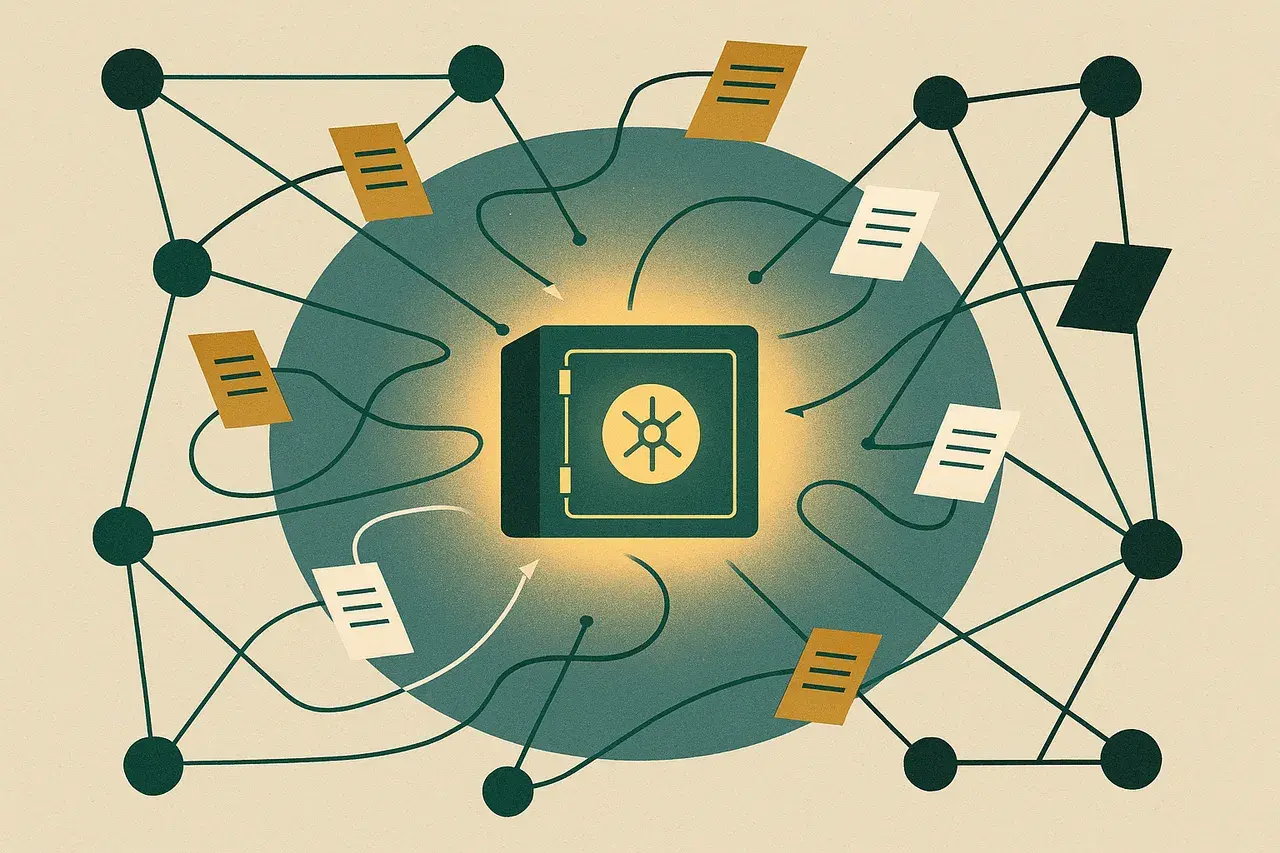
Every time a legal team pastes a contract clause into a general-purpose AI tool, something more valuable than the subscription fee leaves the building. The playbooks, the fallback positions, the preferred indemnity language honed over decades: all of it becomes input for a model that may serve competitors tomorrow. This is the core of what commentators in the legal technology space are beginning to call AI data sovereignty, and it is rapidly becoming the defining procurement question for any firm or corporate legal department evaluating an AI contract lifecycle management platform.
The concern is not hypothetical. Several major AI vendors train their models on user inputs unless customers actively opt out, and even opt-out mechanisms vary in scope and enforceability. For a law firm whose competitive advantage is institutional knowledge, or an in-house team whose leverage in negotiation depends on undisclosed fallback positions, the exposure is material.
What AI Data Sovereignty Actually Means in a Legal Context
AI data sovereignty in legal tech refers to a legal team's ability to determine exactly where its contract data goes, how it is used, and whether it is ever used to improve a model that will be made available to others. It is distinct from standard data-privacy compliance. A vendor can be fully GDPR-compliant and still use anonymised contract data to fine-tune shared models. Sovereignty goes further: it demands that proprietary contract intelligence stays proprietary.
For law firms, the stakes are layered. Client confidentiality obligations under professional conduct rules create a floor. Above that floor sits competitive intelligence: the negotiating positions, clause libraries, and deal structures that differentiate one firm's advice from another's. As Jesse Hampton of Draftwise has observed, firms essentially "pay for intelligence twice" when they use generic AI, once with money and again with the proprietary knowledge embedded in every document they process.
Where This Fits Inside the Contract Lifecycle
The risk is not uniform across the contract lifecycle. At the drafting stage, the exposure is highest: clause-level language reflects a firm's or company's strategic preferences directly. At the review stage, the risk is significant but slightly different. Flagging and redlining activity reveals which issues a party prioritises, which is itself commercially sensitive information.
At the post-signature stage, the analytics layer is where contract intelligence compounds over time. A platform that aggregates renewal dates, pricing escalators, and liability caps across a portfolio builds a picture of commercial behaviour that has genuine competitive value. Any AI CLM platform that trains on this data without clear contractual restrictions is, in effect, extracting that value from the client.
The implication for procurement is clear: legal teams need to ask vendors not just about security certifications but about model training policies, data isolation architecture, and whether the firm's documents are ever used to improve outputs for other customers.
How Legal Teams Can Reassert Control
Several practical measures are available to legal teams that want to protect their contract intelligence without abandoning AI tools altogether.
First, insist on contractual data isolation. A vendor should be able to confirm in writing that no client data is used to train shared models, and that confirmation should survive the vendor's own acquisition or restructuring.
Second, prefer platforms built specifically for legal work over general-purpose large language models adapted for contracts. Purpose-built legal AI contract review tools are more likely to have thought through the confidentiality architecture because their customers demand it.
Third, audit your current stack. Many legal teams have accumulated several AI subscriptions through informal adoption. Each one is a potential data leakage point. A structured review of vendor data policies, conducted annually, is becoming standard practice at well-run legal operations functions.
Fourth, consider where your model fine-tuning happens. Platforms that allow a firm to fine-tune on its own infrastructure, or in a dedicated cloud tenancy, provide a meaningful improvement over shared model environments.
What This Means for In-House Legal Teams Specifically
In-house counsel face a variant of the same problem with an added dimension. Procurement, finance, and commercial teams often adopt AI tools independently of legal, meaning contract data flows through systems that legal has never reviewed. Shadow AI adoption in contracting is now one of the most common risk management conversations between general counsel and their technology counterparts.
The solution is governance before tooling: agree on a set of standards for any AI platform that touches contract data, then evaluate tools against those standards. A contract AI data privacy policy, even a short one, forces the organisation to articulate what it considers acceptable use of its contract intelligence.
The Procurement Checklist Legal Teams Should Use Today
When evaluating any AI platform that processes contracts, legal teams should seek clear answers to these questions before signing:
- Does the vendor train its models on customer data, even in anonymised form?
- Is data stored in a dedicated tenancy or a shared environment?
- What happens to data if the vendor is acquired?
- Can the firm delete its data completely and verifiably upon contract termination?
- Has the vendor undergone an independent security audit, and is the report available?
These questions are not exotic. They are the baseline for responsible adoption of AI contract lifecycle management tools. Firms and legal departments that ask them now will be better positioned than those that ask them after a problem has already occurred. AI data sovereignty is not a future concern. It is a present one, and the legal industry's response to it will shape which platforms earn long-term trust.
Frequently asked questions
- Does AI learn from my contracts when I use it for legal work?
- It depends entirely on the vendor and your contractual terms. Many general-purpose AI tools train on user inputs unless you actively opt out. Purpose-built legal AI platforms typically offer stronger data isolation guarantees, but you should confirm this in writing before sharing any contract data.
- What is AI data sovereignty in the context of law firms?
- AI data sovereignty for law firms means retaining full control over where contract data goes, how it is processed, and whether it is used to train models that serve other customers. It goes beyond standard data-privacy compliance and directly protects a firm's institutional knowledge and client confidentiality obligations.
- How can a legal team protect confidential contract data when using AI tools?
- Legal teams should require vendors to confirm in writing that client data is never used to train shared models, prefer platforms with dedicated data tenancy, and conduct regular audits of all AI subscriptions that touch contract data. A written contract AI data privacy policy is an important first step for any legal operations function.
- Is it safe to use AI for contract review?
- AI contract review can be done safely if you choose a platform built specifically for legal work with clear data isolation architecture. The risk lies in using general-purpose AI tools without understanding the vendor's training data policies. Always review the vendor's data processing agreement before use.
- What should I ask an AI contract lifecycle management vendor about data security?
- Ask whether the vendor trains its models on your data, how data is stored, what happens to your data on termination, and whether an independent security audit is available. You should also ask specifically whether anonymised contract data is ever used to improve outputs delivered to other customers.
See how Adira drafts in your voice and reads contracts from your side.
Explore the showroomRelated reading
Harvey, Tenet and the Legal AI Contract Tools Reshaping CLM in 2025
22 August 2026

Digital Twins for Lawyers: What the Twin1 Launch Means for AI Contract Lifecycle Management
21 August 2026

AI Legal Translation in Contract Lifecycle Management: What the Harvey-DeepL Integration Means for Global Legal Teams
20 August 2026