legaltech
AI Contract Review Tools in 2025: What Legal Teams Need to Know Before Adopting
The AI Contract Tool Market Is Moving Faster Than Most Legal Teams
The pace of product announcements in AI contract review tools has become genuinely difficult to track. In a single week of industry coverage, platforms such as Juro and LegalOn sit alongside newer entrants and specialist consultancies like Consilio, all competing for attention at webinars, conferences, and in the inboxes of in-house legal teams. For legal operations professionals trying to build a rational technology roadmap, the noise is a real problem. This piece cuts through it by focusing on what these tools actually do, where they sit inside a contract lifecycle management workflow, and what honest adoption looks like in practice.
What AI Contract Review Tools Actually Do
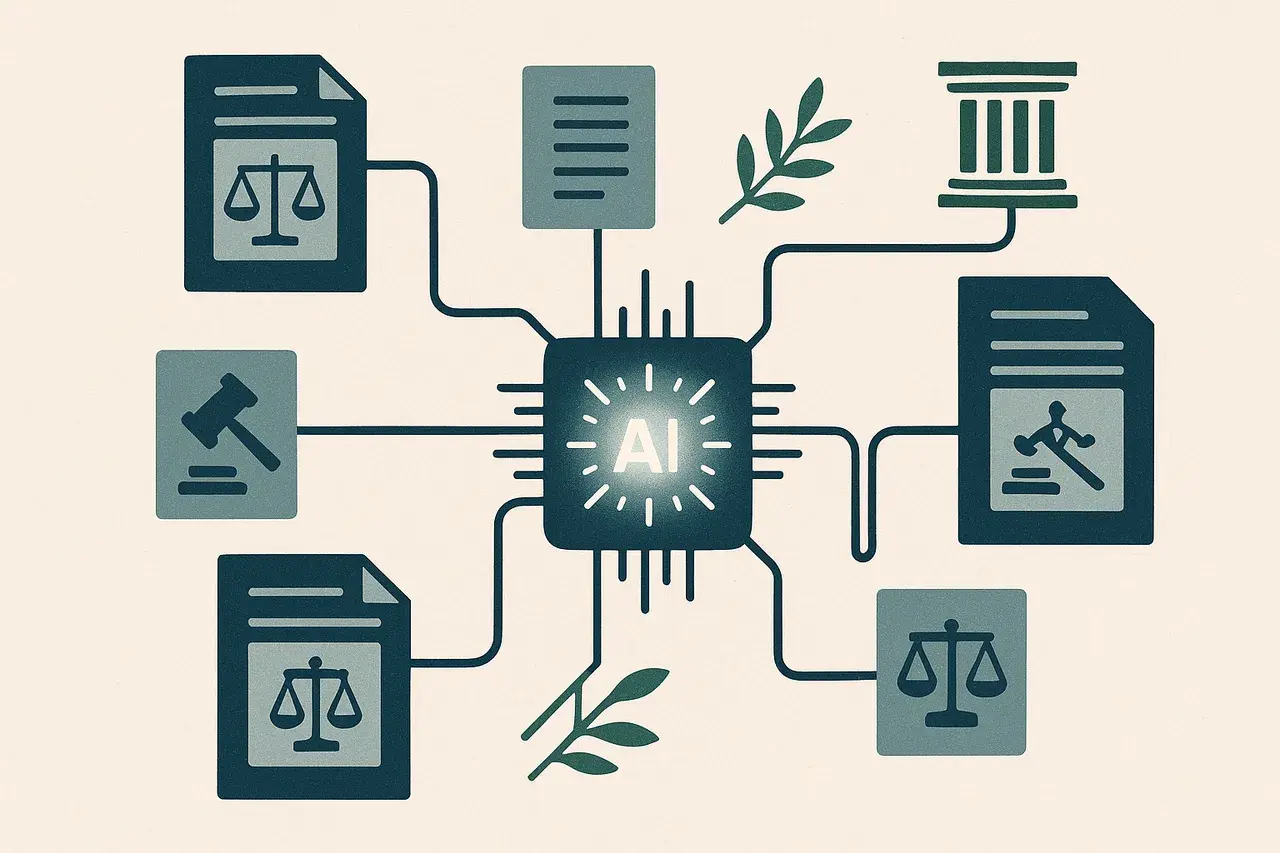
At their core, AI contract review tools apply large language models to the reading, summarising, and risk-flagging of contract text. The better platforms go further: they can compare a counterparty's draft against a company's own preferred positions, identify non-standard clauses, and generate redlines automatically. Some, including tools promoted at recent legal innovation events, are beginning to offer jurisdiction-aware analysis, meaning the system understands that a limitation of liability clause carries different legal weight in England and Wales than it does in Delaware or Singapore.
This jurisdiction awareness matters enormously. A generic AI contract analysis tool that flags every indemnity clause as high-risk without understanding local law creates more work for lawyers, not less. The meaningful differentiator in 2025 is whether a platform can contextualise risk within the governing law that actually applies to the deal.
Where AI Contract Analysis Fits the Contract Lifecycle
Contract lifecycle management covers everything from initial request and drafting through negotiation, execution, and post-signature obligation tracking. AI tools are currently strongest at two points in that lifecycle: early-stage review of incoming counterparty paper, and post-execution analysis of existing contract repositories.
For incoming paper, AI contract review dramatically reduces the time a lawyer spends on first-pass reading. A tool can surface the clauses that deviate from a company's standard positions within minutes, allowing the lawyer to concentrate on judgment-intensive negotiation rather than mechanical comparison. For repository analysis, the same technology can audit thousands of legacy agreements to find renewal dates, price-escalation triggers, or liability caps that would take a human team weeks to catalogue.
Where AI contract tools are weaker is in the middle of the lifecycle: active negotiation, relationship management, and the commercial judgment calls that require understanding a counterparty's real priorities. No platform has automated that, nor should anyone expect it to soon.
The Honest Adoption Picture for In-House Legal Teams
Adoption of AI for in-house lawyers is accelerating, but the gap between buying a tool and embedding it into daily workflow remains wide. Several patterns emerge consistently across organisations that have attempted this.
First, data readiness is the unglamorous prerequisite. AI contract analysis tools trained on a company's own historical contracts perform materially better than out-of-the-box models. That means someone needs to curate, clean, and upload a contract library before the AI produces reliable output. Most legal teams underestimate the time this takes.
Second, lawyer trust is earned incrementally. Early pilots that demonstrate the tool catching a genuine risk, or saving time on a real deal, build the internal credibility that drives adoption. Broad rollouts without proof of value tend to stall.
Third, integration with existing CLM infrastructure is not optional. A standalone AI contract review tool that operates outside the system of record creates a version-control problem. The most successful deployments connect AI capabilities directly into the drafting and negotiation environment lawyers already use.
How Platforms Like Juro and LegalOn Are Positioning Themselves
The current generation of legal AI platforms is differentiating along two broad axes: breadth versus depth. Broader platforms aim to cover the entire contract lifecycle, from self-service request portals through to analytics dashboards, with AI layered across each stage. Deeper, more specialist tools focus on doing one thing, such as first-pass review or clause extraction, exceptionally well.
Juro has consistently positioned itself as a full-lifecycle collaborative contract platform, with AI features embedded into the editing and negotiation interface. LegalOn has focused on AI-powered contract review with a strong emphasis on speed and accuracy for specific contract types. Consilio, coming from a legal services and e-discovery background, brings AI contract analysis into the context of broader legal risk advisory work.
None of these approaches is universally correct. The right choice depends on where a legal team's current bottleneck actually sits.
What to Look For When Evaluating AI Contract Management Software
For legal teams evaluating AI contract management software in 2025, a short checklist cuts through vendor marketing. Does the tool understand the jurisdictions your contracts operate in? Can it be trained on your own playbooks and preferred positions? Does it integrate with your existing CLM or document management system? How does it handle confidentiality of the contract data it processes? And critically: what does the output actually look like, and does it reduce lawyer time or simply add a new inbox to check?
The webinar circuit, populated by platforms eager to demonstrate live, is genuinely useful for answering these questions. Seeing a tool work on a realistic contract scenario, rather than a curated demo, reveals how it handles ambiguity, which is where most legal risk lives.
Adira is built on the premise that AI contract tools should work in a company's own voice, read from that company's own perspective, and operate within the law of the jurisdiction that governs each deal. That is the standard the market is converging on, even if not every product has arrived there yet.
Frequently asked questions
- What do AI contract review tools actually do?
- AI contract review tools use large language models to read contract text, flag clauses that deviate from a company's standard positions, summarise key terms, and generate redlines. The best platforms also apply jurisdiction-aware analysis so that risk is assessed under the governing law that applies to each specific deal.
- How does AI fit into contract lifecycle management?
- AI is currently most effective at two points in the contract lifecycle: reviewing incoming counterparty drafts to surface non-standard clauses quickly, and analysing existing contract repositories to extract obligations, dates, and risk terms at scale. Active negotiation and commercial judgment remain human responsibilities.
- Should my legal team adopt an AI contract tool in 2025?
- Most in-house legal teams will benefit from AI contract review, but realistic adoption requires data preparation, incremental trust-building with lawyers, and integration into existing CLM systems. Buying a tool without those foundations in place rarely delivers the promised efficiency gains.
- What is the difference between Juro and LegalOn?
- Juro positions itself as a full contract lifecycle platform with AI embedded across drafting, collaboration, and analytics. LegalOn focuses more narrowly on fast, accurate AI-powered contract review for specific contract types. Both serve in-house legal teams but suit different workflow priorities.
- How do I choose the best AI contract management software for my company?
- Evaluate whether the tool understands your governing jurisdictions, can be trained on your own playbooks, integrates with your existing systems, and handles contract data securely. Asking vendors to demo the tool on a realistic contract from your industry, rather than a polished example, is the most reliable test.
See how Adira drafts in your voice and reads contracts from your side.
Explore the showroomWorking through a contract like this? Weave is Adira’s free tool to read, mark up, and connect any contract in your browser — no account needed.
Try Weave — freeRelated reading
AI Contract Review Tools in 2025: What Legal Teams Need to Know Before Adopting
11 September 2026
AI Contract Review Tools in 2025: What Legal Teams Need to Know Before Adopting
12 September 2026

AI in Legal Practice: What the Next Generation of Lawyers Must Learn About Contract Law and Technology
9 September 2026