contract lifecycle management
AI Contract Lifecycle Management Platforms Are Multiplying: What Legal Teams Should Know
The CLM Market Is Getting Crowded, and That Is Good News for Buyers
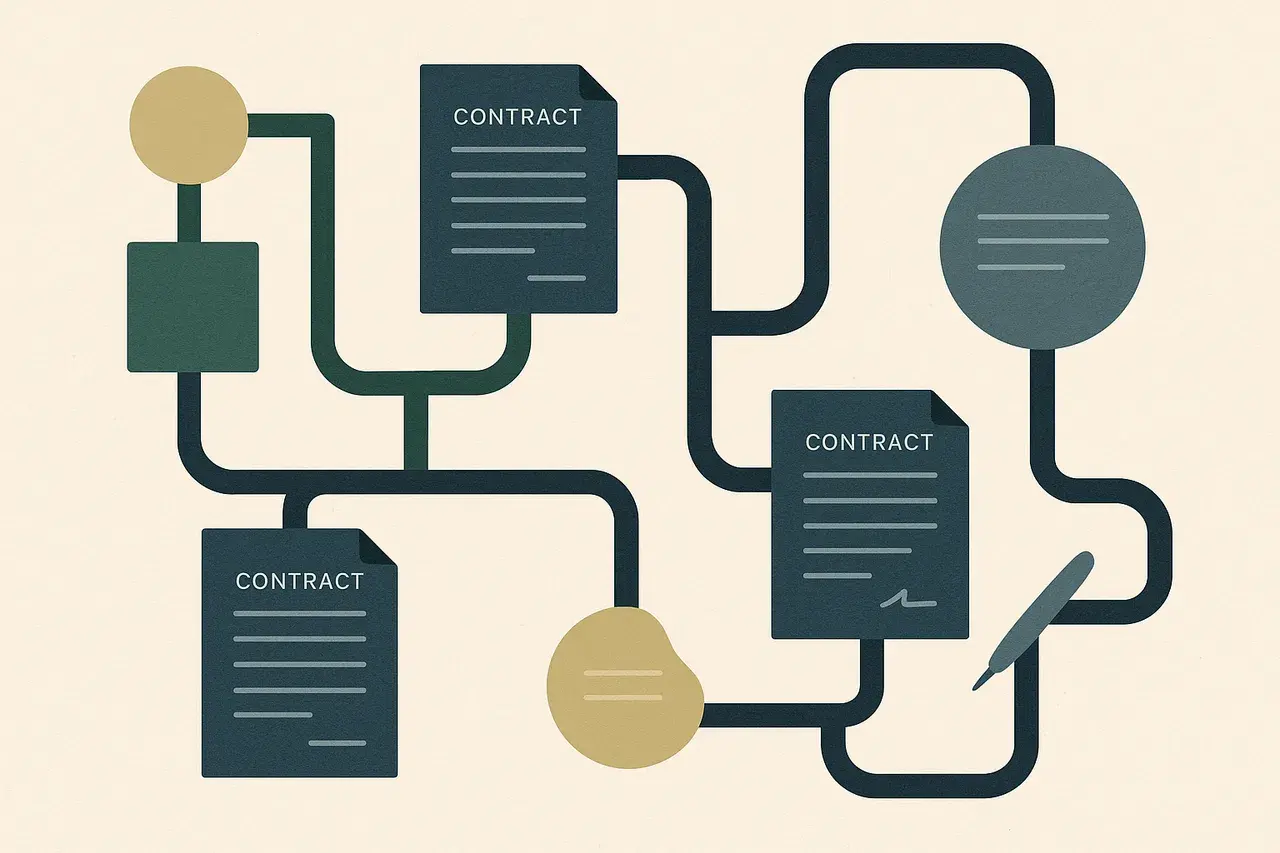
AI contract lifecycle management platforms are no longer a novelty. The launch of Ivo's Collaborate, described as an orchestration platform covering the full contract journey from intake through approval, negotiation and signature, is the latest signal that the market is maturing fast. For legal teams that have been watching from the sidelines, the competitive pressure between vendors is beginning to translate into sharper products, clearer pricing and more honest claims about what AI can and cannot do in a contracting workflow.
The question for in-house counsel and legal operations professionals is not whether to adopt a CLM platform. It is how to choose one that genuinely fits the way their organisation negotiates and manages contracts, rather than one that looks impressive in a demonstration.
What Contract Orchestration Actually Means
The phrase "contract orchestration" is appearing more frequently in vendor marketing, and it is worth unpacking. A true orchestration layer does more than store documents or run a playbook check. It coordinates people, data and actions across every stage of the contract lifecycle: intake requests, internal routing, risk review, redlining, approval gates and execution. The aim is to replace the fragmented mix of email threads, shared drives and manual reminders that still characterises contracting in many organisations.
Ivo's positioning around a single platform covering that entire arc reflects a broader ambition in the CLM space. Several vendors are now competing on end-to-end coverage rather than point solutions. For buyers, this raises the integration question immediately. A platform that orchestrates well internally but connects poorly to your CRM, ERP or e-signature tool creates a different kind of fragmentation, one that is harder to see and harder to fix.
Where AI Adds Genuine Value Across the Contract Lifecycle
AI contract review and negotiation tools have earned real credibility in specific parts of the lifecycle. Clause extraction, risk flagging, playbook enforcement during redlining and obligation tracking after signature are all areas where machine learning has moved from experimental to dependable in well-configured deployments. The intake stage is also benefiting, with AI now capable of classifying contract type, routing requests to the right template and pre-populating fields without human intervention.
The negotiation stage remains the most complex. AI can suggest fallback positions, surface precedent language and identify deviations from approved positions, but the judgement calls still require a lawyer. The best AI contract negotiation software is designed to accelerate that human decision, not to remove it. Legal teams should be sceptical of any vendor that suggests otherwise.
Automated contract approval workflow software is another genuine productivity win. Conditional routing based on contract value, counterparty risk tier or jurisdiction can cut approval cycle times significantly. That is measurable, and it is one of the first places legal operations teams should look when building a business case for CLM adoption.
How to Evaluate a CLM Platform Without Getting Distracted by Features
The CLM platform comparison process has become harder as feature lists have converged. Most enterprise CLM tools now offer some version of AI-assisted drafting, a contract repository, workflow automation and analytics. The differentiators that actually matter in practice are narrower.
First, consider how the platform reads contracts from your side. A tool that drafts and reviews only from a neutral or counterparty perspective will not serve your legal team as well as one trained to identify risk through your organisation's specific lens. Second, look at jurisdiction awareness. Global organisations need a platform that understands the legal context in each market where they operate, not one that applies a generic Anglo-American template to every contract. Third, assess the configurability of the playbook and approval logic. A CLM that cannot reflect your actual risk appetite and internal governance structure will be worked around rather than adopted.
Finally, ask vendors directly about their AI training data, hallucination rates in contract review tasks and how the system handles novel clause types it has not seen before. The answers will tell you a great deal about whether the product is genuinely ready for your workflows.
Adoption Realities for In-House Legal Teams
The honest picture on CLM adoption is that technology is rarely the main obstacle. Change management, data migration and the unglamorous work of building contract templates and playbooks before go-live account for most of the effort. Legal teams that treat a CLM implementation as a software deployment project, rather than a process redesign project, consistently underestimate the time required and overestimate the speed of the return.
That said, the tools available in 2025 and 2026 are materially better than those available three years ago. The AI contract management tools entering the market now are trained on larger datasets, integrate more cleanly with existing legal tech stacks and require less manual configuration to produce useful output from day one. For legal teams that deferred adoption while waiting for the technology to mature, the argument for waiting is becoming harder to sustain.
The proliferation of platforms, including newer entrants building around an orchestration model, means that organisations with specific needs around negotiation, intake automation or post-signature obligation management now have credible options where they previously had compromise solutions. That is progress worth taking seriously.
Frequently asked questions
- What is a contract lifecycle management platform and what does it do?
- A contract lifecycle management platform is software that manages every stage of a contract from initial request through drafting, negotiation, approval, signature and post-signature obligations. Modern CLM tools use AI to automate repetitive tasks such as clause review, risk flagging and approval routing. The goal is to reduce the time and manual effort involved in contracting while improving consistency and visibility across an organisation's agreements.
- How does AI help with contract negotiation?
- AI contract negotiation tools assist lawyers by identifying clauses that deviate from an approved playbook, suggesting fallback positions based on precedent, and flagging risk language for human review. The AI accelerates the redlining process but does not replace lawyer judgement on commercial and legal decisions. The best tools are configured to reflect a specific organisation's risk appetite rather than applying generic rules.
- What should I look for when comparing CLM platforms?
- The most important factors in a CLM platform comparison are how well the tool reads contracts from your organisation's perspective, whether it understands the jurisdictions you operate in, and how configurable the approval workflows and playbooks are. Integration with your existing CRM, ERP and e-signature tools is also critical, as a platform that does not connect cleanly to your stack creates new operational problems.
- How long does it take to implement a CLM platform?
- Implementation timelines vary widely depending on the size of the organisation and the complexity of its contracting processes, but most enterprise CLM deployments take between three and nine months before the platform is fully operational. The biggest delays typically come from data migration, building contract templates and playbooks, and change management rather than the technology itself. Legal teams should plan for a process redesign project, not just a software installation.
- Is AI contract management software reliable enough for in-house legal teams?
- AI contract management tools are now reliable enough for core tasks such as clause extraction, risk flagging, playbook enforcement and obligation tracking in well-configured deployments. Hallucination risks remain a concern in contract drafting and review, and legal teams should ask vendors directly about accuracy rates and how the system handles unfamiliar clause types. Human review of AI output remains essential for any contract with material legal or commercial consequences.
See how Adira drafts in your voice and reads contracts from your side.
Explore the showroomRelated reading
Harvey, Tenet and the Legal AI Contract Tools Reshaping CLM in 2025
22 August 2026

Digital Twins for Lawyers: What the Twin1 Launch Means for AI Contract Lifecycle Management
21 August 2026

AI Legal Translation in Contract Lifecycle Management: What the Harvey-DeepL Integration Means for Global Legal Teams
20 August 2026