legaltech
AI Agent Handoff in Legal Tech: What the New Open Protocol Means for Contract Lifecycle Management
What Is an AI Agent Handoff Protocol and Why Does It Matter for Legal Teams?
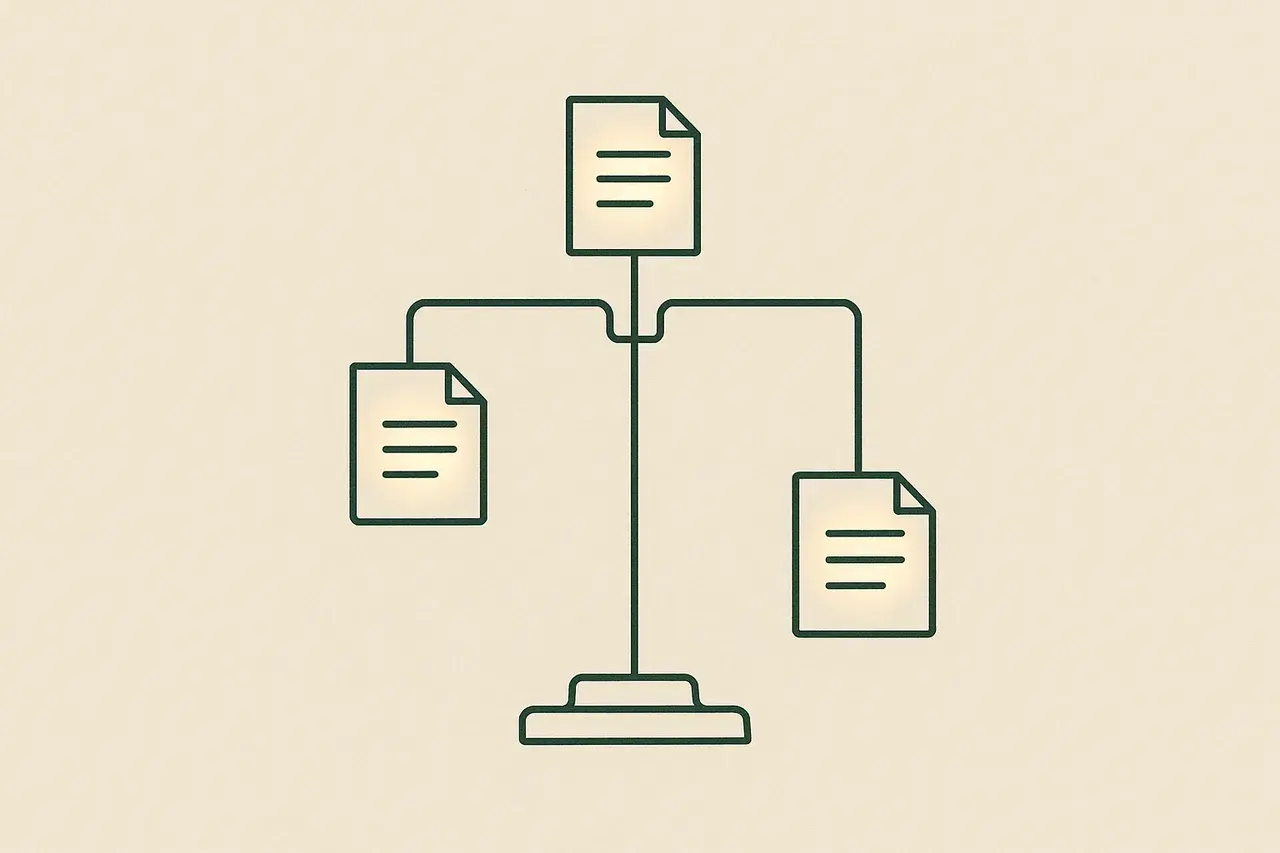
Most legal AI tools today operate as silos. A lawyer might use one platform to draft a non-disclosure agreement, a second to review the counterparty's redline, and a third to run a risk summary before signature. Each switch discards accumulated context, forcing the user to re-prompt, re-upload, and re-explain. DeepJudge's Agent Handoff Protocol (AHP) is designed to fix that problem. The open system allows a user to carry the conversational and analytical context built up in one AI platform directly into another, without starting from scratch.
The early adoption of AHP by Harvey and Thomson Reuters signals that the major legal AI vendors see interoperability, not exclusivity, as the next competitive frontier. For legal operations and in-house counsel evaluating their technology stack, this development deserves careful attention.
How the Protocol Works Inside a Contract Workflow
At its core, AHP functions as a structured handover layer. When a user finishes a task in one AI agent, the protocol packages the relevant context, extracted clauses, risk flags, prior instructions, jurisdiction notes, into a standardised format that a receiving agent can immediately act on.
In a contract lifecycle management context, this matters at several stages. During negotiation, a team might use a specialist drafting agent to produce first-pass language, then hand off to a review agent that reads the document from the company's own perspective, and finally pass context to a workflow agent that triggers approvals or flags missing signatures. With AHP, each handoff is lossless. Without it, each stage requires a human to re-anchor the AI, which reintroduces the very inefficiency that legal AI promises to remove.
DeepJudge, which built its reputation on knowledge management for law firms, is positioning AHP as an open standard rather than a proprietary lock-in mechanism. That framing matters because it lowers the political barrier to adoption across a legal team that may already have investments in multiple platforms.
Where Multi-Agent AI Fits the Broader CLM Picture
Contract lifecycle management has long promised end-to-end automation, from request intake through drafting, negotiation, execution, and obligation tracking. In practice, no single CLM vendor has closed every gap. Legal teams routinely plug specialist AI tools into their existing CLM because the specialist does one thing better: a dedicated clause library, a jurisdiction-specific risk model, or a counterparty intelligence feed.
Multi-agent AI architectures formalise what legal teams have been doing informally. Instead of a human acting as the integration layer, the agents themselves coordinate. AHP is an early, practical step toward that architecture becoming reliable enough for production use.
For platforms like Adira, which drafts in a company's own voice, reads contracts from the client's side, and applies jurisdiction-aware legal knowledge, the question is whether open handoff protocols enable tighter, more coherent workflows or simply add a new coordination overhead. The honest answer is: both, depending on implementation. A well-governed multi-agent stack can compress the contract review cycle significantly. A poorly governed one creates audit gaps where no single agent or human owns accountability for a decision.
The Honest Adoption Picture for In-House Legal and Law Firms
Interoperability protocols in legal technology have a mixed track record. SALI Alliance's matter data standards and various API initiatives have moved slowly from announcement to genuine workflow adoption. AHP has a meaningful advantage: two major vendors have adopted it at launch, which gives it immediate network value rather than requiring years of ecosystem building.
That said, legal teams should be clear-eyed about what adoption actually requires. Connecting AI agents through a handoff protocol does not automatically produce compliant, auditable outputs. Each agent in the chain needs appropriate guardrails, the handoff context must be scoped carefully to exclude privileged material that should not travel between tools, and the workflow as a whole must sit within a governance framework that a general counsel or data protection officer can defend.
Law firms in particular will want to assess whether AHP-connected workflows satisfy their professional responsibility obligations around competence, confidentiality, and supervision of AI-generated work product. Those questions do not have universal answers yet, and any firm moving quickly should document its reasoning.
What Legal Technology Buyers Should Do Now
For in-house legal teams and law firms currently evaluating or renewing AI tool contracts, AHP is worth tracking as a selection criterion. Ask vendors whether they support open handoff standards and what data leaves their environment during a handoff. Understand whether your CLM platform can serve as the orchestration layer or whether you need a separate workflow tool to manage agent coordination.
For those already using Adira or similar AI CLM platforms, the practical near-term move is to map your existing contract workflow against the points where context is currently lost between tools. Those gaps are where interoperability protocols like AHP will deliver the clearest return. Building that map now means you will be positioned to adopt multi-agent workflows deliberately rather than reactively as the market matures.
Frequently asked questions
- What is an AI agent handoff protocol in legal technology?
- An AI agent handoff protocol is a standardised system that allows one AI tool to pass its accumulated context, such as extracted clauses, risk notes, and prior instructions, directly to another AI tool. DeepJudge's Agent Handoff Protocol (AHP) is the first open version designed for legal workflows. It means users do not have to re-explain their task when switching between AI platforms.
- How does multi-agent AI affect contract lifecycle management?
- Multi-agent AI allows different specialist tools to handle different stages of the contract lifecycle, such as drafting, review, negotiation, and obligation tracking, without losing context between stages. This can compress review cycles and reduce the manual re-prompting that currently slows down AI-assisted contract work. The key requirement is a governance framework that maintains accountability across the full chain.
- Is the DeepJudge Agent Handoff Protocol open source?
- DeepJudge has positioned AHP as an open protocol rather than a proprietary system, which means other vendors can adopt it without licensing it from DeepJudge. Harvey and Thomson Reuters have both adopted it at launch. Whether it becomes a true open standard depends on broader ecosystem uptake over time.
- Can AI agents share context across different legal platforms securely?
- In principle yes, but the security and confidentiality implications need careful management. Legal teams must ensure that privileged or sensitive information is scoped appropriately before it travels between platforms, and that each platform in the chain meets the firm's data handling standards. The protocol itself enables the transfer; governance policies determine what should and should not be transferred.
- Should law firms change their AI tool procurement based on agent interoperability?
- Interoperability support is becoming a meaningful selection criterion alongside accuracy, jurisdiction coverage, and security. Firms evaluating AI tools should ask vendors whether they support open handoff standards and what data leaves their environment during a handoff. Firms with mature multi-tool stacks will benefit most from prioritising this capability now.
See how Adira drafts in your voice and reads contracts from your side.
Explore the showroomRelated reading
Harvey, Tenet and the Legal AI Contract Tools Reshaping CLM in 2025
22 August 2026

Digital Twins for Lawyers: What the Twin1 Launch Means for AI Contract Lifecycle Management
21 August 2026

AI Legal Translation in Contract Lifecycle Management: What the Harvey-DeepL Integration Means for Global Legal Teams
20 August 2026